< Back to News

Biennale Architecttura 2018

June 2018
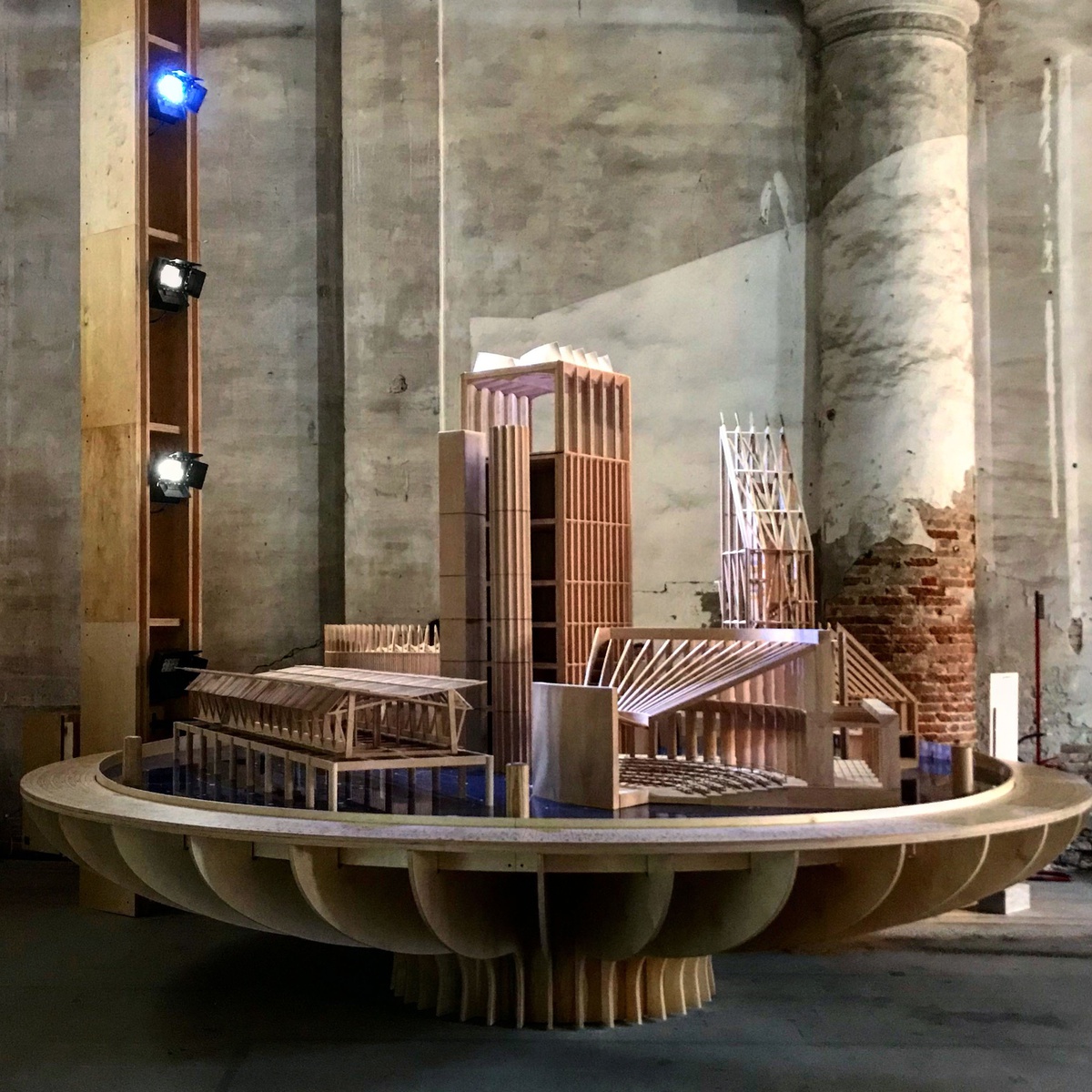
Biennale Architecttura 2018

The 2018 Venice Biennale opened to the public on the 26th May. This year’s theme “focuses on architecture’s ability to provide free and additional spatial gifts to those who use it and on its ability to address the unspoken wishes of strangers”.

Our contribution is a collection of six large-scale models, each representing a hall for gathering that the practice has designed. These models are placed upon a rotating table which is a calendar and a cosmic machine. Each hall has a different purpose yet they all bring people together in a rhythmic and cyclical fashion daily, weekly and annually. The specific uses of each building are regulated by a calendar of events, rituals and times of congregation. Their calendars are inscribed on the outer rim of a turning table. The table can be rotated by hand. When you turn it, varying light falls upon the models representing the passage of the sun through the day from dawn to dusk. It is a manual and mechanical process.

The intention of presenting these models in this way is to emphasise the relationship between the enduring frames of the buildings and the endless procession of fugitive elements that pass through them periodically.
a+u Feature on Somerville College Accommodation

May 2014

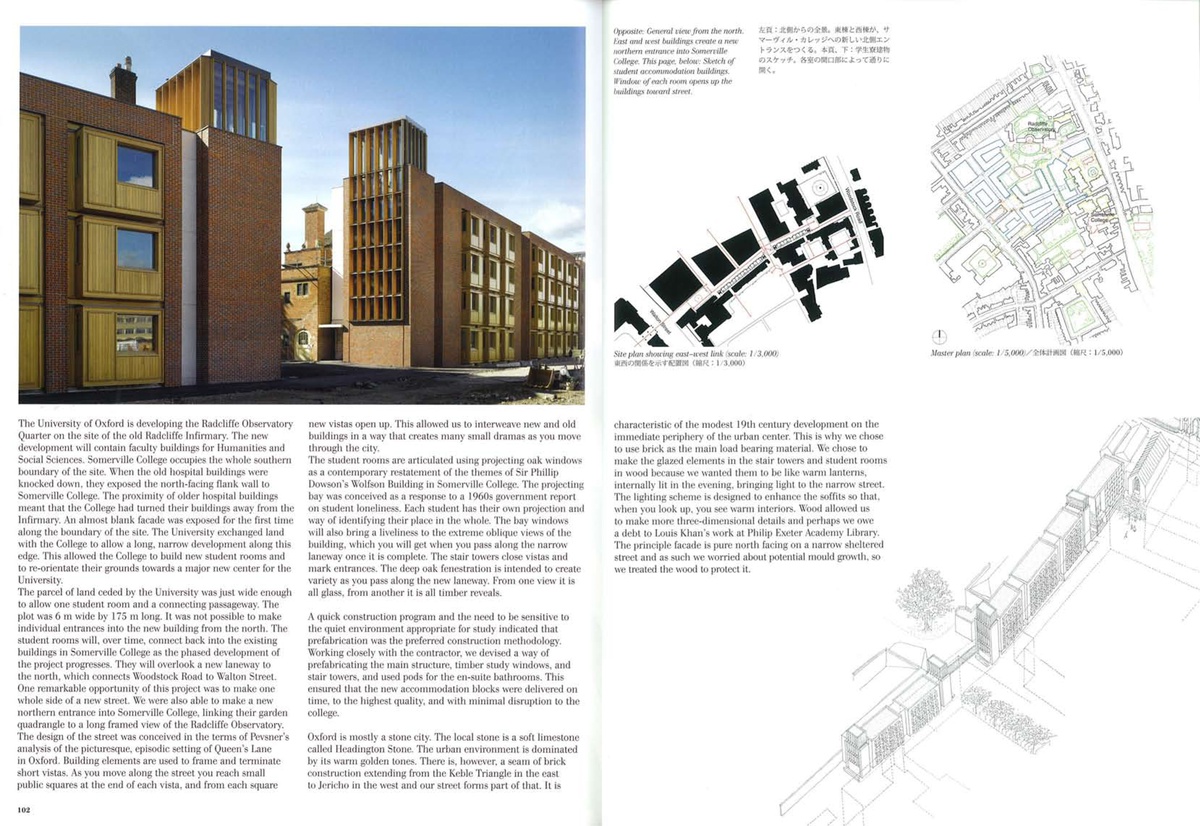
a+u Feature on Somerville College Accommodation

The Japanese journal a+u has published an account of the practice’s student accommodation for Somerville College, Oxford. The theme of this month’s publication is ‘New Landscapes of Wooden Architecture’ and features an international selection of projects that explore new aspects of wood technology and its potential within cities. The article gives a description on the themes and processes behind the project, placing it within the context of the historic university city and the surrounding Radcliffe Infirmary Quarter.

It is illustrated with working details of the bespoke timber glazing for the stair tower lanterns, as well as the prefabricated timber projecting bay window units for the student bedrooms, with their integral desk and bench seat overlooking the street.

‘We chose to make the glazed elements in the stair towers and student rooms in wood because we wanted them to be like warm lanterns, internally lit in the evening, bringing light to the narrow street…Wood allowed us to make more three-dimensional details…we owe a debt to Louis Kahn’s work at Philip Exeter Academy Library.’  NM