WongAvery Gallery opening
June 2022
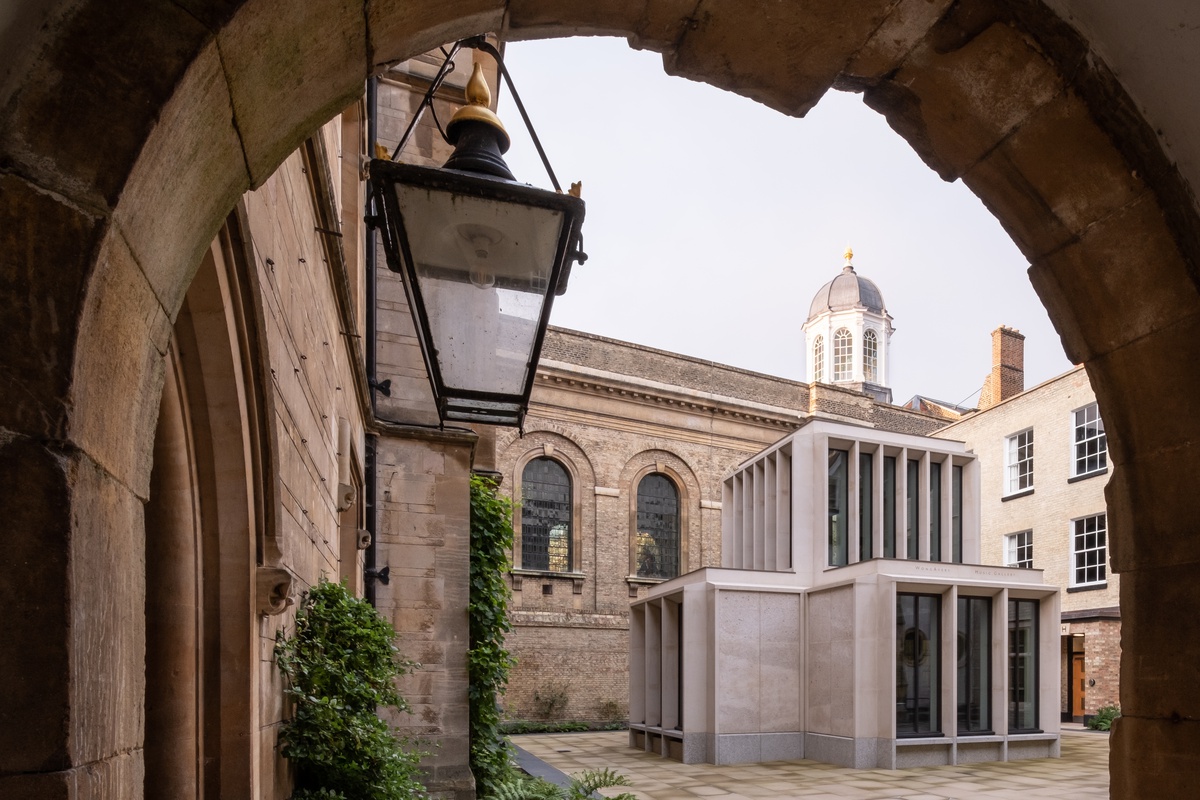
HRH The Duke of Gloucester officially opened the WongAvery Music Gallery for Trinity Hall on the 24th June.
During the dedication ceremony in the Music Gallery, Vice-Master Dr Daniel Tyler and Vice-Chair of the Avery-Tsui Foundation Natasha Wong, addressed the guests, before a dedication given by alumnus Revd Cortland Fransella. The ceremony concluded by the Director of Music Andrew Arthur, who played a piece on the piano in the new space.
Dr Tyler said: “Avery Court has been transformed by the addition of the WongAvery Music Gallery. This state-of-the art musical recital and rehearsal space is a stunning addition to the College. We are grateful to His Royal Highness for formally opening the building.
“We offer our sincere thanks to the Avery-Tsui Foundation for their support. It is wonderful to be in this space at the heart of Trinity Hall and know that it has been built thanks to the love of music and the love of the College on the part of a former student and his family. I am sure it will inspire future generations of students.”
Biennale Architecttura 2018
June 2018
The 2018 Venice Biennale opened to the public on the 26th May. This year’s theme “focuses on architecture’s ability to provide free and additional spatial gifts to those who use it and on its ability to address the unspoken wishes of strangers”.
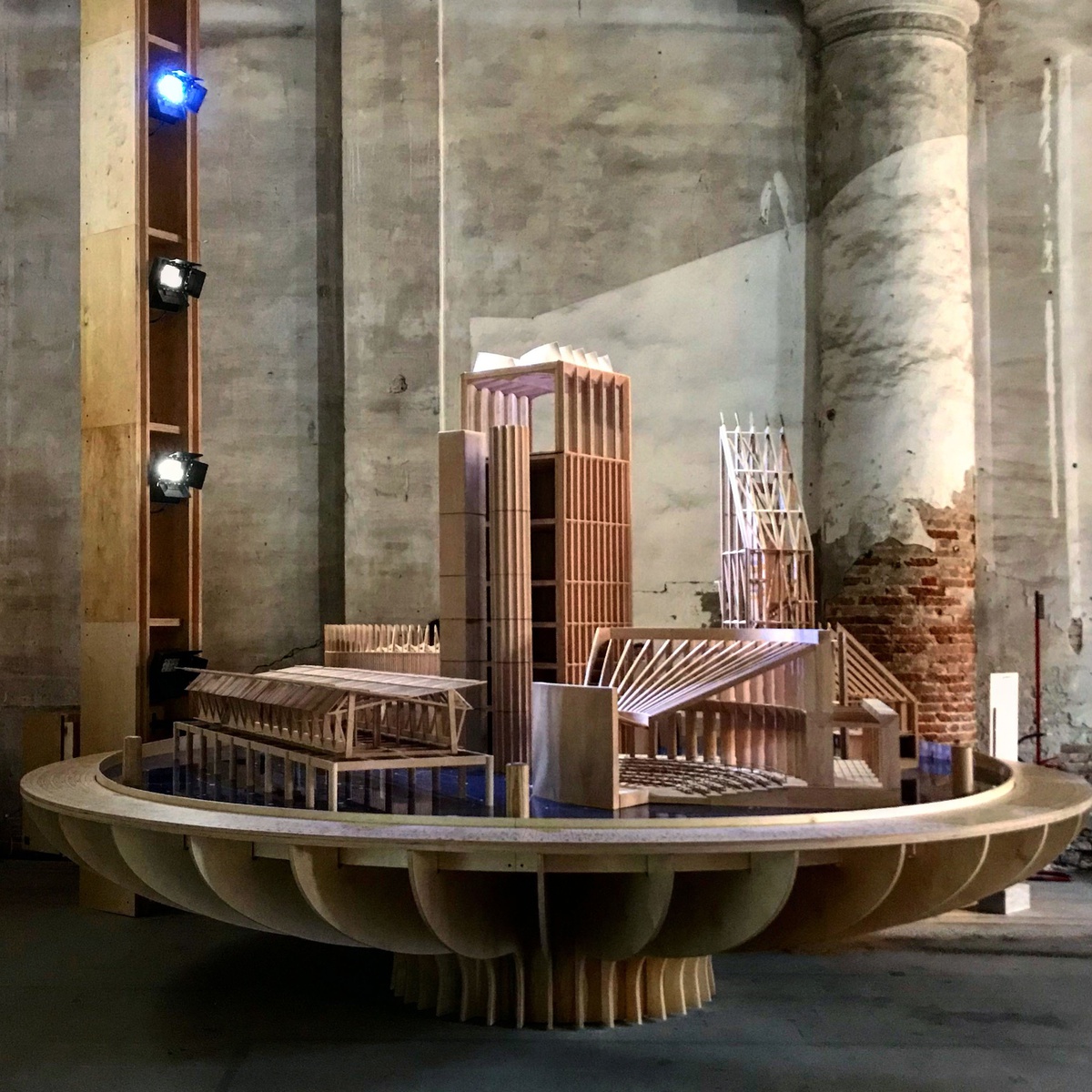
Our contribution is a collection of six large-scale models, each representing a hall for gathering that the practice has designed. These models are placed upon a rotating table which is a calendar and a cosmic machine. Each hall has a different purpose yet they all bring people together in a rhythmic and cyclical fashion daily, weekly and annually. The specific uses of each building are regulated by a calendar of events, rituals and times of congregation. Their calendars are inscribed on the outer rim of a turning table. The table can be rotated by hand. When you turn it, varying light falls upon the models representing the passage of the sun through the day from dawn to dusk. It is a manual and mechanical process.
The intention of presenting these models in this way is to emphasise the relationship between the enduring frames of the buildings and the endless procession of fugitive elements that pass through them periodically.