WongAvery Gallery opening
June 2022
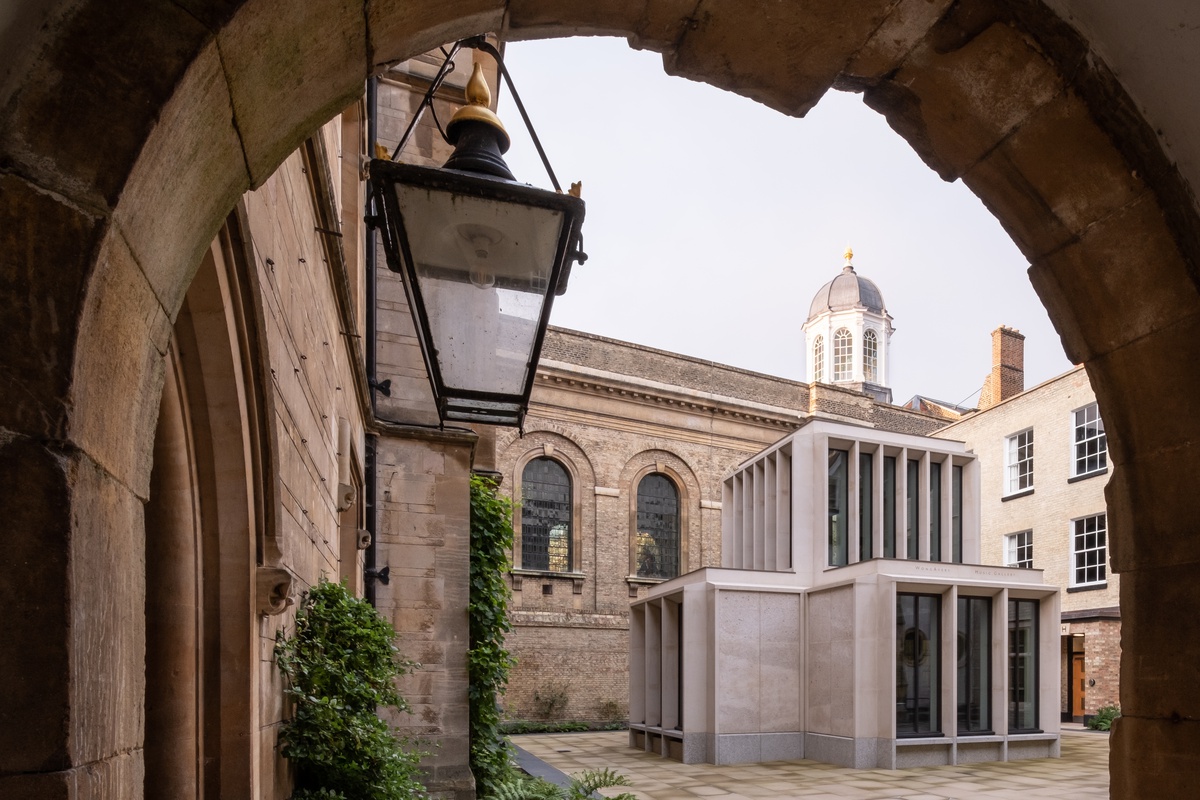
HRH The Duke of Gloucester officially opened the WongAvery Music Gallery for Trinity Hall on the 24th June.
During the dedication ceremony in the Music Gallery, Vice-Master Dr Daniel Tyler and Vice-Chair of the Avery-Tsui Foundation Natasha Wong, addressed the guests, before a dedication given by alumnus Revd Cortland Fransella. The ceremony concluded by the Director of Music Andrew Arthur, who played a piece on the piano in the new space.
Dr Tyler said: “Avery Court has been transformed by the addition of the WongAvery Music Gallery. This state-of-the art musical recital and rehearsal space is a stunning addition to the College. We are grateful to His Royal Highness for formally opening the building.
“We offer our sincere thanks to the Avery-Tsui Foundation for their support. It is wonderful to be in this space at the heart of Trinity Hall and know that it has been built thanks to the love of music and the love of the College on the part of a former student and his family. I am sure it will inspire future generations of students.”
Frameless Architecture
August 2015
Our classification of the world is the result of a desire to impose order on the chaos we are born into. In nature we classify the species, in society we classify our relationships, and in architecture we classify the spaces we design and inhabit. In many cases, classification is a useful tool that allows us to root ourselves in time and space.
Classification can also be the enemy of imagination, suffocating our desire to wonder and discover new associations. It can limit the understanding of what surrounds us and disjoint elements that should not be separated. Framing perception can become a reductive force.
In his book Atlas: How to Carry the World on One’s Back, Didi Huberman uses ‘atlas’ in its broadest sense to mean a ‘collection of images’. Huberman explores two different ‘uses of reading’: a denotative sense in search of messages, and a connotative sense in search of montages. The dictionary is a predictable tool for the former, and the atlas is the ‘unexpected apparatus’ for the latter[1].
The atlas is frameless and endless. It surpasses boundaries and restrictions and is in a state of constant renewal. The atlas enables our imagination to trigger new associations, new relations. Although we may start with a search for the specific, we may then wander endlessly, unlimited by a defining frame.
Architectural education, architectural research and architectural practice have suffered for too long from being limited by a defining frame that has placed them in different dictionary entries. It is now time to rethink this model, which shapes our lives, our careers, and ultimately our contribution to society. If we are to replace the dictionary with the atlas, if we are to substitute the definitive meaning with the endless search for new relations, we will have a new model of architecture where education, research and practice are interwoven and intrinsic to one another.
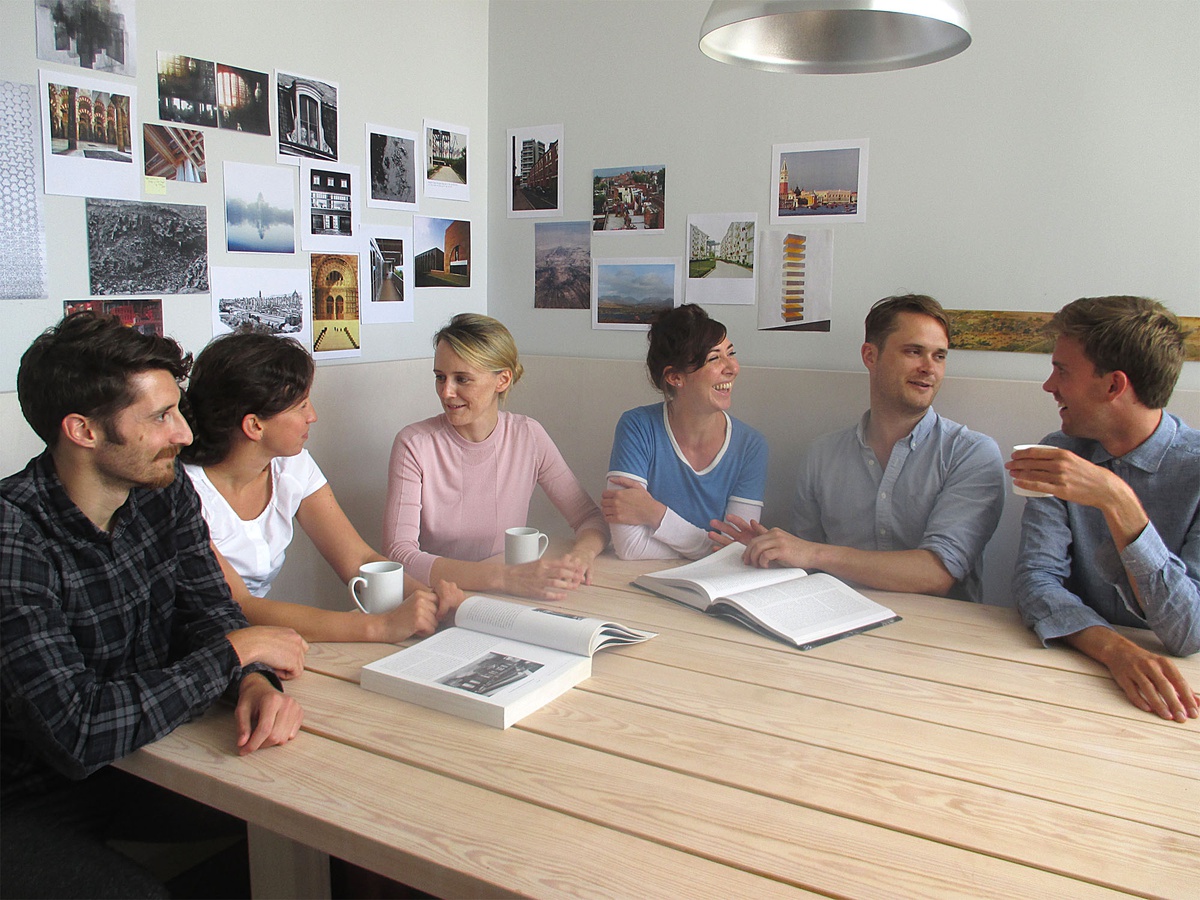
For this new model to succeed, we must completely awaken our imagination. Education, research and practice will be symbiotic and won’t be understood without each other. As a result, transverse readings and meanings will develop within our work. These will be found not only in the individual but also in the collective. In our office, inspired by Aby Warburg’s Mnemosyne Atlas, we will develop our own Atlas where images of our endlessly evolving inspirations and aspirations will be captured. Our Atlas will be a new ground from which meaning, space and relationships will grow. Our Atlas will enable us to read what has never been written[2].
[1] Georges Didi-Huberman (2010). Atlas. ¿Cómo llevar el mundo a cuestas?. Madrid: TF Editores/Museo Reina Sofía . 16-17.
[2] Georges Didi-Huberman (2010). Atlas. ¿Cómo llevar el mundo a cuestas?. Madrid: TF Editores/Museo Reina Sofía . 14.