Winner of the 2022 Stirling Prize
October 2022
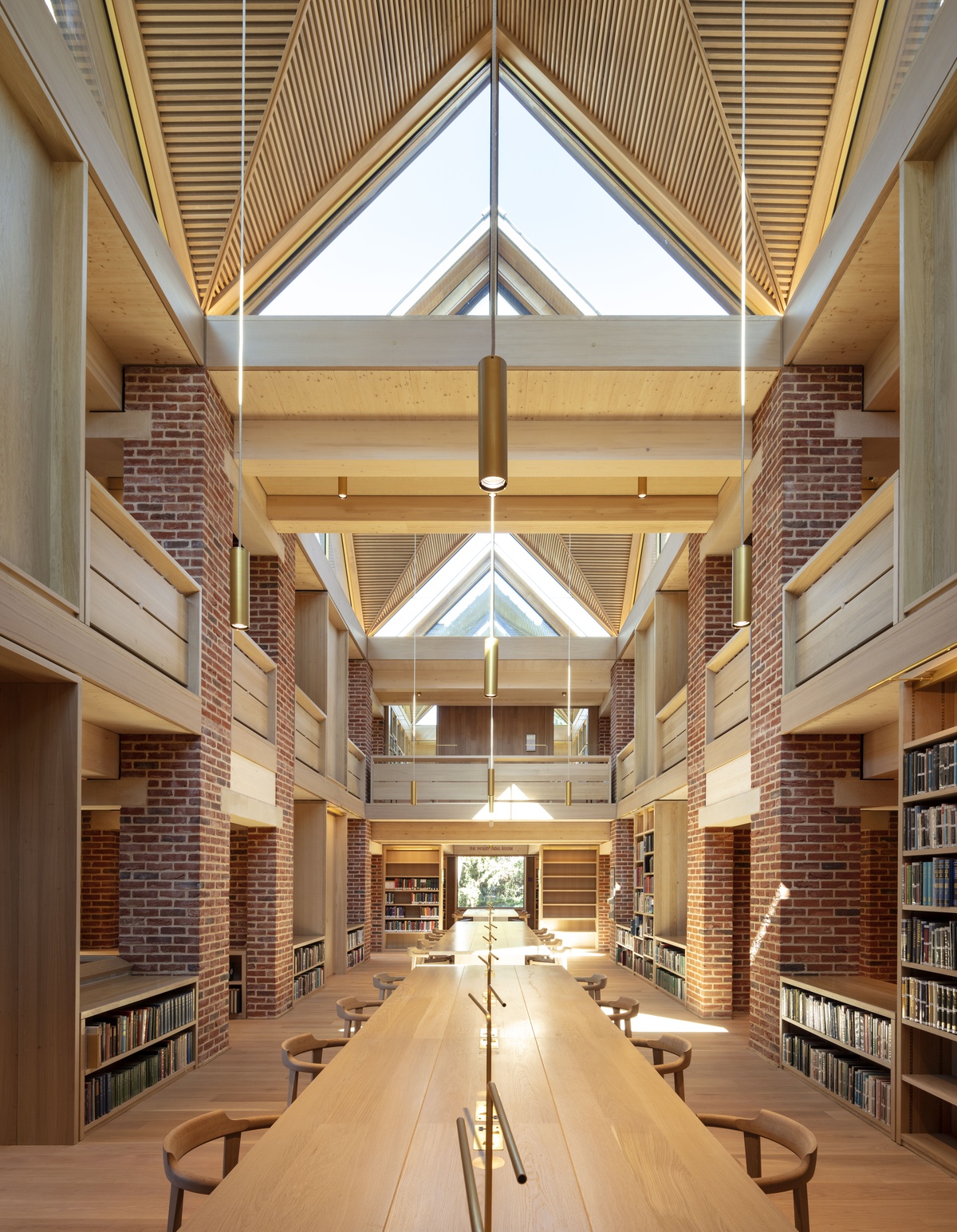
The Royal Institute of British Architects (RIBA) has named our project The New Library at Magdalene College in Cambridge as the winner of the 26th RIBA Stirling Prize, the UK’s most prestigious award for architecture.
The New Library contains a study space and library, archive and picture gallery and appears as an arrangement of simple brick volumes which echo the typical gabled forms of the existing College. The main library is a suite of interconnecting rooms lined with bookcases, reading desks and galleries, arranged on a tartan grid between interconnecting passageways. Conceived as a journey towards the light, three main reading rooms organise the principal circulation route through the library from the three-storey entrance hall, to a double-height central reading room and up to a long single-height room overlooking the garden.
Speaking on behalf of the 2022 RIBA Stirling Prize jury, RIBA President Simon Allford, said:
“A unique setting with a clear purpose – The New Library at Magdalene College is sophisticated, generous, architecture that has been built to last.
Creating a new building that will last at least 400 years is a significant challenge, but one that Niall McLaughlin Architects has risen to with the utmost skill, care and responsibility.”
Screens
June 2015
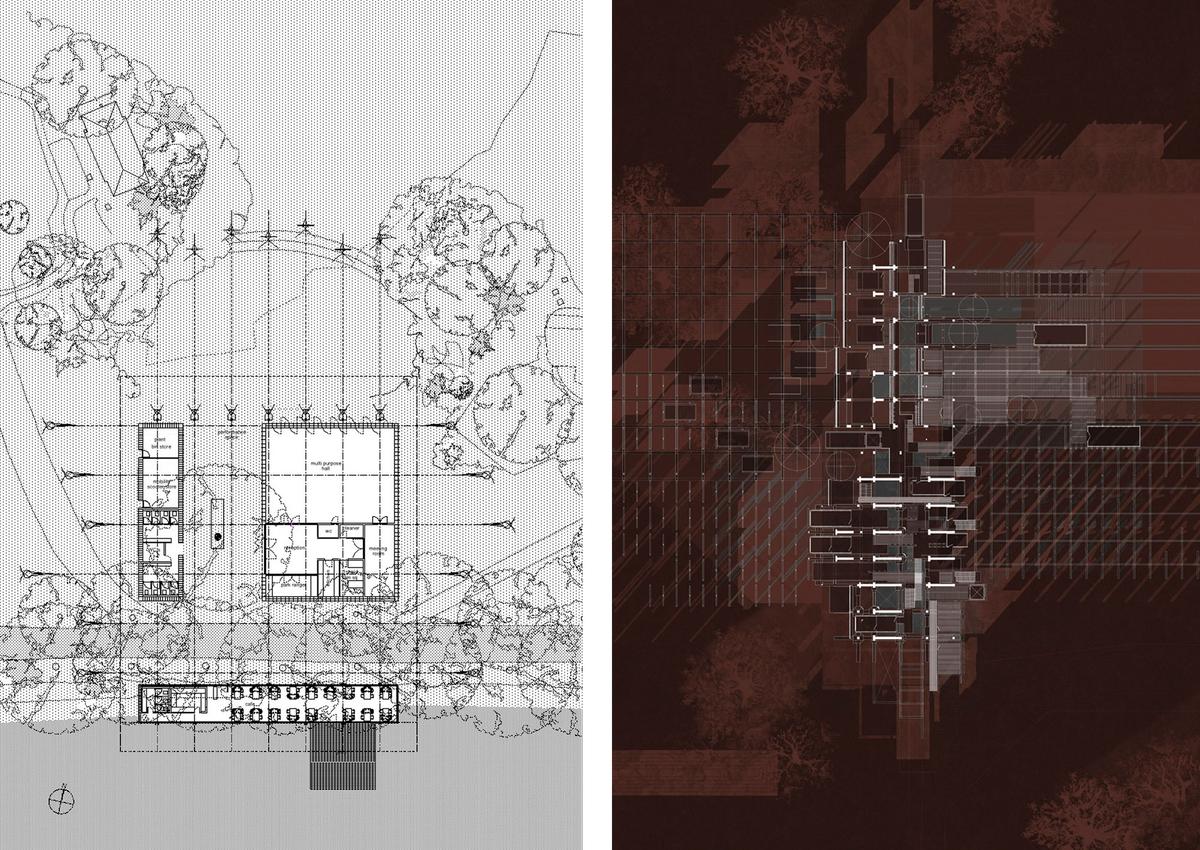
Images: Avenham Park Pavillion, Preston. The Institute of Timber, Detroit
‘What do you see when you look up through the trees? Try to imagine this moment in a pretended place or part of a journey through a particular sequence of spaces. How does one describe this experience? What is it about spaces in nature, for example forests, which make them fascinating yet at the same time unsettling places to inhabit? A forest offers a place of refuge and natural beauty where the element of surprise is all part of the experience’
The idea of nature as a spatial experience and a driver for architectural form was a question that ran through my academic work and has subsequently led to an obsession with a perceptual and evolving architecture. It is interesting that my time in the office has allowed me to both reflect and discover parallels that run through similar themes in the work of the practice. A pursuit for a “thicket-like” characteristic, which allows for shifts in spatial qualities and a variation of patterns that overlay like woven surfaces to define space are just some of the mannerisms that I have begun to recognise.
I compare my own attempt to generate a kind of place that is animated, brightening as you ascend towards the canopy when reading the blurred lines of the roof of the pavilion designed for a woodland park in Preston. The structure is designed as a number of layers of mesh to capture rain whilst creating a display of shadows that activate the building beneath. As a competition proposal, the structure was never fully realised yet it has been the ideas established during this process that still resonate today. By staggering the building between the tree density, the line of the pavilion is undefined breaking the traditional form of constructing space and allowing a new reading of the building and landscape. Particularly enlightening in the search for the enclosure of space is a fruition of a screen-like quality that works as a surface and also as a generator of it’s tectonic form.
The use of the screen as a ‘device’ in our architecture allows elements to become not only separators of rooms or the external environment but also actuators for unique and unimagined spatial experiences. In search of this architecture is an attempt to purposefully discover a different architecture and an unplanned result that wouldn’t necessarily be reached through something un-natural.
Benni Allan graduated from the Bartlett with Distinction in 2014, and has been working on a project for Jesus College, Cambridge since joining Niall McLaughlin Architects. In February 2015, Benni was named as one of the nation’s up-and-coming designers and ‘One to Watch’ by the Design Council to represent the future of British design. His project the ‘City of Forests’ looked at beautifying Detroit through reforestation strategies to promote a denser, greener and more sustainable future in which timber becomes the main economic output. As Detroit continues to struggle with the effects of massive industrial changes, this more positive image of vacancy as an asset opens new discussions about the future post-industrial city.