Winner of the 2022 Stirling Prize
October 2022
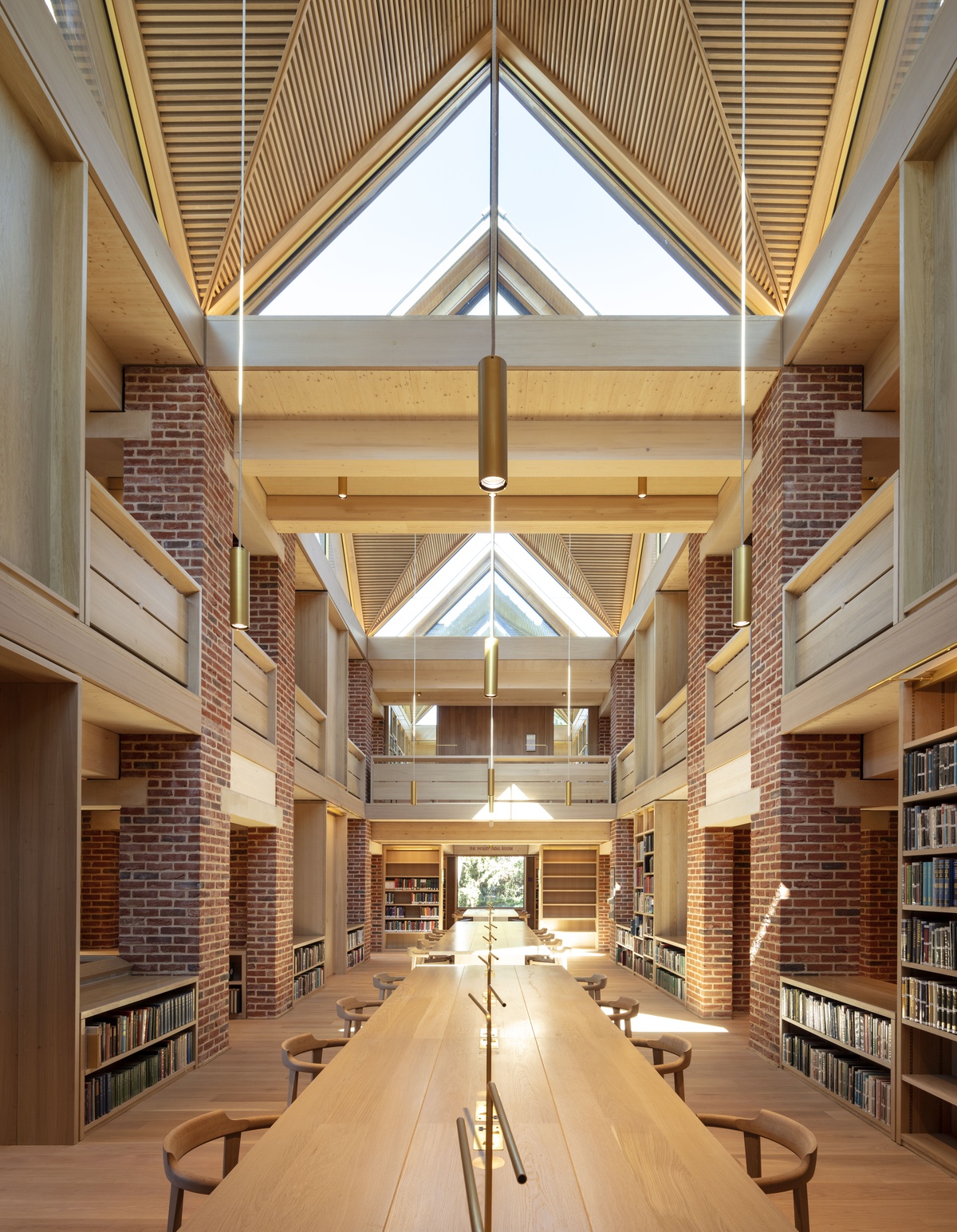
The Royal Institute of British Architects (RIBA) has named our project The New Library at Magdalene College in Cambridge as the winner of the 26th RIBA Stirling Prize, the UK’s most prestigious award for architecture.
The New Library contains a study space and library, archive and picture gallery and appears as an arrangement of simple brick volumes which echo the typical gabled forms of the existing College. The main library is a suite of interconnecting rooms lined with bookcases, reading desks and galleries, arranged on a tartan grid between interconnecting passageways. Conceived as a journey towards the light, three main reading rooms organise the principal circulation route through the library from the three-storey entrance hall, to a double-height central reading room and up to a long single-height room overlooking the garden.
Speaking on behalf of the 2022 RIBA Stirling Prize jury, RIBA President Simon Allford, said:
“A unique setting with a clear purpose – The New Library at Magdalene College is sophisticated, generous, architecture that has been built to last.
Creating a new building that will last at least 400 years is a significant challenge, but one that Niall McLaughlin Architects has risen to with the utmost skill, care and responsibility.”
Craftlines
August 2015
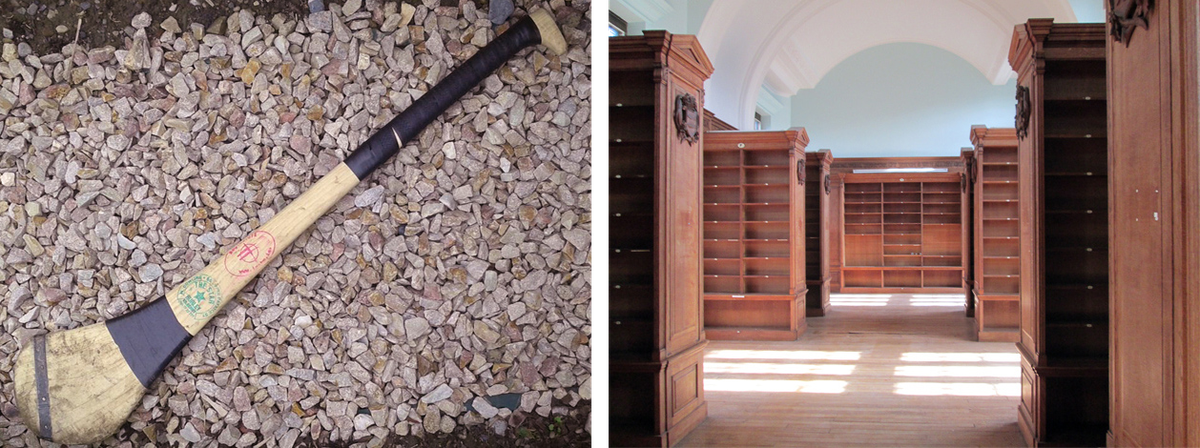
My grandfather has worn many hats; soldier, civil servant, father of seven, husband, and winner of a county final in hurling (the achievement of which he is potentially most proud). He is fluent in Irish and recalls event and dates from 50 years ago with a staggering accuracy. Yet the residing image of him from my childhood is as a craftsman – in the garage next to his house in Dublin, whittling and sanding a piece of ash to form a hurley, sizing it precisely for the user, wrapping the handle to create the perfect hold. I remember sitting, playing surreptitiously with a clamp, watching this in awe: the creation of the perfect instrument from a piece of timber; a skill honed through practice and an unfailing attention to detail. I marvelled at the assurance of it all, the promise in his hands.
It would be satisfyingly simple to attribute my choice of career to these moments – to claim there was an epiphany in watching him, a sudden realisation that I wanted to be an architect, to create. In reality, however, the path was not so linear; instead the conviction that I wanted to become an architect embedded itself in my consciousness slowly, over time. The memory of him working in his garage was one I didn’t return to often, and like any story we fail to repeatedly tell ourselves, it languished, dormant, in the recesses of my mind.
I recently went to site at Jesus College, Cambridge, where we are working on a project that is part new build, part refurbishment. An aspect of the refurbishment involves the adaptation of eight bookcases in the magnificent former library into wall panelling. The existing bookcases are a dark stained timber, designed by Maurice Webb in the 1920s and wonderfully crafted by a masterful hand. Reworking these without compromising their beauty would be a challenge for any craftsman.
On seeing the work the joiner had done, I realised there was no cause for worry – it had been executed with confident, competent hands. In that moment, the memory of my grandfather in his garage came back to me in glorious Technicolor; and I felt a familiar thrill at the embodied potential of the right material in the hands of a craftsman, with promise in his hands.