NMLA Announced as Winners for The Museum of Jesus’ Baptism Competition
February 2026
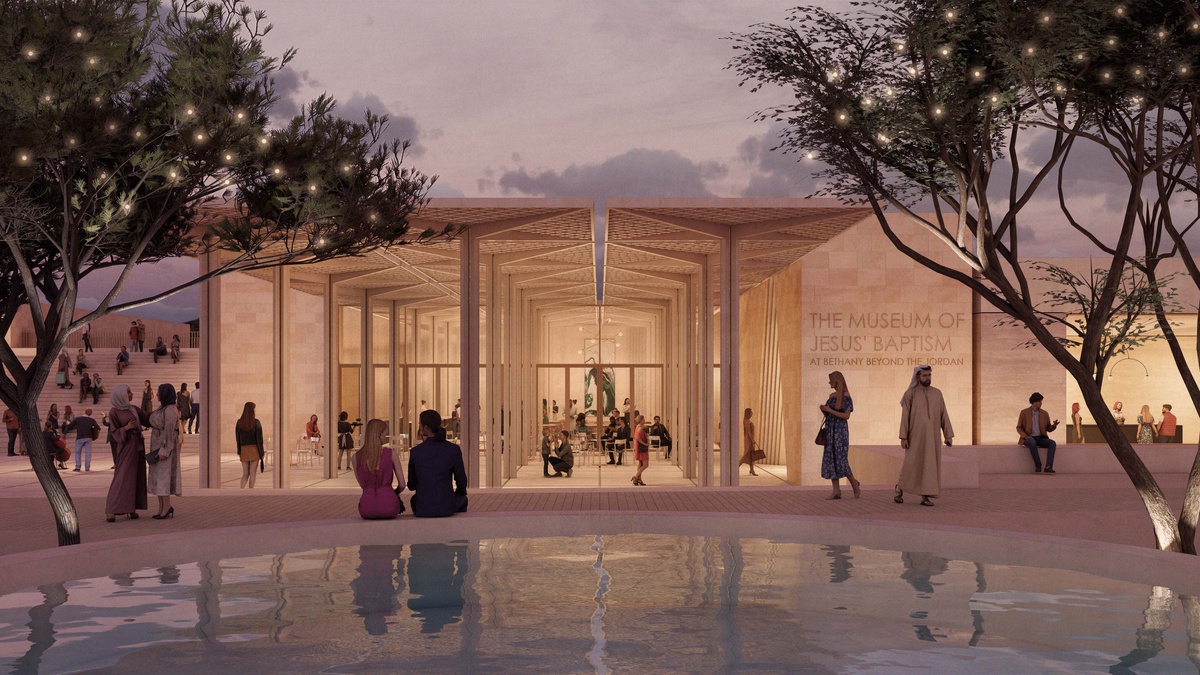
We are delighted that our practice has been announced as the winner of the Malcolm Reading Consultants international competition The Museum of Jesus’ Baptism at Bethany, Jordan.
Our winning concept impressed the Foundation and the Advisory Panel with “its flair for multi-layered and immersive storytelling that focuses on communicating baptism’s power to offer spiritual renewal and new life.” In scale and form, the proposal answered the brief’s call for a museum that ‘evokes wonder and humility in the visitor and responds sensitively to the site’.
Dr Tharwat Almasalha, Chair of the competition’s Advisory Panel and Chair of the Foundation’s Board, said:
‘We congratulate Níall McLaughlin’s team on their proposal which excels in telling the story of baptism – highlighting its power to offer spiritual renewal and new life.
‘We look forward to celebrating the bimillennial of Christ’s baptism in 2030 with the opening of the new museum which promises to be an inspiration for Jordan, faith communities, and secular visitors worldwide.
‘This proposal responds sensitively to the luminous setting in the wilderness and the adjacent UNESCO site. Though modest in size and form, the design has exceptional resonance: it will be attuned to human and divine connections.
‘Together with the NMLA-led team we’re determined to create a museum that will be a global exemplar and acclaimed as a universal symbol of peace.’
The team commented “We are delighted to receive the news that we are the winners of the competition for the Museum of Jesus’ Baptism at Bethany, Jordan. It is an extraordinary site with a profound history. The brief was beautifully written, and the shortlist was exceptionally strong. We felt honored to be chosen to participate with such an interesting group.
‘The challenge of the design was to find a way to allow the architecture to mediate between a charged landscape and the sacred narratives that arose within it. It demanded a building that could work with allegory. At the same time, the project needed to use local labor, skills, and resources to achieve something with a sense of social responsibility and low carbon expenditure. We now look forward to working with the Foundation to develop the design in dialogue with enthusiastic local and international experts. We relish the opportunity to learn more about this beautiful country.’
Our team is supported by Engicon (Local Consultant); Kim Wilkie Landscape (Landscape Architecture); Nissen Richards Studio (Exhibition Design & Wayfinding); Studio ZNA (Lighting Design); and Arup (Daylight & Shadow Studies).
Master’s Field Project
April 2019
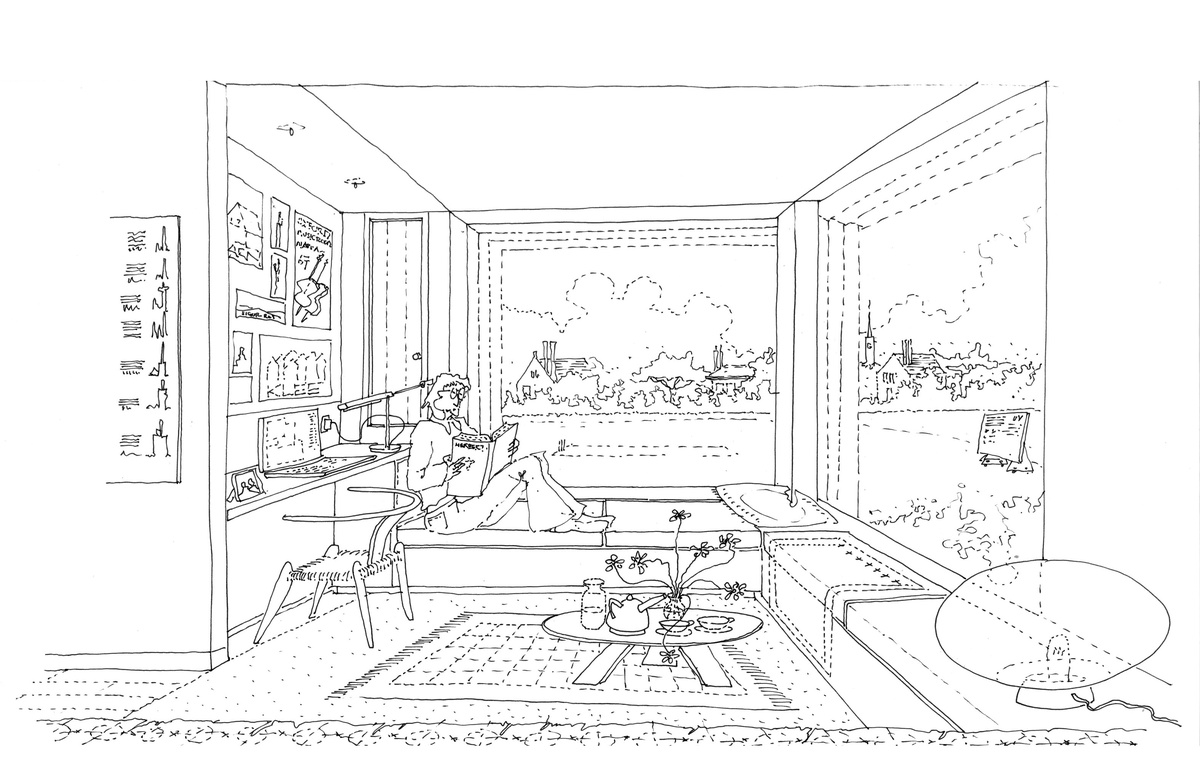
When reflecting on the work of our practice, the chamfered corner, is a recurring interest. This detail has developed over the years from our preoccupations with the Miesian re-entrant corner, the simplicity of a trabeated structure, and a desire to find ways of expressing a deep façade.
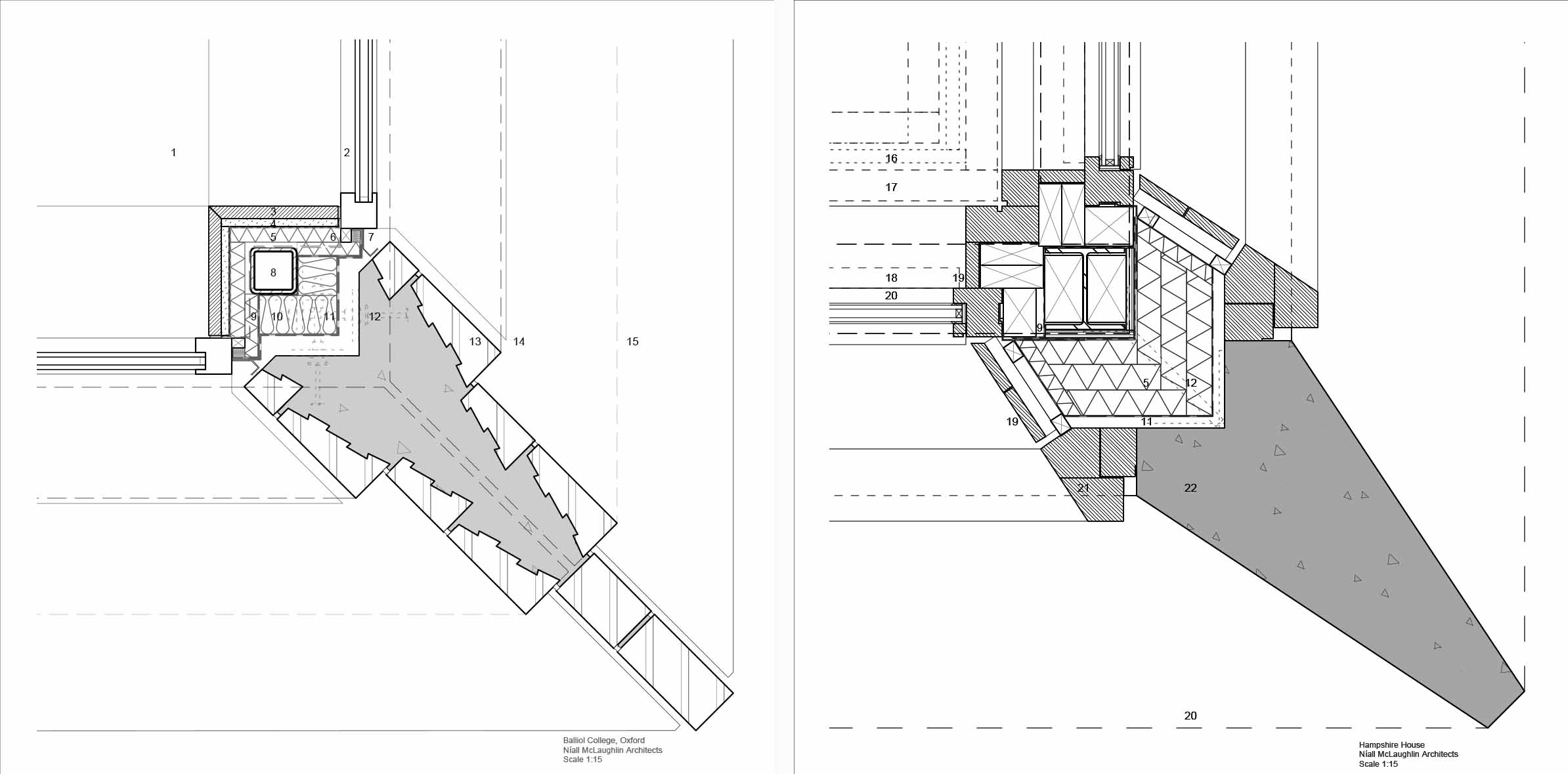
Simple chamfers in concrete and stone were employed in recent completed projects for Hampshire House and The Sultan Nazrin Shah Centre, Oxford. At the Master’s Field site in Oxford, currently under construction for Balliol College, a corbelled chamfered detail is incorporated in a load bearing façade. This project comprises eight student accommodation buildings and a pavilion arranged around a series of courtyards overlooking a cricket pitch.
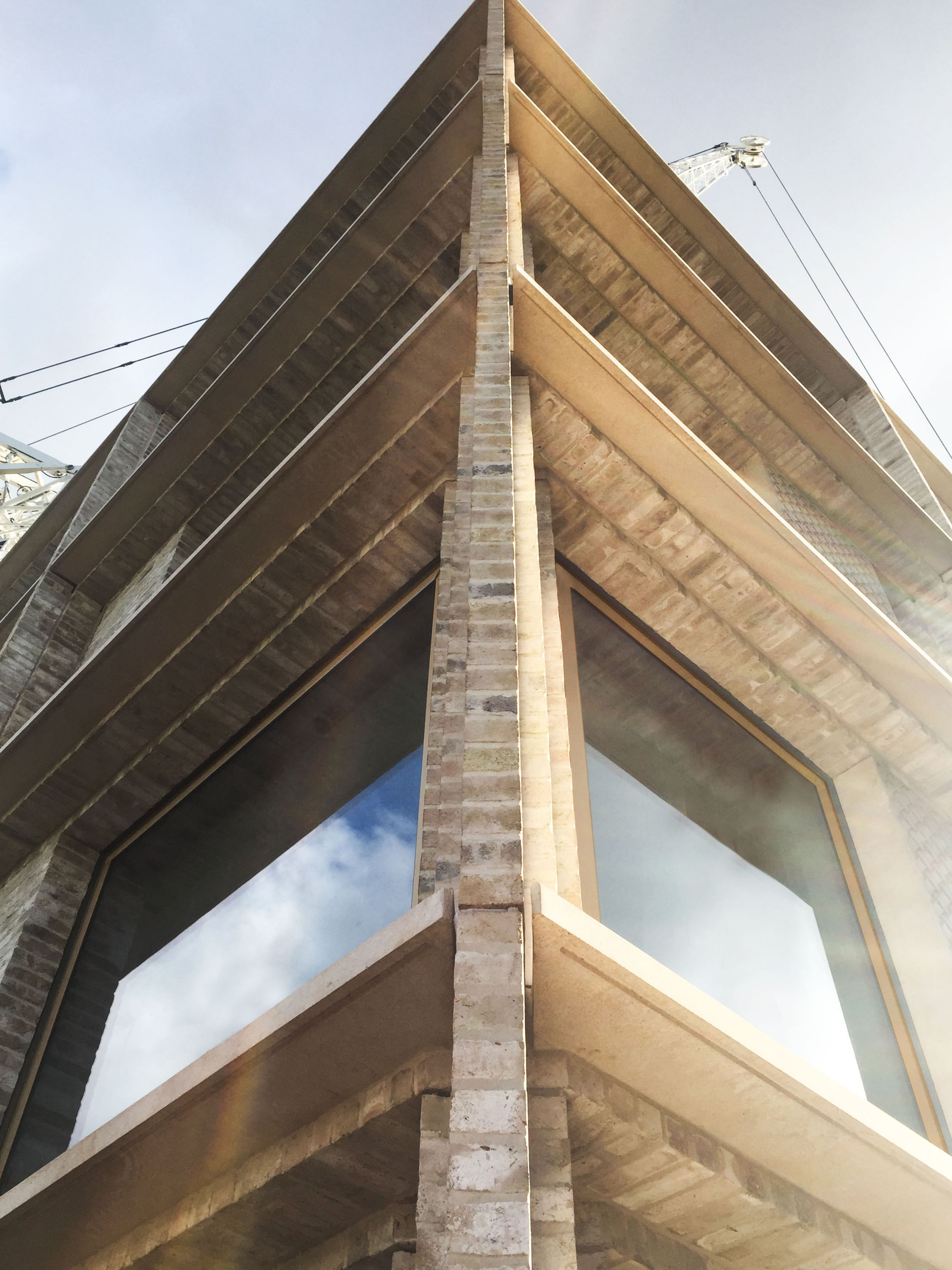
A brick-clad chamfer at the corner between two windows is used throughout the accommodation buildings. This establishes a shifting perspectival relationship as one moves through the site, and gives all the buildings a common language. Corbelled brick and concrete lintels and mullions set up a trabeated structural rhythm which clearly defines each individual student bedroom and creates a delicate play of light and shadow across the façade. A series of finely detailed brick and concrete panels are layered within the depth of the window reveal, articulating a secondary rhythm which expresses the transition from solid to glazed elements.
The detail enables the depth and structure of the wall to be elegantly expressed, maximizing its presence when viewed externally and minimizing its presence internally. It also forms a generous threshold which provides privacy for students inside engrossed in their study. For moments of welcome distraction, the large picture windows frame uninterrupted views over the cricket pitch and across the campus.
The expression of a chamfered corner produces challenges in construction, particularly when expressed in precast concrete components clad in corbelled brickwork. When forming acute angles with orthogonal bricks, special consideration must be given to alignments and bonding. Interface details demand careful thought regarding sequencing and tolerances to achieve a symbiosis of structural performance with aesthetic ambition.
Externally, in the plan detail shown here, the apex of the chamfer is formed from stacked brick headers. This exposes three faces of each brick, limiting the choice of bricks, which are typically produced with only one finished stretcher face. Brick specials are required to form the chamfered corbel of the lintels, and grids are carefully set out to ensure alignment of vertical and horizontal corbelling. We looked to the meticulously detailed and crafted brickwork of Jensen-Klint’s masterpiece, Grundvig’s Church in Copenhagen, for expression of stepped vertical forms.
Internally, minimising the corner where the windows meet produces intricate challenges in the alignment of linings, blinds, reveals and fitted furniture. This complex resolution of constituent parts all work hard to achieve the aesthetic objective of the simple glazed chamfered corner.
Detail Key
1.Whitewashed ply bench 2. Aluminium window 3.Whitewashed plywood reveal 4.Plasterboard 5.Rigid insulation 6.Steel window fixing brackets 7.Metal pressing 8.Wind post 9.EPDM/ vapour barrier 10.Mineral wool insulation 11.Breather membrane 12.Steel restraint brackets 13.Corbelled brick faced precast concrete mullion 14.Flashing 15.Concrete cill 16.Concealed curtain track 17.Oak joist over 18.Concealed roller blind 19.Timber panels 20.Timber framed window 21.Prelaminated timber frame 22.Precast concrete mullion 23.Precast concrete coping over