The Guardian on the Royal Academy Summer Exhibition
June 2022
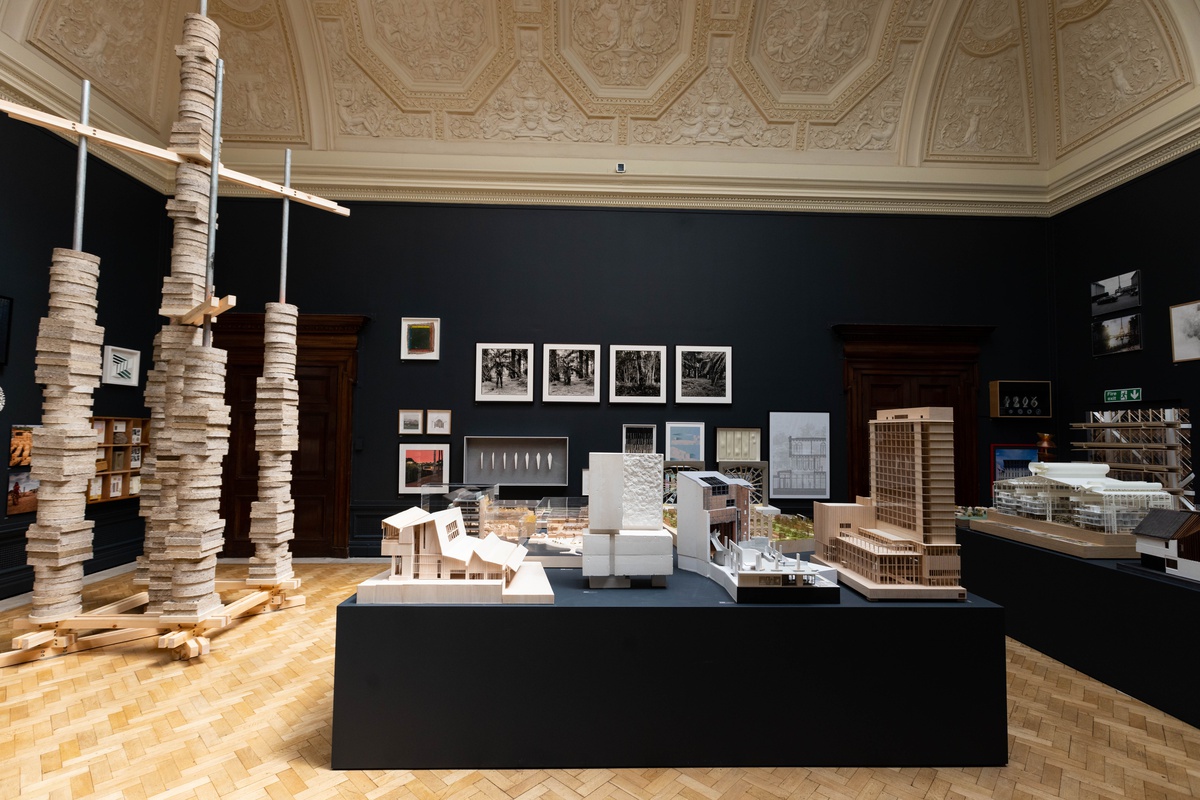
Olly Wainwright has published his Guardian review of this year’s Royal Academy architecture rooms which have been co-curated by Níall McLaughlin and artist Rana Begum. With this year’s theme being ‘Climate’, Wainwright highlights that “Architects and engineers have, after all, some responsibility for the mess we’re in, given that 40% of carbon emissions come from buildings. They also have the means to do something about it”. Níall commented, “there can be a sense of fatalism about the climate, but our discipline can show that imaginative change is possible”.
The article reviews a few select pieces such as Stonemasonry Company and Webb Yates engineers’ large stone beam titled ‘Equanimity’, the Khudi Bari (or Tiny House), a modular monsoon-resistant shelter designed by Bangladeshi architect Marina Tabassum, and Thai architect Boonserm Premthada’s ‘Dung Power’ a structure made from elephant dung bricks.
The article can be accessed here.
Image © Royal Academy of Arts, London / David Parry
Biennale Architecttura 2018
June 2018
The 2018 Venice Biennale opened to the public on the 26th May. This year’s theme “focuses on architecture’s ability to provide free and additional spatial gifts to those who use it and on its ability to address the unspoken wishes of strangers”.
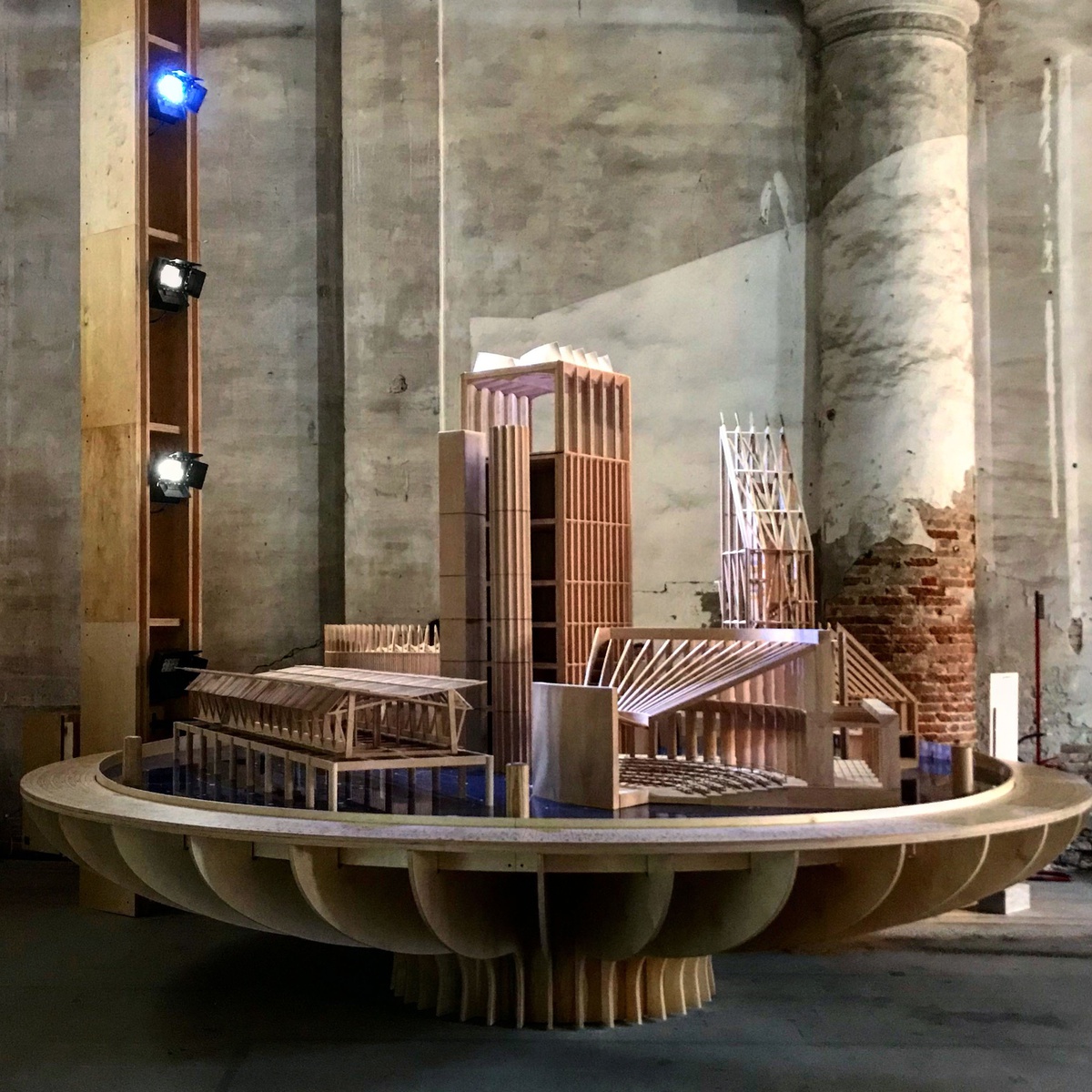
Our contribution is a collection of six large-scale models, each representing a hall for gathering that the practice has designed. These models are placed upon a rotating table which is a calendar and a cosmic machine. Each hall has a different purpose yet they all bring people together in a rhythmic and cyclical fashion daily, weekly and annually. The specific uses of each building are regulated by a calendar of events, rituals and times of congregation. Their calendars are inscribed on the outer rim of a turning table. The table can be rotated by hand. When you turn it, varying light falls upon the models representing the passage of the sun through the day from dawn to dusk. It is a manual and mechanical process.
The intention of presenting these models in this way is to emphasise the relationship between the enduring frames of the buildings and the endless procession of fugitive elements that pass through them periodically.