Summer of Work Experience at NMLA
September 2024
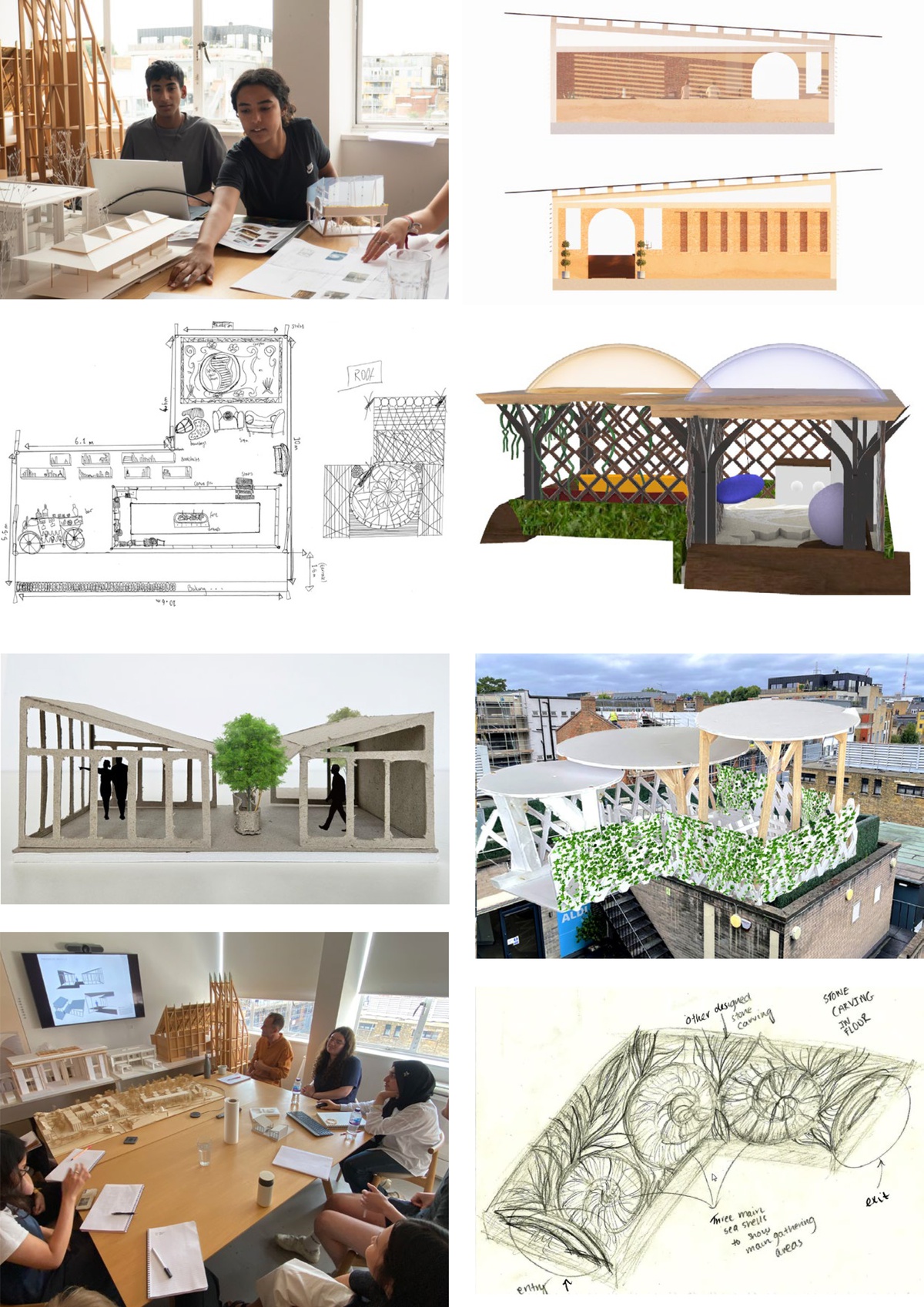
Over a 4-week period this summer, we were delighted to host eight work experience students from a range of London state schools and sixth-form colleges. Our programme aims to inspire and provide insight into architectural practice through a bespoke week-long project involving a brief, site survey, research and consultation, design, drawing, image and model making, and presentation. Attending in pairs (and mostly having never met before), all four sets of students choose to work together on design proposals. It was wonderful to see their lively exchange of ideas, evolving team work and complementary skillsets being developed. Members of staff volunteered in pairs to support the students with their design project but also held portfolio review sessions for those interested in applying for architecture degrees, and involved the students in office meetings and design reviews. At the end of each week, a larger group of staff gathered for the students’ presentations as an informal crit, celebrating the excellent work and relaying constructive feedback. We’d like to thank Manar and Zain, Katerina and Khaterah, Megan and Wasim, and Kacper and Ayushi, and wish them all well for their future studies.