Summer of Work Experience at NMLA
September 2024
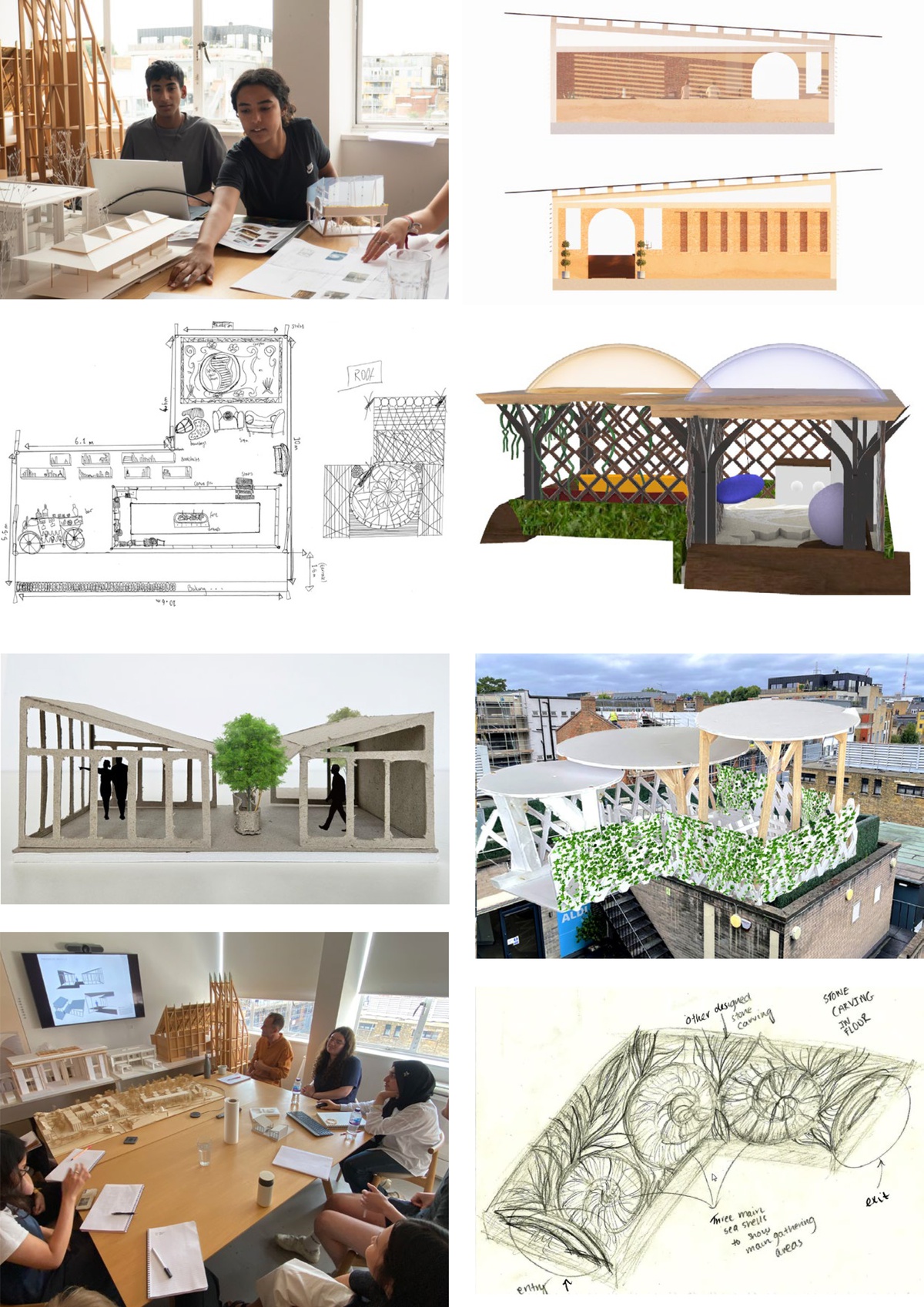
Over a 4-week period this summer, we were delighted to host eight work experience students from a range of London state schools and sixth-form colleges. Our programme aims to inspire and provide insight into architectural practice through a bespoke week-long project involving a brief, site survey, research and consultation, design, drawing, image and model making, and presentation. Attending in pairs (and mostly having never met before), all four sets of students choose to work together on design proposals. It was wonderful to see their lively exchange of ideas, evolving team work and complementary skillsets being developed. Members of staff volunteered in pairs to support the students with their design project but also held portfolio review sessions for those interested in applying for architecture degrees, and involved the students in office meetings and design reviews. At the end of each week, a larger group of staff gathered for the students’ presentations as an informal crit, celebrating the excellent work and relaying constructive feedback. We’d like to thank Manar and Zain, Katerina and Khaterah, Megan and Wasim, and Kacper and Ayushi, and wish them all well for their future studies.
Frameless Architecture
August 2015
Our classification of the world is the result of a desire to impose order on the chaos we are born into. In nature we classify the species, in society we classify our relationships, and in architecture we classify the spaces we design and inhabit. In many cases, classification is a useful tool that allows us to root ourselves in time and space.
Classification can also be the enemy of imagination, suffocating our desire to wonder and discover new associations. It can limit the understanding of what surrounds us and disjoint elements that should not be separated. Framing perception can become a reductive force.
In his book Atlas: How to Carry the World on One’s Back, Didi Huberman uses ‘atlas’ in its broadest sense to mean a ‘collection of images’. Huberman explores two different ‘uses of reading’: a denotative sense in search of messages, and a connotative sense in search of montages. The dictionary is a predictable tool for the former, and the atlas is the ‘unexpected apparatus’ for the latter[1].
The atlas is frameless and endless. It surpasses boundaries and restrictions and is in a state of constant renewal. The atlas enables our imagination to trigger new associations, new relations. Although we may start with a search for the specific, we may then wander endlessly, unlimited by a defining frame.
Architectural education, architectural research and architectural practice have suffered for too long from being limited by a defining frame that has placed them in different dictionary entries. It is now time to rethink this model, which shapes our lives, our careers, and ultimately our contribution to society. If we are to replace the dictionary with the atlas, if we are to substitute the definitive meaning with the endless search for new relations, we will have a new model of architecture where education, research and practice are interwoven and intrinsic to one another.
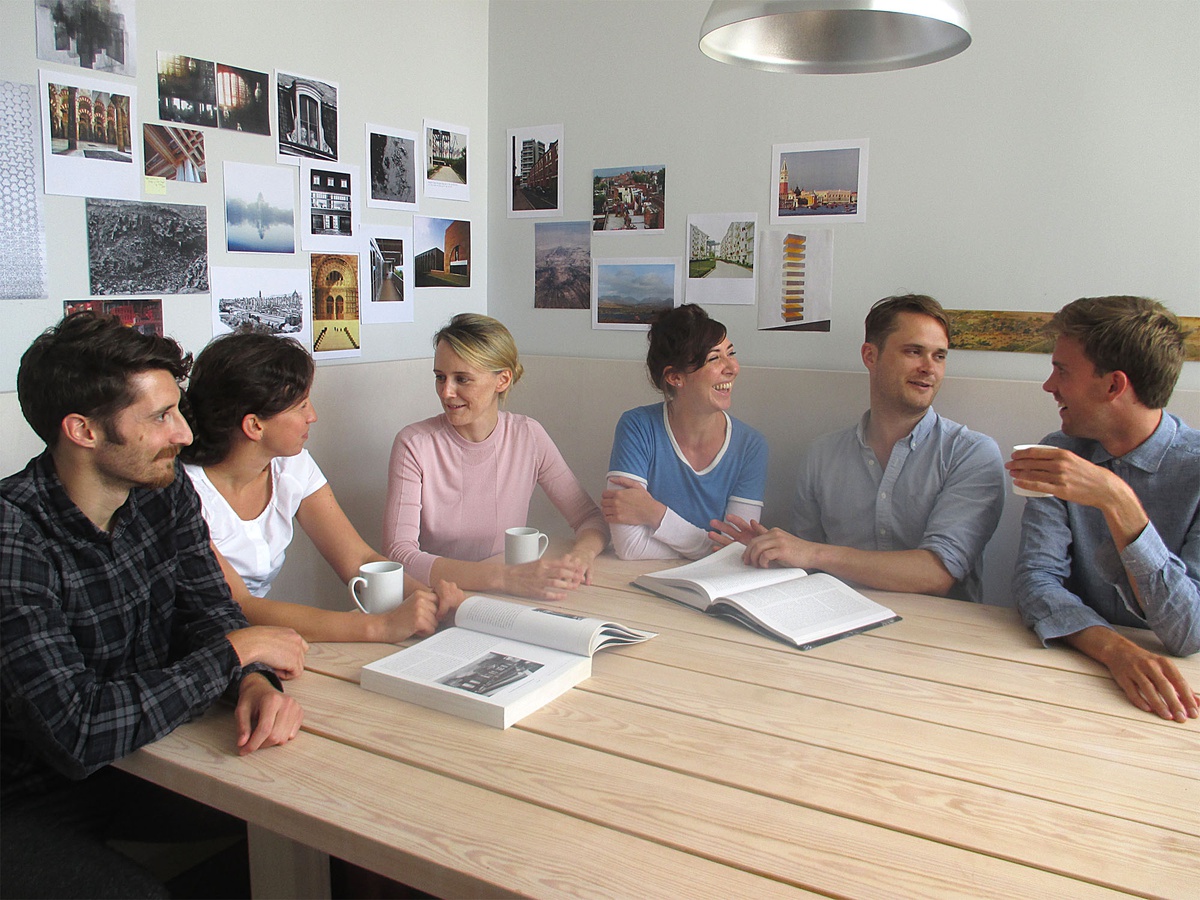
For this new model to succeed, we must completely awaken our imagination. Education, research and practice will be symbiotic and won’t be understood without each other. As a result, transverse readings and meanings will develop within our work. These will be found not only in the individual but also in the collective. In our office, inspired by Aby Warburg’s Mnemosyne Atlas, we will develop our own Atlas where images of our endlessly evolving inspirations and aspirations will be captured. Our Atlas will be a new ground from which meaning, space and relationships will grow. Our Atlas will enable us to read what has never been written[2].
[1] Georges Didi-Huberman (2010). Atlas. ¿Cómo llevar el mundo a cuestas?. Madrid: TF Editores/Museo Reina Sofía . 16-17.
[2] Georges Didi-Huberman (2010). Atlas. ¿Cómo llevar el mundo a cuestas?. Madrid: TF Editores/Museo Reina Sofía . 14.