Summer of Work Experience at NMLA
September 2024
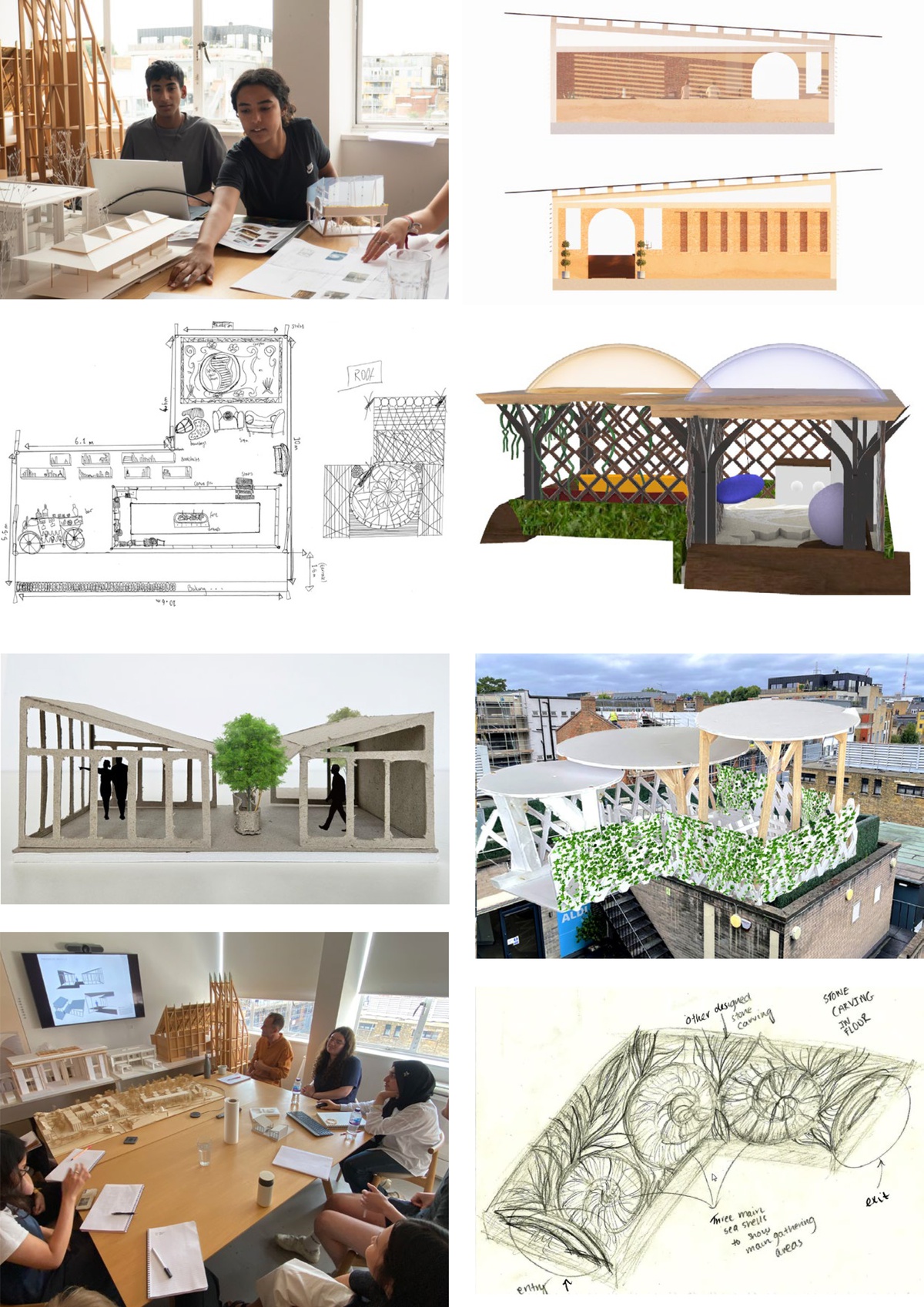
Over a 4-week period this summer, we were delighted to host eight work experience students from a range of London state schools and sixth-form colleges. Our programme aims to inspire and provide insight into architectural practice through a bespoke week-long project involving a brief, site survey, research and consultation, design, drawing, image and model making, and presentation. Attending in pairs (and mostly having never met before), all four sets of students choose to work together on design proposals. It was wonderful to see their lively exchange of ideas, evolving team work and complementary skillsets being developed. Members of staff volunteered in pairs to support the students with their design project but also held portfolio review sessions for those interested in applying for architecture degrees, and involved the students in office meetings and design reviews. At the end of each week, a larger group of staff gathered for the students’ presentations as an informal crit, celebrating the excellent work and relaying constructive feedback. We’d like to thank Manar and Zain, Katerina and Khaterah, Megan and Wasim, and Kacper and Ayushi, and wish them all well for their future studies.
Auckland Castle Wing Extension
May 2019
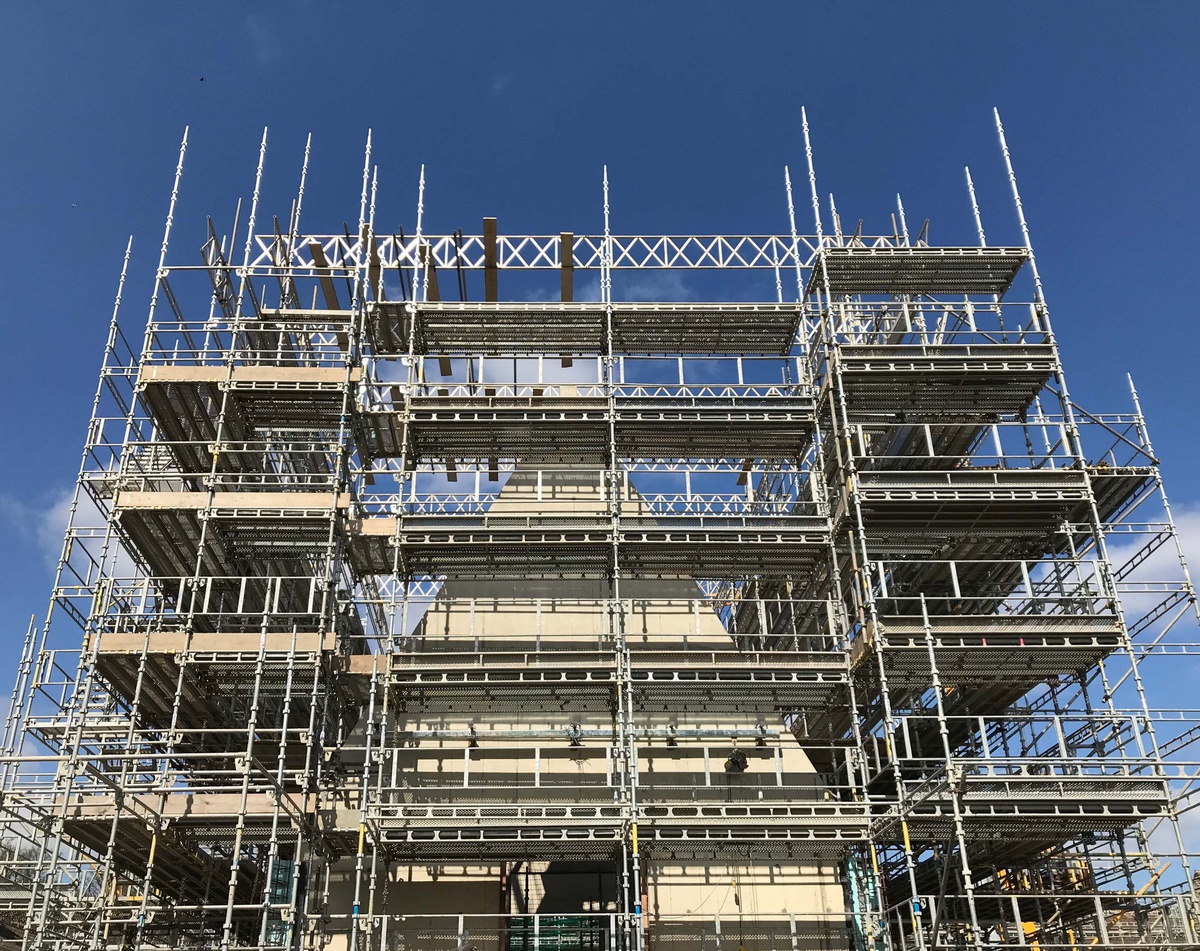
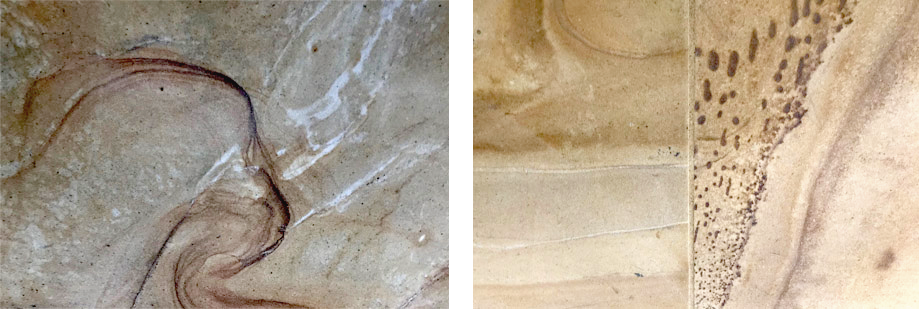
Following the completion of the Auckland Tower, the Faith Museum is our second project at Auckland Castle and is an extension to the Grade I listed Scotland Wing. Unlike its vertical sister, which wears its expressed timber structure on the outside, the Faith Museum is singular and monolithic in its appearance, forming a continuous horizontal stone edge to an enclosed courtyard. Cop Crag sandstone, local to the north-east of England, is the external treatment for the roof, walls and weatherings of the building. Far from being homogenous, the stone is alive with natural variation which ranges from delicate lacy swirls to something resembling animal markings.
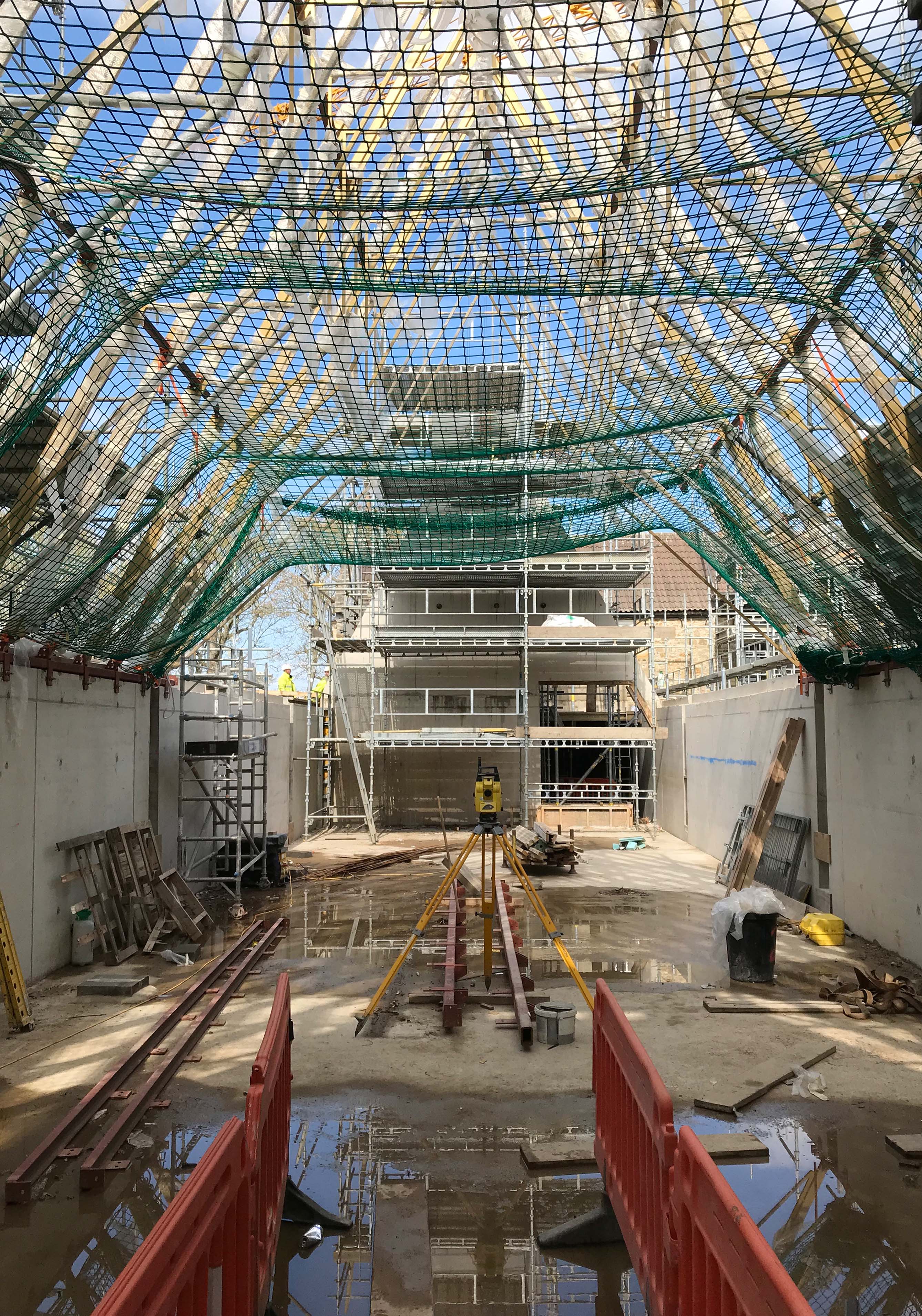
The principal internal space is a 9.5m tall gallery which follows the steeply pitching roof form, supported by a procession of closely-centred fine metal trusses. The Museum is largely inward-looking, borne of its intended purpose for contemplation and preservation of religious artefacts. This provides further enjoyable contrast and conversation between our two buildings in how they seem to view one another: the Tower’s expansive 360˚ views offering a full appreciation of the Faith Museum in its entirety as begins to take form, whilst the introspective Museum offers the only the slightest peek of its neighbour over the wall.