RIBA East Award Winner
May 2022
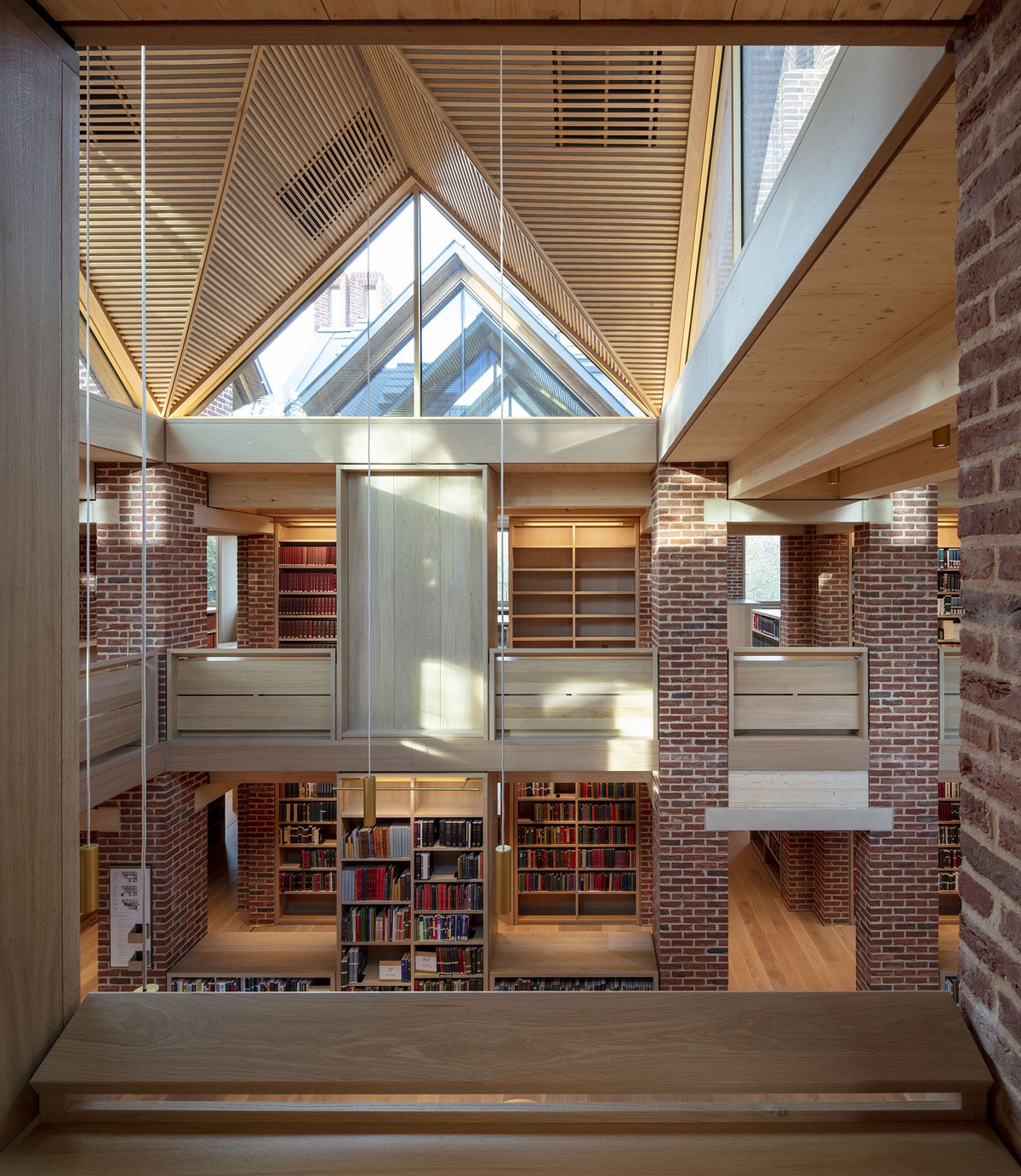
Magdalene College Library has been awarded a RIBA East Award. The New College Library for Magdalene College contains a study space and library, archive and picture gallery. Our scheme appears as an arrangement of simple brick volumes which echo the typical gabled architecture of the existing College. The main library is a suite of interconnecting rooms lined with bookcases, reading desks and galleries, arranged on a tartan grid between interconnecting passageways. Three main reading rooms organise the principal circulation route through the library from the three-storey entrance hall, to a double-height central reading room and up to a long single-height room overlooking the garden.
The RIBA judges commented "A brief to create a college library with a lifespan of 400 years – to replace a library gifted to Magdalene by Samuel Pepys 300 years previously – is no small task. Niall McLaughlin Architects have certainly risen to the challenge with this deft and inspiring temple to learning."
Frameless Architecture
August 2015
Our classification of the world is the result of a desire to impose order on the chaos we are born into. In nature we classify the species, in society we classify our relationships, and in architecture we classify the spaces we design and inhabit. In many cases, classification is a useful tool that allows us to root ourselves in time and space.
Classification can also be the enemy of imagination, suffocating our desire to wonder and discover new associations. It can limit the understanding of what surrounds us and disjoint elements that should not be separated. Framing perception can become a reductive force.
In his book Atlas: How to Carry the World on One’s Back, Didi Huberman uses ‘atlas’ in its broadest sense to mean a ‘collection of images’. Huberman explores two different ‘uses of reading’: a denotative sense in search of messages, and a connotative sense in search of montages. The dictionary is a predictable tool for the former, and the atlas is the ‘unexpected apparatus’ for the latter[1].
The atlas is frameless and endless. It surpasses boundaries and restrictions and is in a state of constant renewal. The atlas enables our imagination to trigger new associations, new relations. Although we may start with a search for the specific, we may then wander endlessly, unlimited by a defining frame.
Architectural education, architectural research and architectural practice have suffered for too long from being limited by a defining frame that has placed them in different dictionary entries. It is now time to rethink this model, which shapes our lives, our careers, and ultimately our contribution to society. If we are to replace the dictionary with the atlas, if we are to substitute the definitive meaning with the endless search for new relations, we will have a new model of architecture where education, research and practice are interwoven and intrinsic to one another.
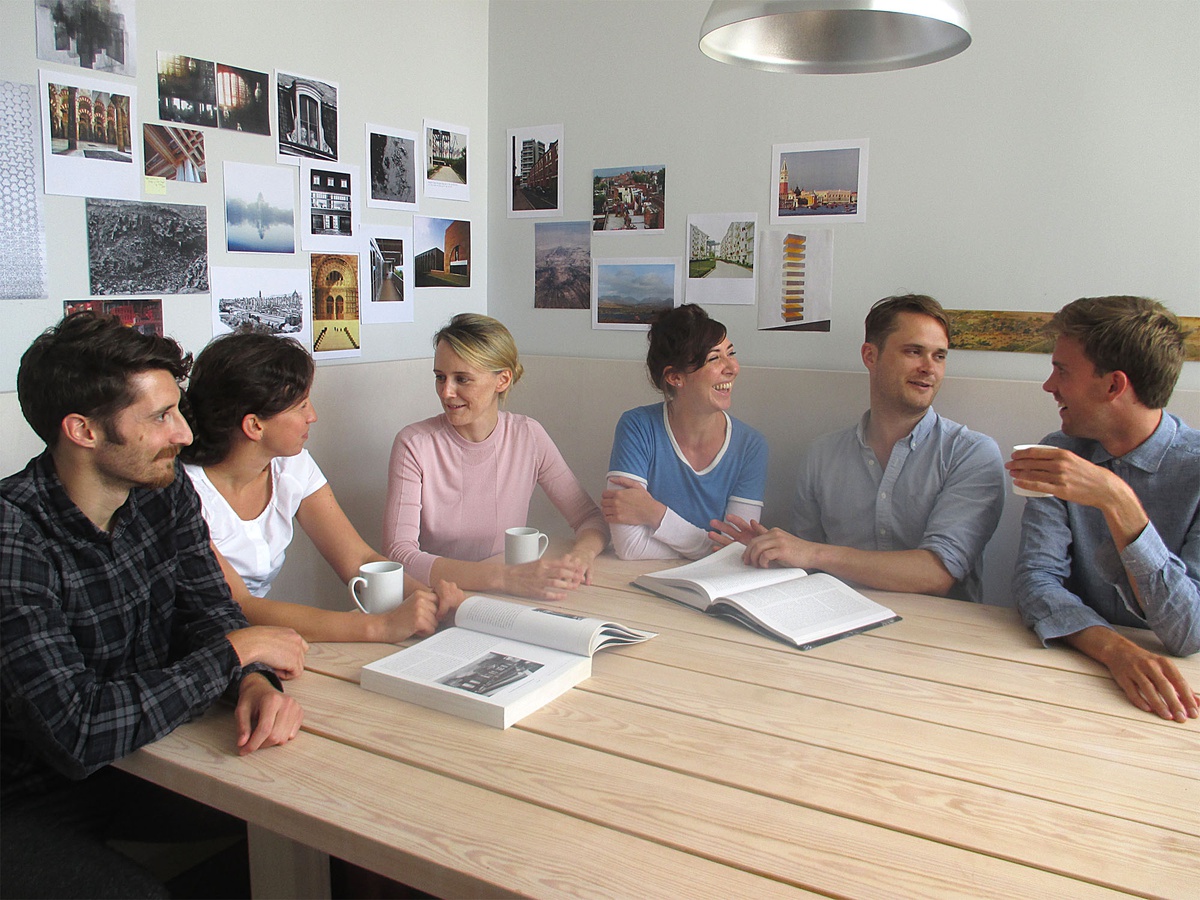
For this new model to succeed, we must completely awaken our imagination. Education, research and practice will be symbiotic and won’t be understood without each other. As a result, transverse readings and meanings will develop within our work. These will be found not only in the individual but also in the collective. In our office, inspired by Aby Warburg’s Mnemosyne Atlas, we will develop our own Atlas where images of our endlessly evolving inspirations and aspirations will be captured. Our Atlas will be a new ground from which meaning, space and relationships will grow. Our Atlas will enable us to read what has never been written[2].
[1] Georges Didi-Huberman (2010). Atlas. ¿Cómo llevar el mundo a cuestas?. Madrid: TF Editores/Museo Reina Sofía . 16-17.
[2] Georges Didi-Huberman (2010). Atlas. ¿Cómo llevar el mundo a cuestas?. Madrid: TF Editores/Museo Reina Sofía . 14.