Resolution to grant planning permission to University College Oxford passed
October 2020
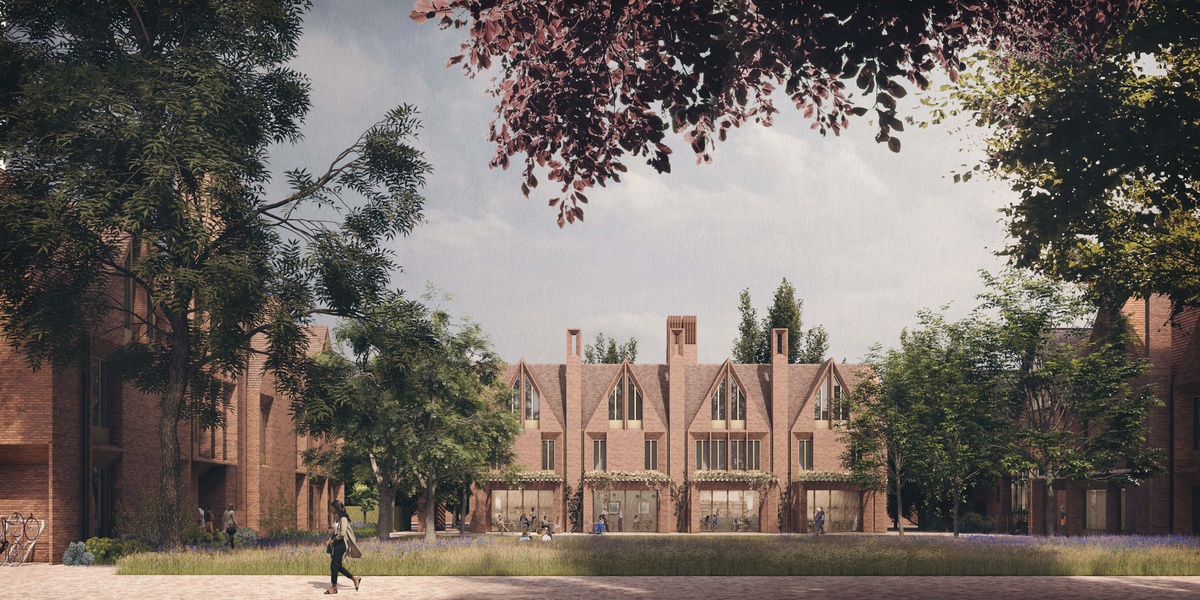
Oxford City Council has passed a resolution to grant planning permission to University College Oxford (‘Univ’) for a new collegiate development in the North Oxford Victorian Suburb Conservation Area (NOVSCA). The scheme is for 150 new student bedrooms and represents the largest addition to the College in over three centuries. Niall McLaughlin Architects and Kim Wilkie won the commission in 2018 following an architectural competition.
The development – Univ North – will complement Univ’s High Street site in the city centre, and will enrich the College’s existing satellite annexe in north Oxford. Designed as an extensive, landscape-led proposal, the development will provide accommodation and facilities to encourage and nurture a multi-generational community. The whole development site embraces an existing care home and proposes new accommodation for undergraduates, postgraduates and early career academics along with a children’s nursery. In addition, the site will house a student café, a gym, ancillary study rooms, and a multipurpose common space for College events to which it is hoped the local community will join.
The scheme has been designed to improve the setting of the existing buildings and specimen trees by removing unsympathetic extensions and planting. Existing and new buildings frame a series of richly planted open, south-facing gardens and courts that are connected by a principal east-west path. The architecture and massing of the new buildings varies across the site as they respond to the immediate context in differing Character Areas that include Victorian and Edwardian villas, and notable modern buildings by Sir Philip Dowson and Geoffrey Beard. Existing and new buildings frame a series of richly planted open, south-facing gardens and courts that are connected by a principal east-west path. The architecture and massing of the new buildings varies across the site as they respond to the immediate context in differing Character Areas that include Victorian and Edwardian villas, and notable modern buildings by Sir Philip Dowson and Geoffrey Beard.
Sir Ivor Crewe, Master of University College at the time, said: “We are delighted that the City Council has supported our proposals for Univ North. It is a very exciting project, which will enable the College to deepen our own accommodation provision and support for future generations of students and academics studying at Univ.”
Frameless Architecture
August 2015
Our classification of the world is the result of a desire to impose order on the chaos we are born into. In nature we classify the species, in society we classify our relationships, and in architecture we classify the spaces we design and inhabit. In many cases, classification is a useful tool that allows us to root ourselves in time and space.
Classification can also be the enemy of imagination, suffocating our desire to wonder and discover new associations. It can limit the understanding of what surrounds us and disjoint elements that should not be separated. Framing perception can become a reductive force.
In his book Atlas: How to Carry the World on One’s Back, Didi Huberman uses ‘atlas’ in its broadest sense to mean a ‘collection of images’. Huberman explores two different ‘uses of reading’: a denotative sense in search of messages, and a connotative sense in search of montages. The dictionary is a predictable tool for the former, and the atlas is the ‘unexpected apparatus’ for the latter[1].
The atlas is frameless and endless. It surpasses boundaries and restrictions and is in a state of constant renewal. The atlas enables our imagination to trigger new associations, new relations. Although we may start with a search for the specific, we may then wander endlessly, unlimited by a defining frame.
Architectural education, architectural research and architectural practice have suffered for too long from being limited by a defining frame that has placed them in different dictionary entries. It is now time to rethink this model, which shapes our lives, our careers, and ultimately our contribution to society. If we are to replace the dictionary with the atlas, if we are to substitute the definitive meaning with the endless search for new relations, we will have a new model of architecture where education, research and practice are interwoven and intrinsic to one another.
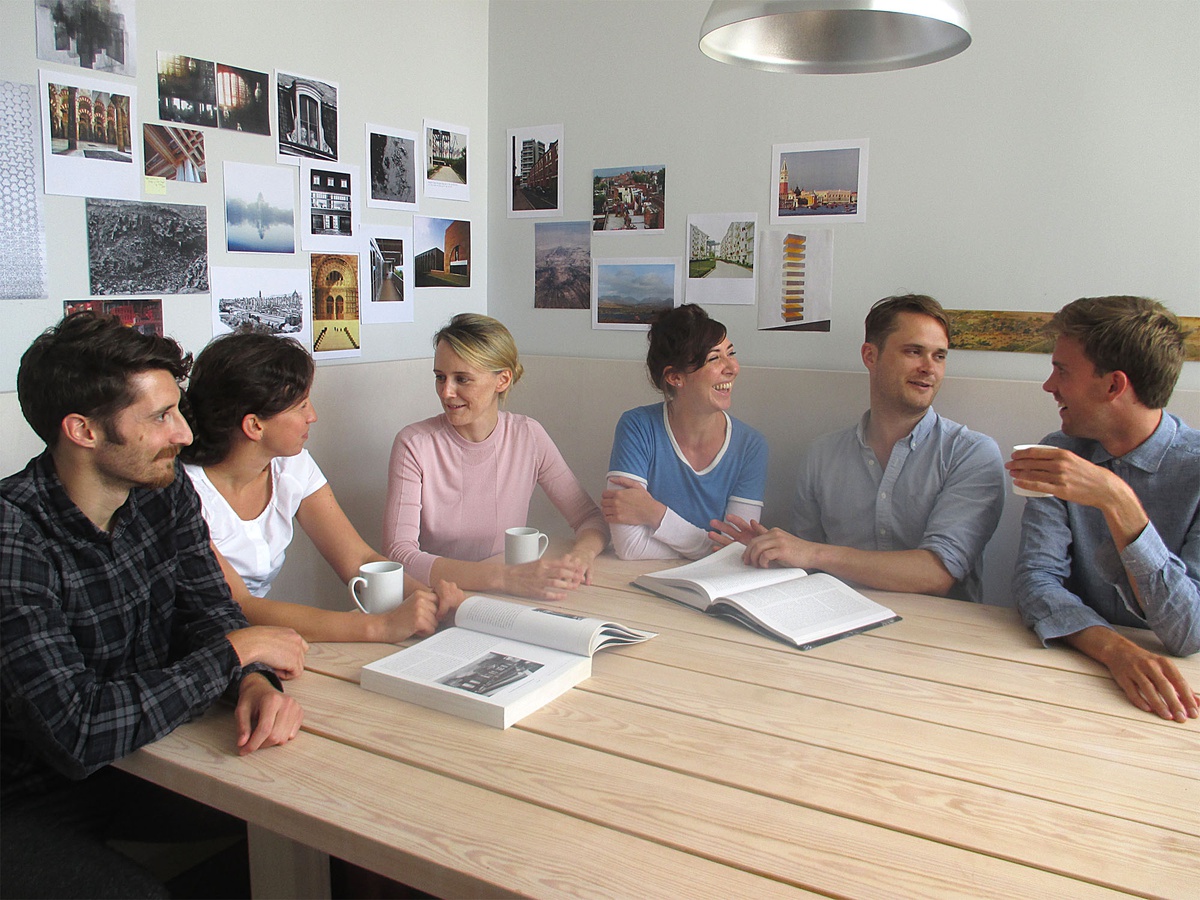
For this new model to succeed, we must completely awaken our imagination. Education, research and practice will be symbiotic and won’t be understood without each other. As a result, transverse readings and meanings will develop within our work. These will be found not only in the individual but also in the collective. In our office, inspired by Aby Warburg’s Mnemosyne Atlas, we will develop our own Atlas where images of our endlessly evolving inspirations and aspirations will be captured. Our Atlas will be a new ground from which meaning, space and relationships will grow. Our Atlas will enable us to read what has never been written[2].
[1] Georges Didi-Huberman (2010). Atlas. ¿Cómo llevar el mundo a cuestas?. Madrid: TF Editores/Museo Reina Sofía . 16-17.
[2] Georges Didi-Huberman (2010). Atlas. ¿Cómo llevar el mundo a cuestas?. Madrid: TF Editores/Museo Reina Sofía . 14.