Planning Granted for the New Academic Building, Bedford School
October 2022
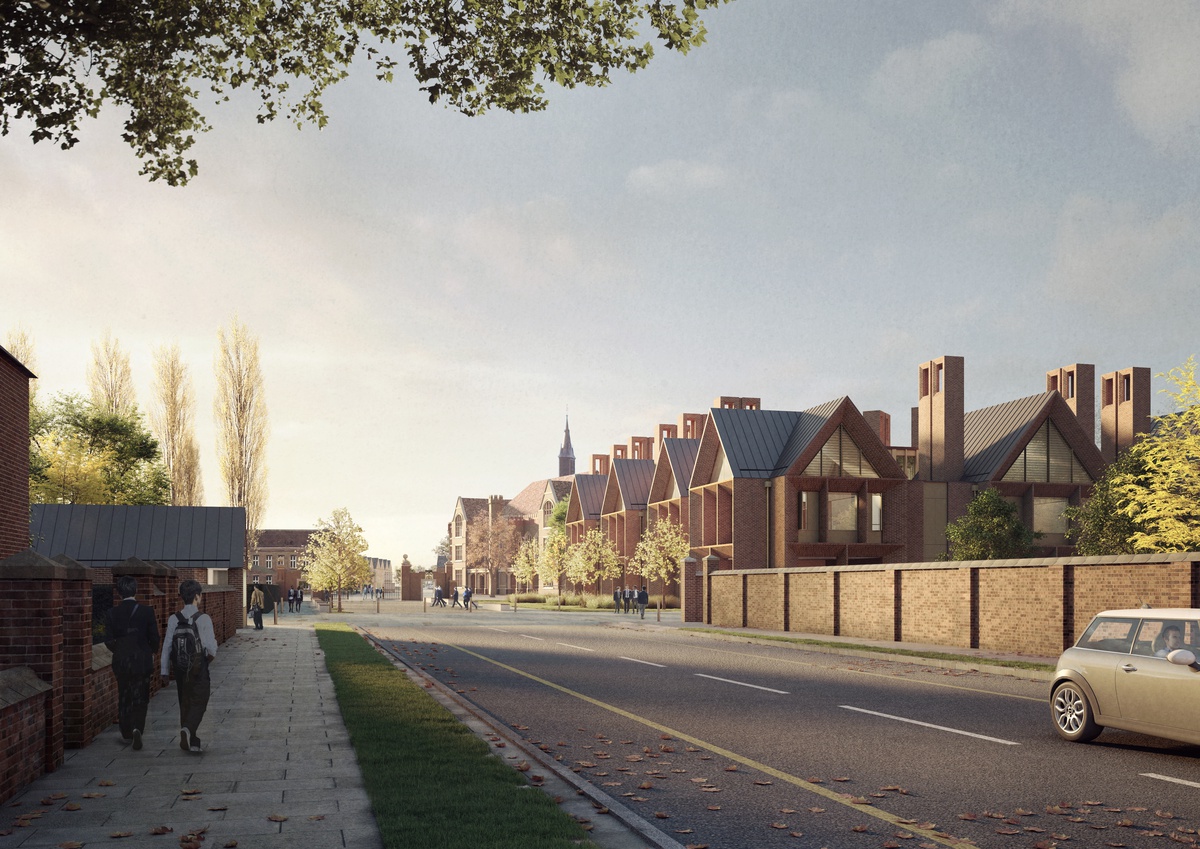
Arriving at the School via the De Parys Avenue Gates. Visualisation depicting the set-back frontage of the proposed New Academic Building, revealing the Main School Building.
We are delighted that Bedford School have been granted planning permission to build their New Academic Building. The new teaching facility, arranged across two-storeys will host 21 classrooms for Maths, Economics and Computer Science along with smaller rooms for group working and seminars. The building is composed as a chain of simple square teaching volumes arranged around a central breakout and circulation concourse. The facades borrow from the organisational principles and neo-gothic elements of the Main School Building - employing deep reveals, gabled roofs, chimneys and a lantern to create generous, bright and airy spaces for teaching and learning. In front of the new building, there will be a new pedestrianised square with delicate trees and lush low-level planting. To the rear, a series of small villa gardens will be combined to form a larger courtyard garden captured by the existing library and New Academic Building, hosting teaching terraces and verdant spaces for socialising and rest.
Image Credit: Pictureplane