Níall McLaughlin Receives 2026 Royal Gold Medal for Architecture
January 2026
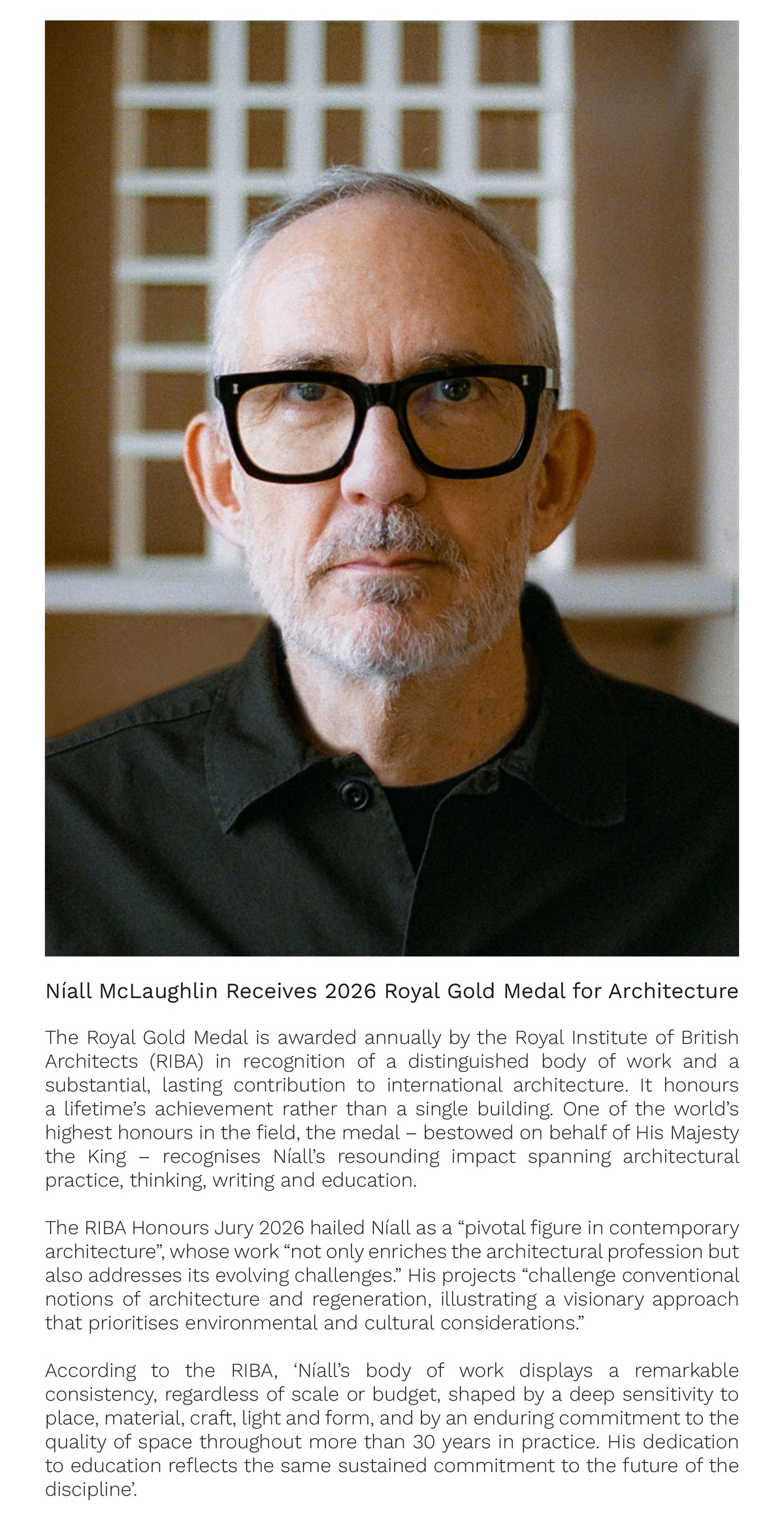
Established in 1990, Níall McLaughlin Architects is a London-based practice designing buildings for education, culture, faith, care, and housing, all grounded in an approach that sees architecture as learning, craft, and ritual that endures through human engagement and collective use.
Acknowledging the award Níall said ‘Architecture is a patient and ethical act, one that unfolds through care for people, places, and institutions, over time. To receive the Royal Gold Medal from a jury so deeply engaged in education, culture, and civic life is an honour that affirms these values. It encourages us to continue working with the same attentiveness, restraint, and responsibility that have shaped our practice from the beginning.’
RIBA President and Chair of the 2026 RIBA Honours Jury, Chris Williamson, said: “Always one to credit and uplift those around him, it is fitting that Níall is recognised for the resounding impact he has had on the profession. As an educator, he has been an outstanding role model for young architects, while his designs - eclectic in appearance and use - share a sense of care and grace that represent the very best of architecture.
Such sustained success has in no way diminished his humility. A humble visionary, his dedication to architecture as an art and professional practice has left an enduring mark on the discipline – one that will undoubtedly transcend trends and time.”
The 2026 RIBA Honours Jury was chaired by RIBA President Chris Williamson and comprised of 2025 Royal Gold Medal recipient Kazuyo Sejima of SANAA, Anna Liu of Tonkin Liu, Isabel Allen, Editor, Architecture Today and Victoria Farrow, Architect and Subject Lead in Architecture and the Built Environment at Leicester School of Architecture, De Montfort University.
Checking In
August 2017
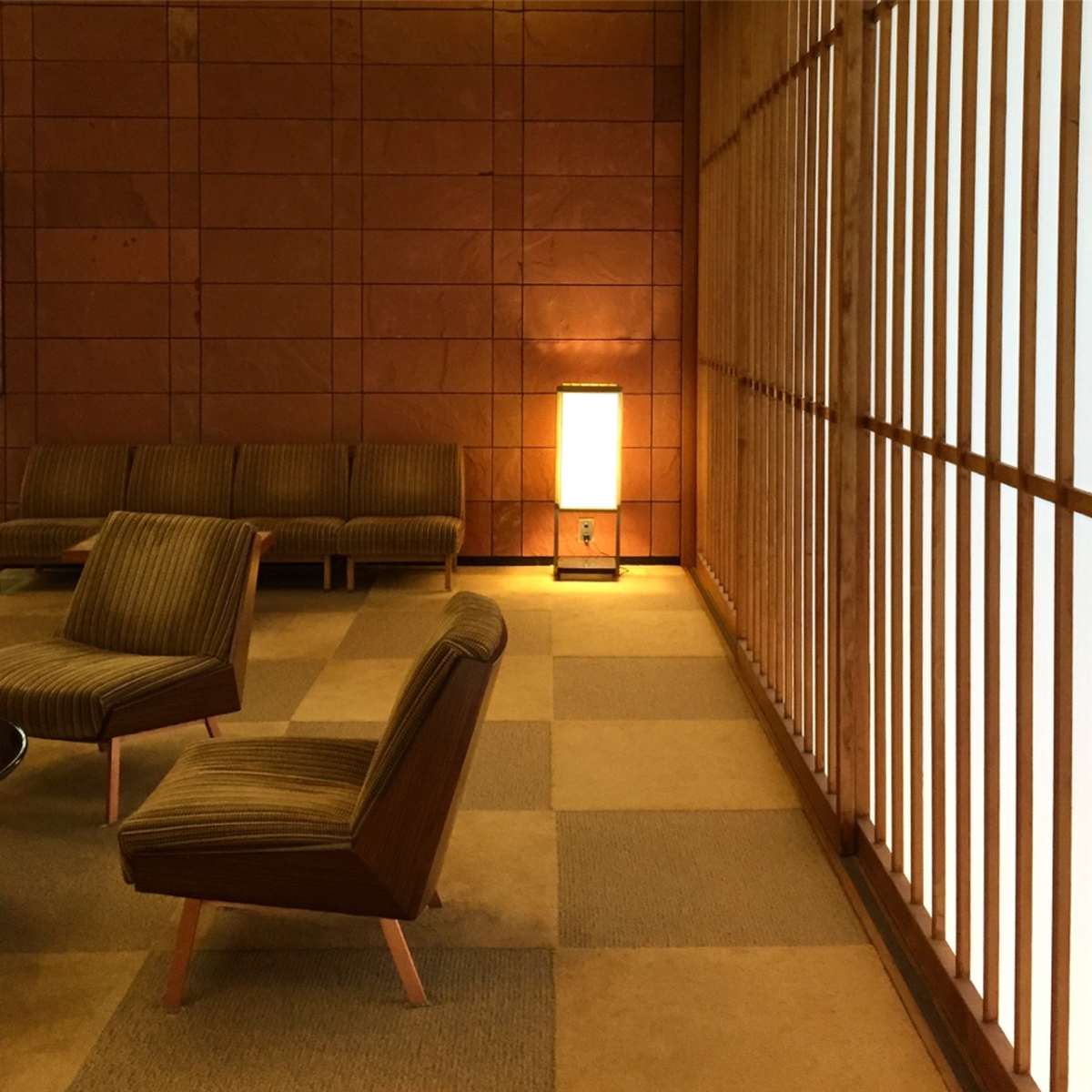
In July, following a recent opportunity to begin designing a concept store for fashion brand HiPanda, two of the NMLA team were lucky enough to travel to Tokyo for a site visit.
After leaving the airport, we begin driving through the narrow Tokyo streets as the dizzying cityscape towers upwards. Some things seem similar, but always more…vertical. Stepping out of the car the humid air quickly envelops, reminding us we are certainly not in Camden anymore. Pure overstimulation.
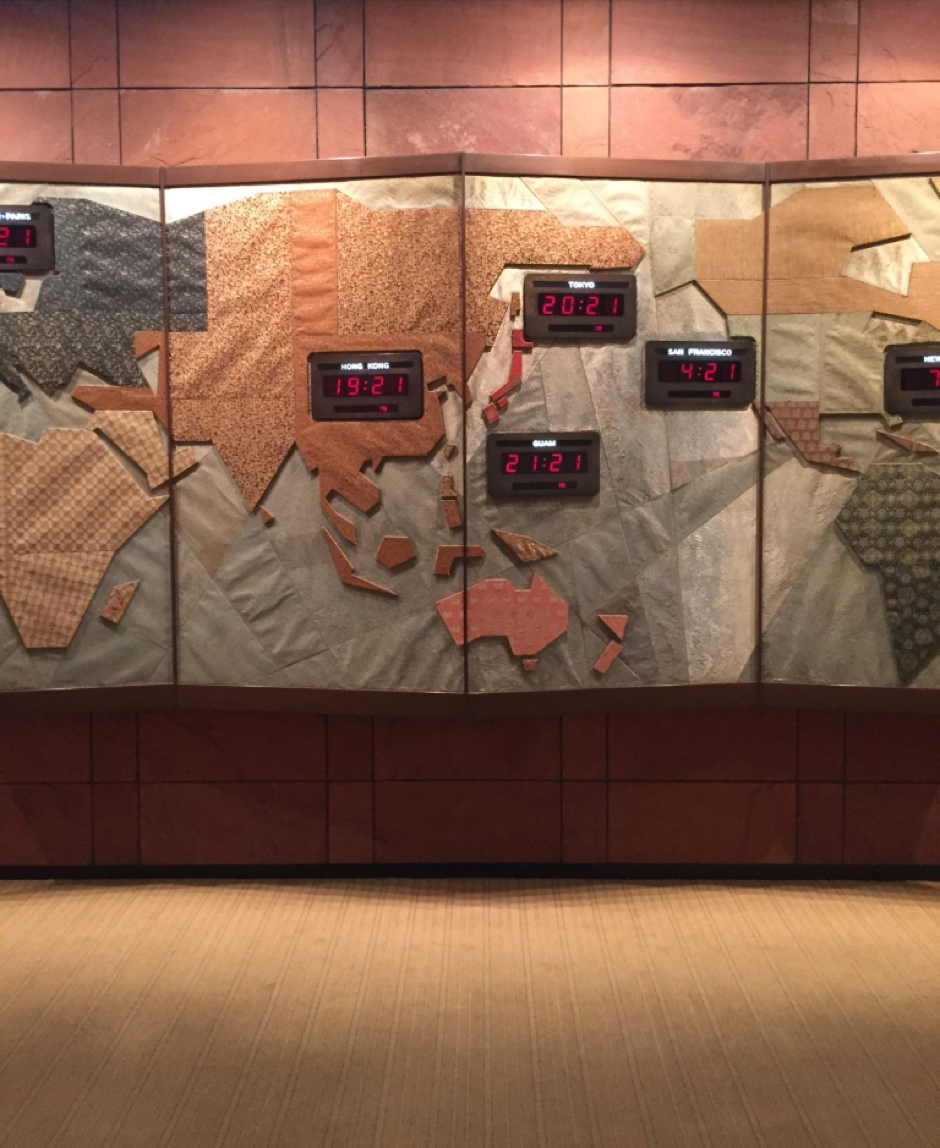
Stepping into Hotel Okura’s lobby the chaos of the megalopolis washes off and is replaced with Zen. Passing the immaculately stacked wall of umbrellas, the ‘bell captain’ gracefully bows with a slight smile seeing how large my eyes have become. The dimly lit mirage of greens and browns is so consistently assembled it seems to hum. While the giant world map hanging on the wall is supposed to remind us of the new time zone, it instead seems to catapult us back 5 decades, straight into a scene from Madmen. The hotel’s 60s style interior has remained completely untouched. And it’s marvellous. Even the impeccable uniforms of the staff match the muffled beige palette. While at each turn there are plethora patterns and textures, it still feels incredibly understated.
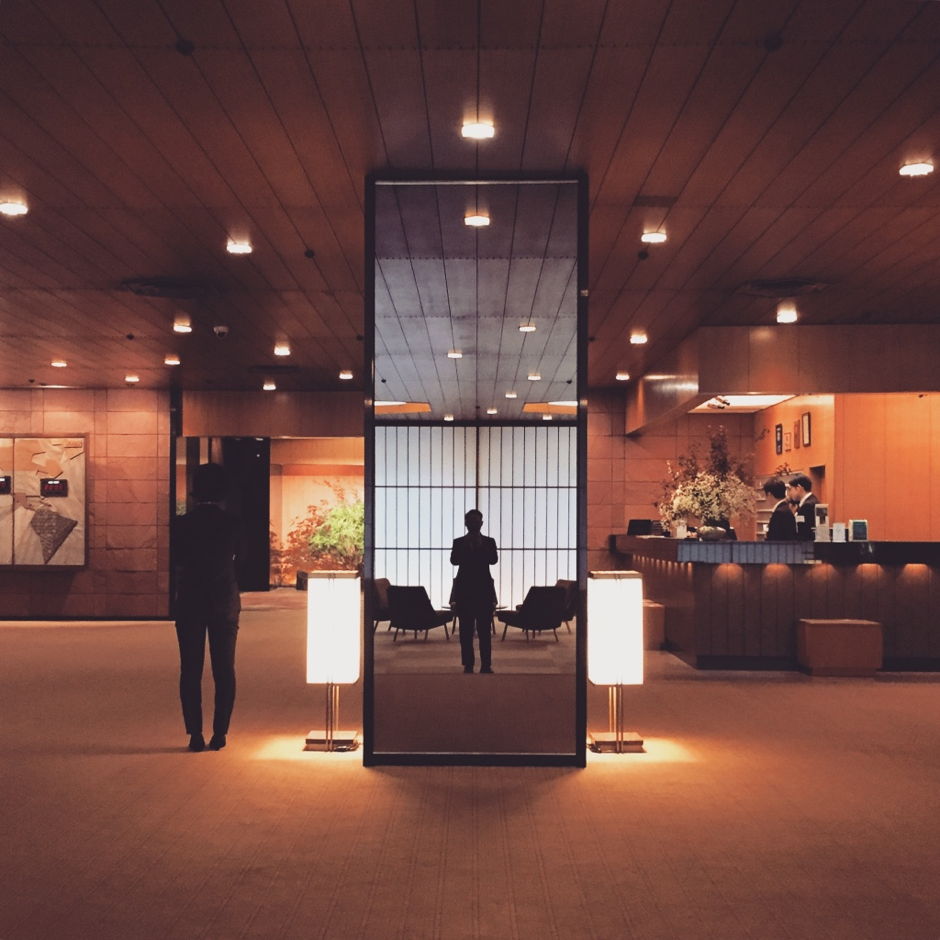
Designed by Yoshiro Taniguchi and Hideo Kosaka in 1962, the modern design clearly references more traditional Japanese forms and palettes. Unfortunately, the original Northern Wing of the hotel (which was arguably the most authentic and impressive of the two) was demolished in 2015 to make way for a much larger tower ahead of the 2020 Tokyo Olympics. Despite widespread outcry to try and save the adored modernist relic, the Northern Wing fell to the wrecking ball .
Yet so many aspects of the Southern Wing still hold endless charms and we were so lucky to experience them. Warm timber and brass detailing forms the backdrop to lighter elements like shoji screens and ornate wall hangings. The wide low spaces are punctuated by dangling hexagonal pendants and potplants. When standing in the space you can instantly see why writers have been inspired to set their scenes within these walls. James Bond spent a night or two here, while local writers seem equally enamoured, and Haruki Murakami sends Aomame here in his unnerving and fantastical 1Q84.
While Tokyo charges ahead into the future almost everywhere you look, it was so special to witness this elegant design, perfectly frozen in time.