Níall McLaughlin Receives 2026 Royal Gold Medal for Architecture
January 2026
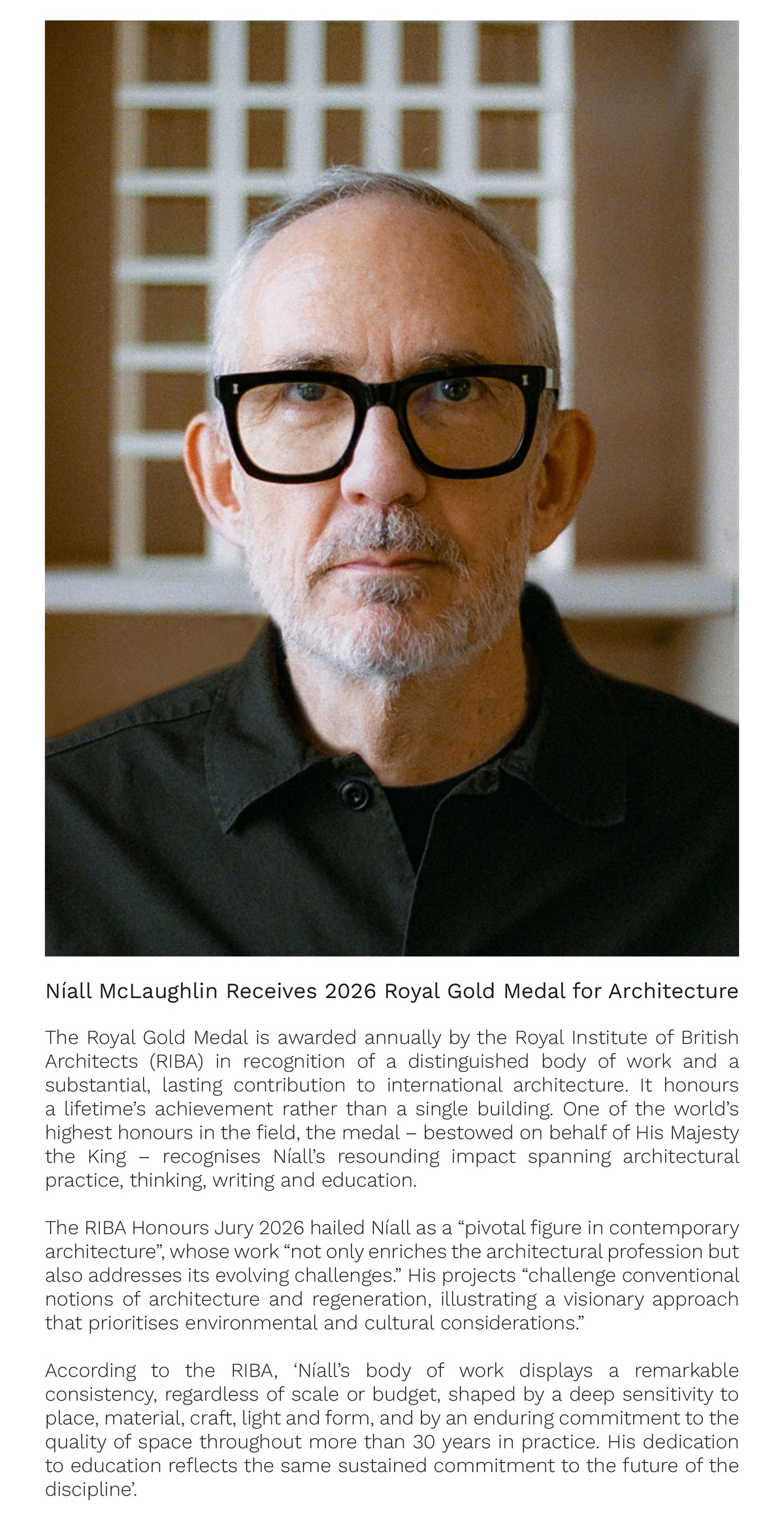
Established in 1990, Níall McLaughlin Architects is a London-based practice designing buildings for education, culture, faith, care, and housing, all grounded in an approach that sees architecture as learning, craft, and ritual that endures through human engagement and collective use.
Acknowledging the award Níall said ‘Architecture is a patient and ethical act, one that unfolds through care for people, places, and institutions, over time. To receive the Royal Gold Medal from a jury so deeply engaged in education, culture, and civic life is an honour that affirms these values. It encourages us to continue working with the same attentiveness, restraint, and responsibility that have shaped our practice from the beginning.’
RIBA President and Chair of the 2026 RIBA Honours Jury, Chris Williamson, said: “Always one to credit and uplift those around him, it is fitting that Níall is recognised for the resounding impact he has had on the profession. As an educator, he has been an outstanding role model for young architects, while his designs - eclectic in appearance and use - share a sense of care and grace that represent the very best of architecture.
Such sustained success has in no way diminished his humility. A humble visionary, his dedication to architecture as an art and professional practice has left an enduring mark on the discipline – one that will undoubtedly transcend trends and time.”
The 2026 RIBA Honours Jury was chaired by RIBA President Chris Williamson and comprised of 2025 Royal Gold Medal recipient Kazuyo Sejima of SANAA, Anna Liu of Tonkin Liu, Isabel Allen, Editor, Architecture Today and Victoria Farrow, Architect and Subject Lead in Architecture and the Built Environment at Leicester School of Architecture, De Montfort University.
Master’s Field Project
April 2019
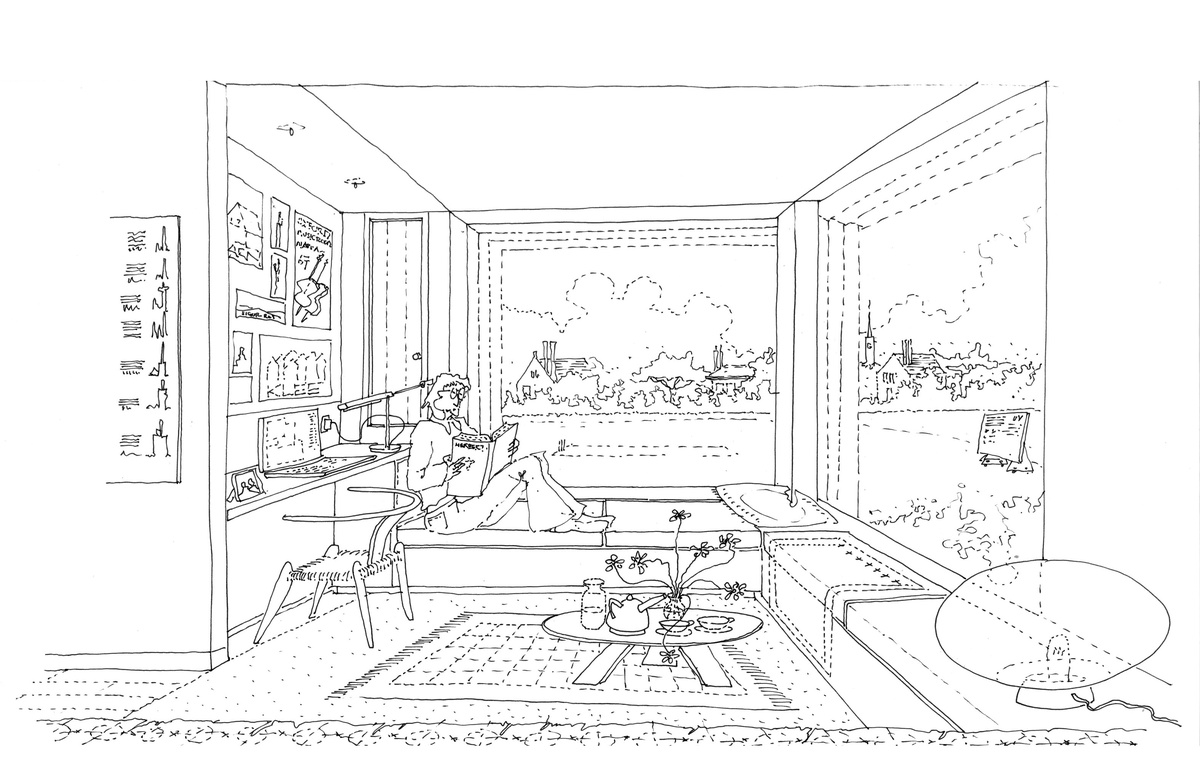
When reflecting on the work of our practice, the chamfered corner, is a recurring interest. This detail has developed over the years from our preoccupations with the Miesian re-entrant corner, the simplicity of a trabeated structure, and a desire to find ways of expressing a deep façade.
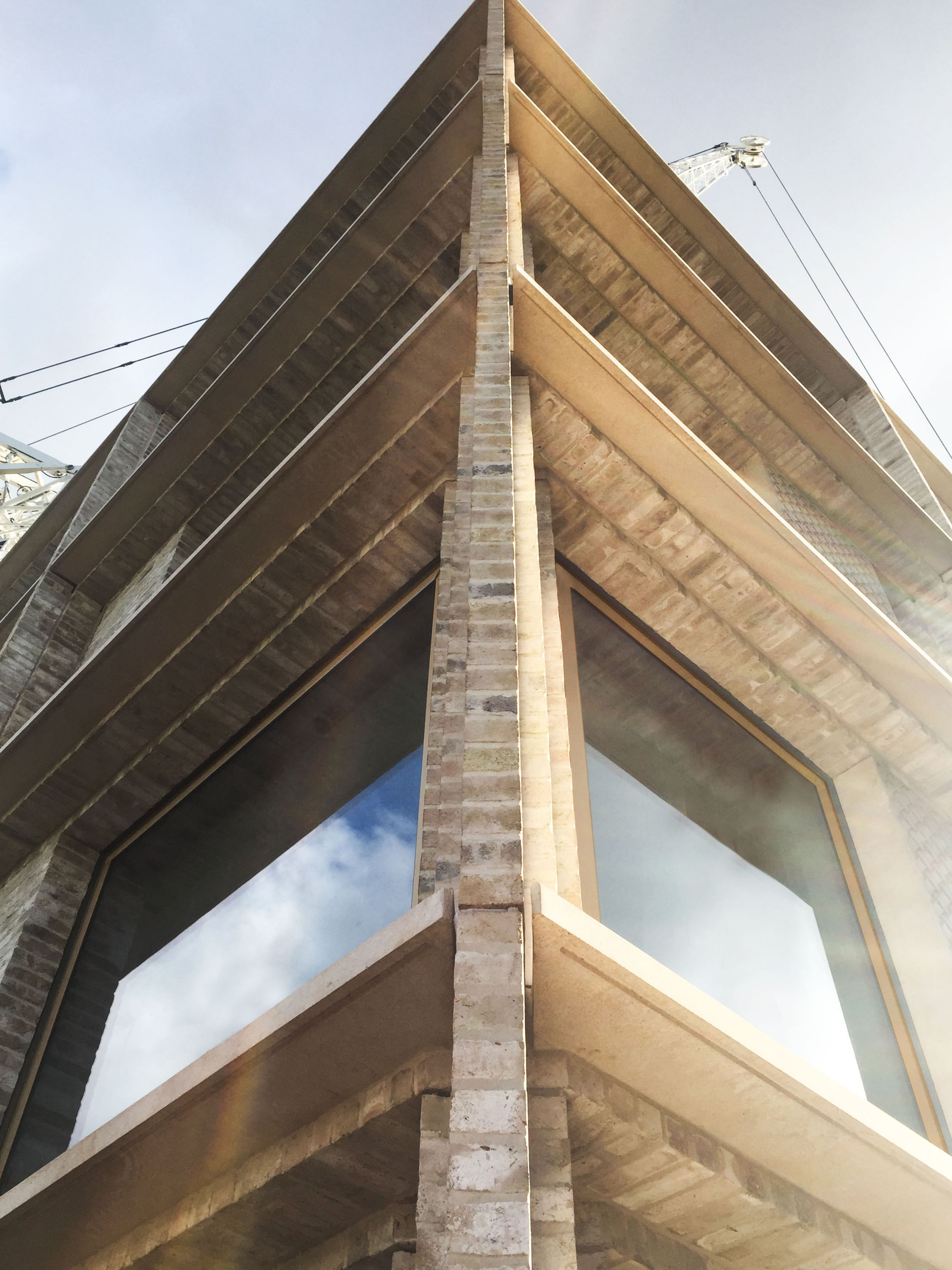
Simple chamfers in concrete and stone were employed in recent completed projects for Hampshire House and The Sultan Nazrin Shah Centre, Oxford. At the Master’s Field site in Oxford, currently under construction for Balliol College, a corbelled chamfered detail is incorporated in a load bearing façade. This project comprises eight student accommodation buildings and a pavilion arranged around a series of courtyards overlooking a cricket pitch.
A brick-clad chamfer at the corner between two windows is used throughout the accommodation buildings. This establishes a shifting perspectival relationship as one moves through the site, and gives all the buildings a common language. Corbelled brick and concrete lintels and mullions set up a trabeated structural rhythm which clearly defines each individual student bedroom and creates a delicate play of light and shadow across the façade. A series of finely detailed brick and concrete panels are layered within the depth of the window reveal, articulating a secondary rhythm which expresses the transition from solid to glazed elements.
The detail enables the depth and structure of the wall to be elegantly expressed, maximizing its presence when viewed externally and minimizing its presence internally. It also forms a generous threshold which provides privacy for students inside engrossed in their study. For moments of welcome distraction, the large picture windows frame uninterrupted views over the cricket pitch and across the campus.
The expression of a chamfered corner produces challenges in construction, particularly when expressed in precast concrete components clad in corbelled brickwork. When forming acute angles with orthogonal bricks, special consideration must be given to alignments and bonding. Interface details demand careful thought regarding sequencing and tolerances to achieve a symbiosis of structural performance with aesthetic ambition.
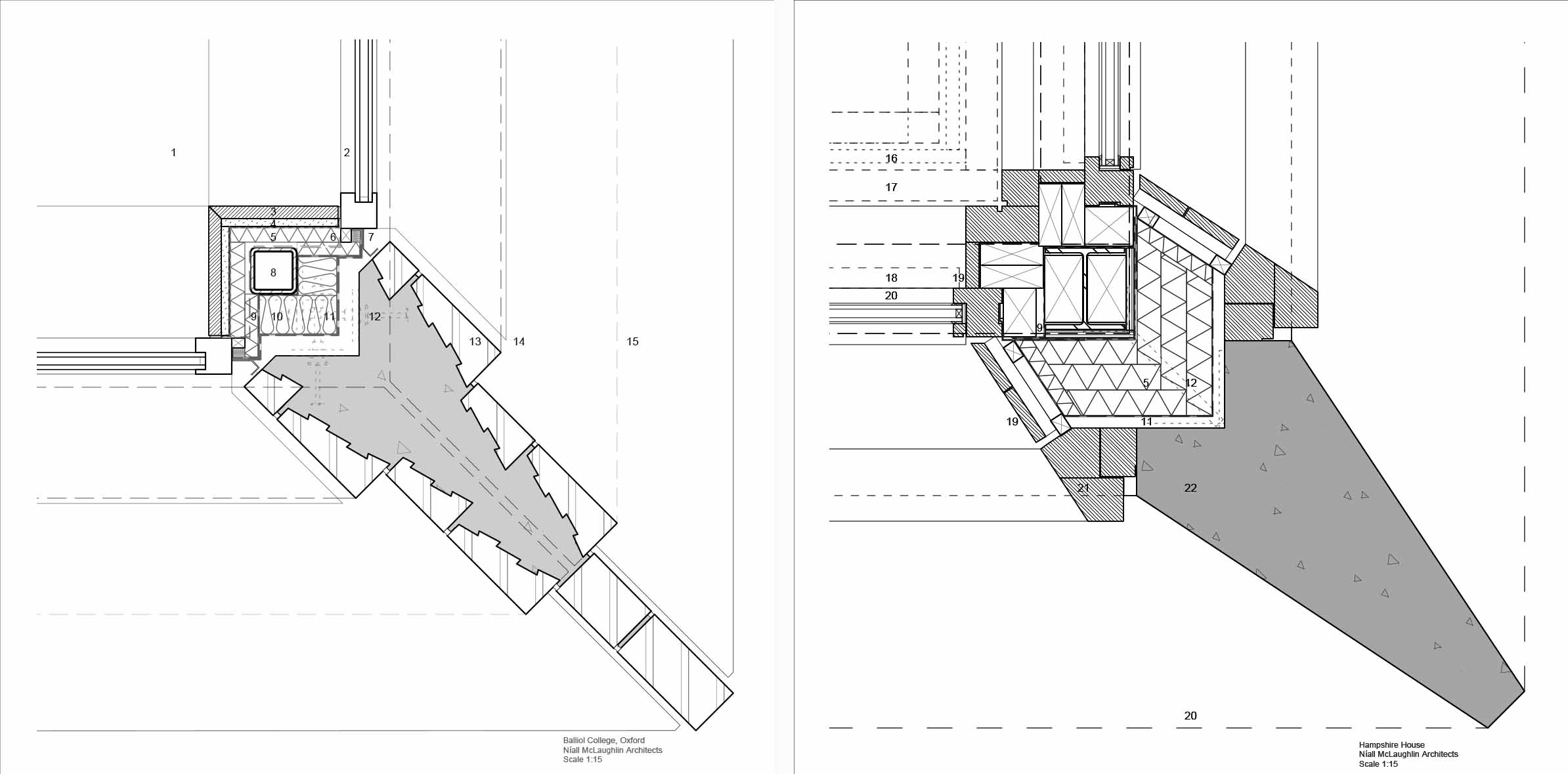
Externally, in the plan detail shown here, the apex of the chamfer is formed from stacked brick headers. This exposes three faces of each brick, limiting the choice of bricks, which are typically produced with only one finished stretcher face. Brick specials are required to form the chamfered corbel of the lintels, and grids are carefully set out to ensure alignment of vertical and horizontal corbelling. We looked to the meticulously detailed and crafted brickwork of Jensen-Klint’s masterpiece, Grundvig’s Church in Copenhagen, for expression of stepped vertical forms.
Internally, minimising the corner where the windows meet produces intricate challenges in the alignment of linings, blinds, reveals and fitted furniture. This complex resolution of constituent parts all work hard to achieve the aesthetic objective of the simple glazed chamfered corner.
Detail Key
1.Whitewashed ply bench 2. Aluminium window 3.Whitewashed plywood reveal 4.Plasterboard 5.Rigid insulation 6.Steel window fixing brackets 7.Metal pressing 8.Wind post 9.EPDM/ vapour barrier 10.Mineral wool insulation 11.Breather membrane 12.Steel restraint brackets 13.Corbelled brick faced precast concrete mullion 14.Flashing 15.Concrete cill 16.Concealed curtain track 17.Oak joist over 18.Concealed roller blind 19.Timber panels 20.Timber framed window 21.Prelaminated timber frame 22.Precast concrete mullion 23.Precast concrete coping over