Níall McLaughlin Architects Names New Directors
November 2025
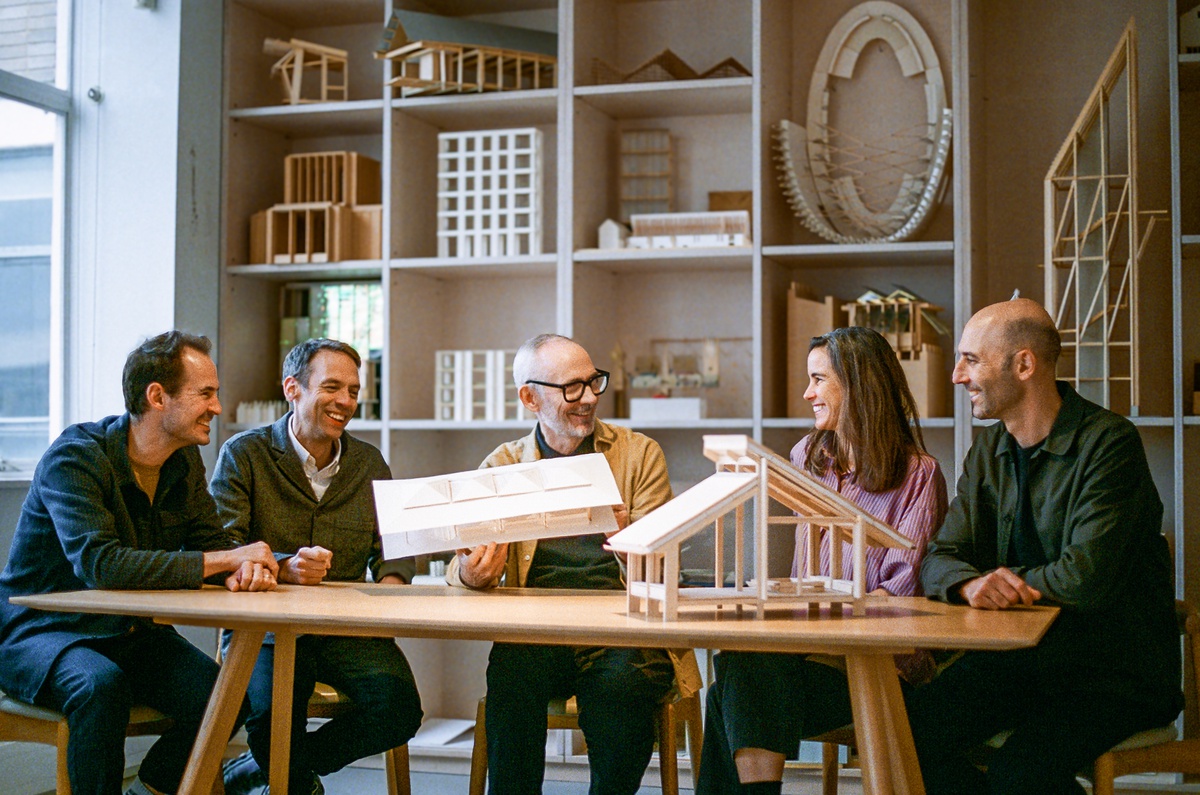
Níall McLaughlin Architects is excited to announce significant changes to its leadership, with four long-standing Associates being promoted to Directors. With a combined seven decades of experience at the practice between them, Anne Schroell, Tim Allen-Booth, Tilo Guenther and Tom McGlynn will shape the future of Níall McLaughlin Architects. This promotion rewards their commitment and contribution to the practice, recognising their leadership, work on key projects, business development and office wide initiatives. The new Directors will work closely with founding Principal Níall McLaughlin to build on the practice’s reputation for design excellence and promote a model of practice that is equitable, diverse and inclusive, and sustainable.
Tom McGlynn joined the practice in 2014 and was the Project Associate on The International Rugby Experience in Limerick voted as Ireland’s favourite building in 2023, and West Court Jesus College in Cambridge winning an RIBA Project Architect of the Year Award in 2018.
Tim Allen-Booth joined the practice in 2006 and was the Project Associate on The Bishop Edward King Chapel in Oxfordshire which was RIBA Stirling Prize Shortlisted in 2013, and The New Library Magdalene College in Cambridge winning the RIBA Stirling Prize in 2022.
Anne Schroell joined the practice in 2006 and was the Project Associate on the Faith Museum in Bishop Auckland which won the RIBA North East Building of the Year in 2024 and Grand Prize Winner of the Building Beauty Awards in 2024, and is currently the Project Associate on the Maggie’s Centre in Cambridge.
Tilo Guenther joined the practice in 2006 and was Project Associate on Darbishire Place in Whitechapel, which was RIBA Stirling Prize Shortlisted in 2015, and Saltmarsh House, which was Shortlisted for House of the Year in 2023.
Frameless Architecture
August 2015
Our classification of the world is the result of a desire to impose order on the chaos we are born into. In nature we classify the species, in society we classify our relationships, and in architecture we classify the spaces we design and inhabit. In many cases, classification is a useful tool that allows us to root ourselves in time and space.
Classification can also be the enemy of imagination, suffocating our desire to wonder and discover new associations. It can limit the understanding of what surrounds us and disjoint elements that should not be separated. Framing perception can become a reductive force.
In his book Atlas: How to Carry the World on One’s Back, Didi Huberman uses ‘atlas’ in its broadest sense to mean a ‘collection of images’. Huberman explores two different ‘uses of reading’: a denotative sense in search of messages, and a connotative sense in search of montages. The dictionary is a predictable tool for the former, and the atlas is the ‘unexpected apparatus’ for the latter[1].
The atlas is frameless and endless. It surpasses boundaries and restrictions and is in a state of constant renewal. The atlas enables our imagination to trigger new associations, new relations. Although we may start with a search for the specific, we may then wander endlessly, unlimited by a defining frame.
Architectural education, architectural research and architectural practice have suffered for too long from being limited by a defining frame that has placed them in different dictionary entries. It is now time to rethink this model, which shapes our lives, our careers, and ultimately our contribution to society. If we are to replace the dictionary with the atlas, if we are to substitute the definitive meaning with the endless search for new relations, we will have a new model of architecture where education, research and practice are interwoven and intrinsic to one another.
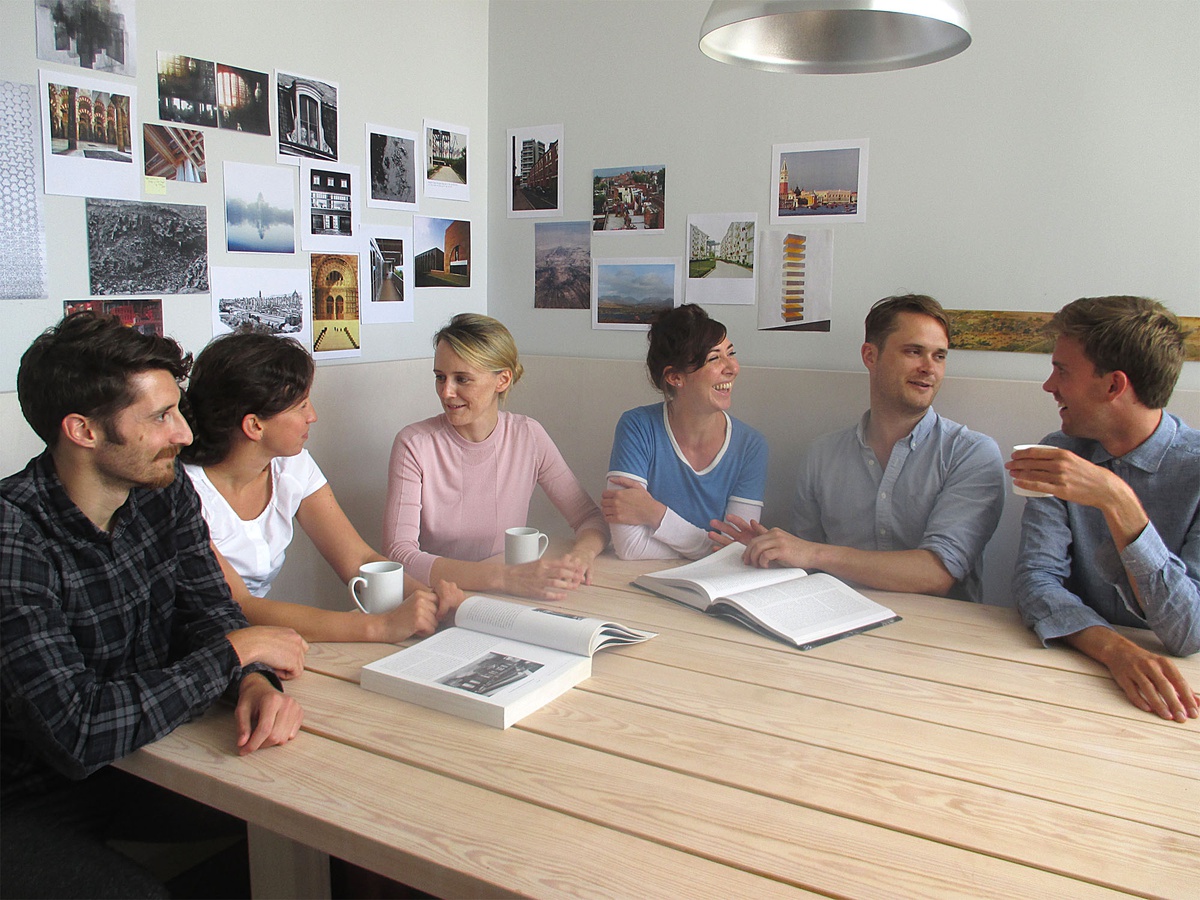
For this new model to succeed, we must completely awaken our imagination. Education, research and practice will be symbiotic and won’t be understood without each other. As a result, transverse readings and meanings will develop within our work. These will be found not only in the individual but also in the collective. In our office, inspired by Aby Warburg’s Mnemosyne Atlas, we will develop our own Atlas where images of our endlessly evolving inspirations and aspirations will be captured. Our Atlas will be a new ground from which meaning, space and relationships will grow. Our Atlas will enable us to read what has never been written[2].
[1] Georges Didi-Huberman (2010). Atlas. ¿Cómo llevar el mundo a cuestas?. Madrid: TF Editores/Museo Reina Sofía . 16-17.
[2] Georges Didi-Huberman (2010). Atlas. ¿Cómo llevar el mundo a cuestas?. Madrid: TF Editores/Museo Reina Sofía . 14.