Catherine Hughes Building Planning Approval
May 2017
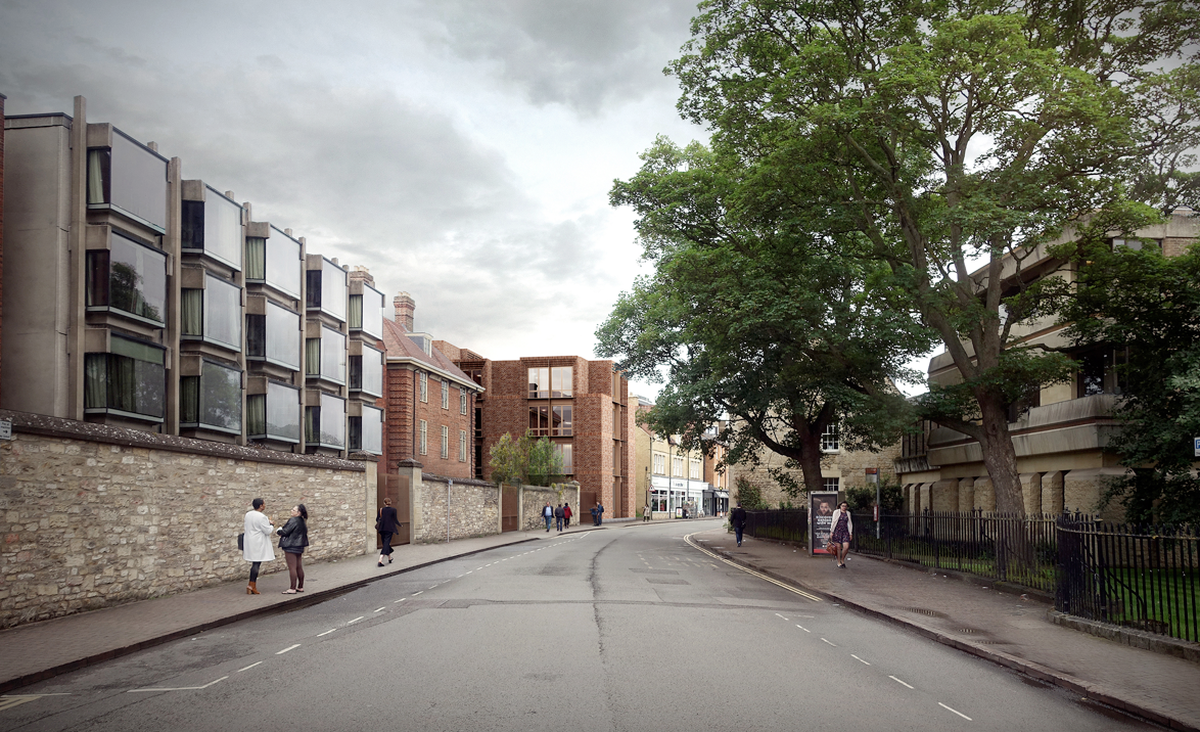
Our new student accommodation scheme for Somerville College, has been awarded planning approval unanimously by Oxford City Council. The project, known as the Catherine Hughes Building, will provide 68 bedrooms, allowing the College to accommodate all their undergraduates on site. This is our third building for Somerville College, further to our work on the ROQ student housing and the extension to the Philip Dowson designed Wolfson building.
The new building has a frontage on to Walton Street, with a Graduate Reading Room at ground floor level. The use of red brick will reflect the neighbouring buildings, with articulated brickwork elements around generous windows to provide a rhythm to the façade. Framed setbacks at third floor level allow the new building to align with key levels on the adjacent Penrose Building and to provide variety to the roof line. Internally, bedrooms are arranged in to clusters with kitchens and circulation spaces utilising direct and borrowed natural light and forming focal points for social activity.
Enabling works, involving the demolition of existing buildings, are due to commence in the next few months, with the main construction expected to start on site at the beginning of 2018.