Camden Goods Yard
December 2017
Camden Council granted planning permission to Camden Goods Yard at the end of November, voting unanimously in favour of the scheme. The extensive development reinvents an existing Morrisons supermarket and car park on Chalk Farm Road and in close proximity to the Roundhouse and Camden Locks. The project will deliver 573 new homes of mixed tenure, including nearly 40% affordable homes.
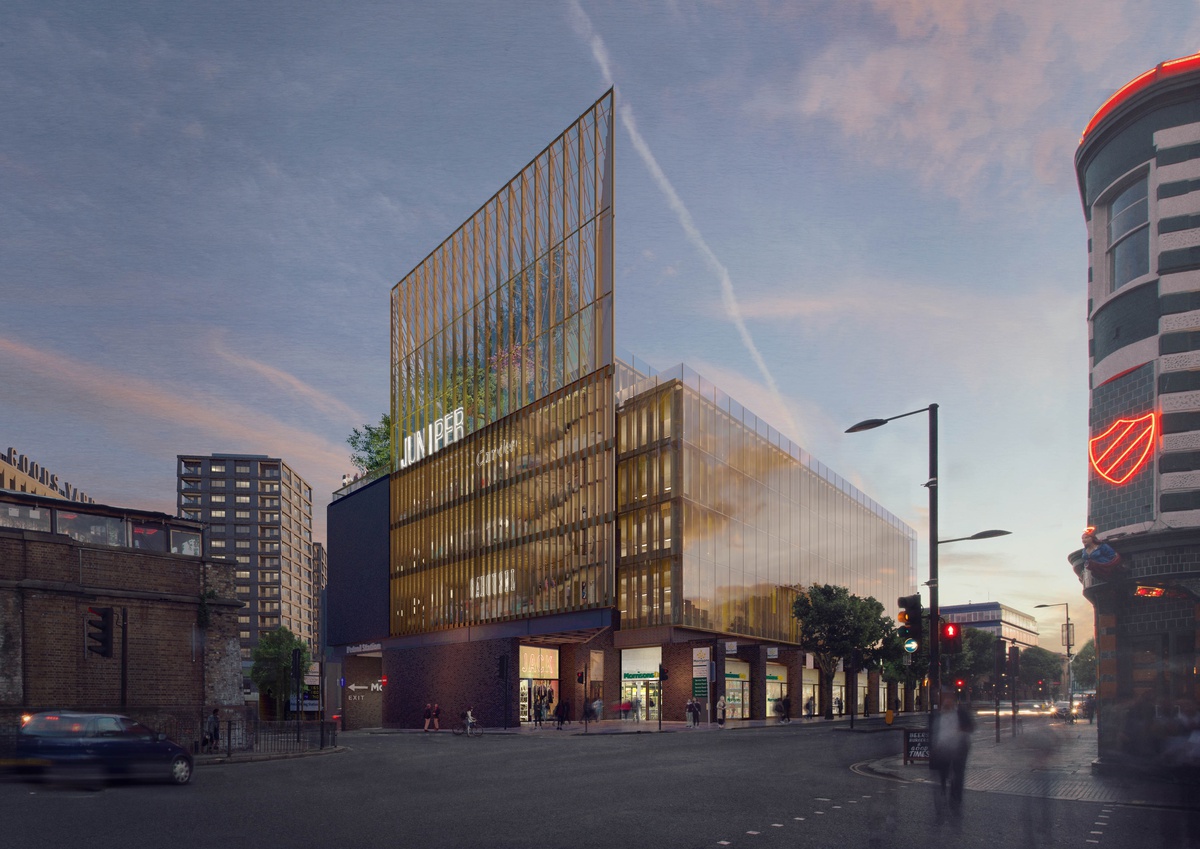
Niall McLaughlin Architects designed the mixed-use building marking the main point of access to the Camden Goods Yard site off Chalk Farm Road. It incorporates an existing petrol filling station into a mixed-use building that accommodates workspace alongside retail, a cafe, restaurant and winter garden.
The shop units are placed between heavy brick piers with riveted steel beams above, referencing the language of the ‘Great Wall of Camden’ that once stood in its place and the historic industrial structures nearby. At the corner, the building is a celebration of public activity, enlivened by the inhabitants of its cafes and restaurants, and a winter garden at the top level. The adjacent office accommodation has a vitreous and delicate outer facade with a layered and dynamic inner skin offering depth, texture and changing transparency.
The project is a collaboration with Allies and Morrison, who are the overall masterplan architect and, together with Piercy & Company, designers of the individual buildings.