Building Stories - 2022 RIBA
September 2022
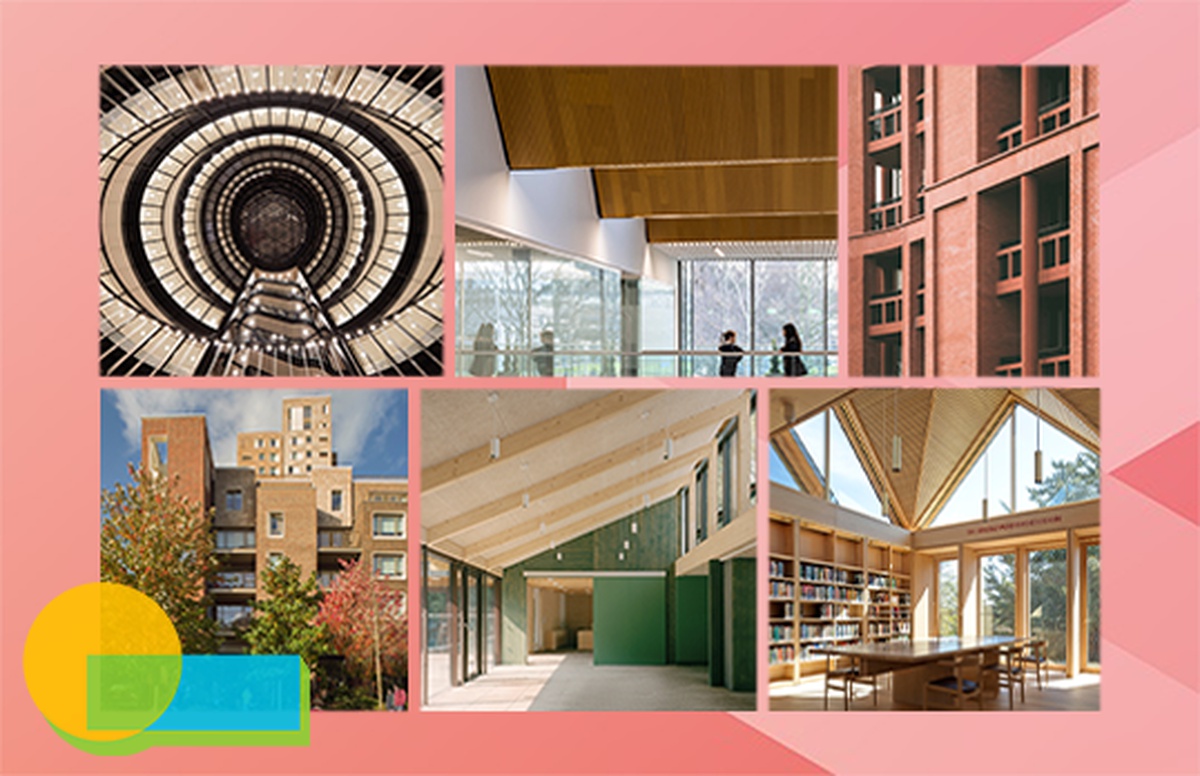
On the 21st September at London's RIBA and the 4th October at the Everyman Cinema in Leeds, the architects shortlisted for the 2022 RIBA Stirling Prize will reveal the stories behind their buildings, what inspires them, and what it would mean to win the UK’s most prestigious architecture prize.
The six shortlisted projects are:
- 100 Liverpool Street, Hopkins Architects
- Forth Valley College – Falkirk Campus, Reiach and Hall Architects
- Hackney New Primary School and 333 Kingsland Road, Henley Halebrown
- Orchard Gardens, Elephant Park, Panter Hudspith Architects
- Sands End Arts and Community Centre, Mæ Architects
- The New Library, Magdalene College, Niall McLaughlin Architects
The architects behind the six shortlisted buildings will give brief presentations, followed by a panel discussion and a live Q&A with the audience. Talking on behalf of our pratice to present the New Library, Magdalene College will be Claire McMenamin and Tim Allen-Booth. You can watch the RIBA London event here.
Frameless Architecture
August 2015
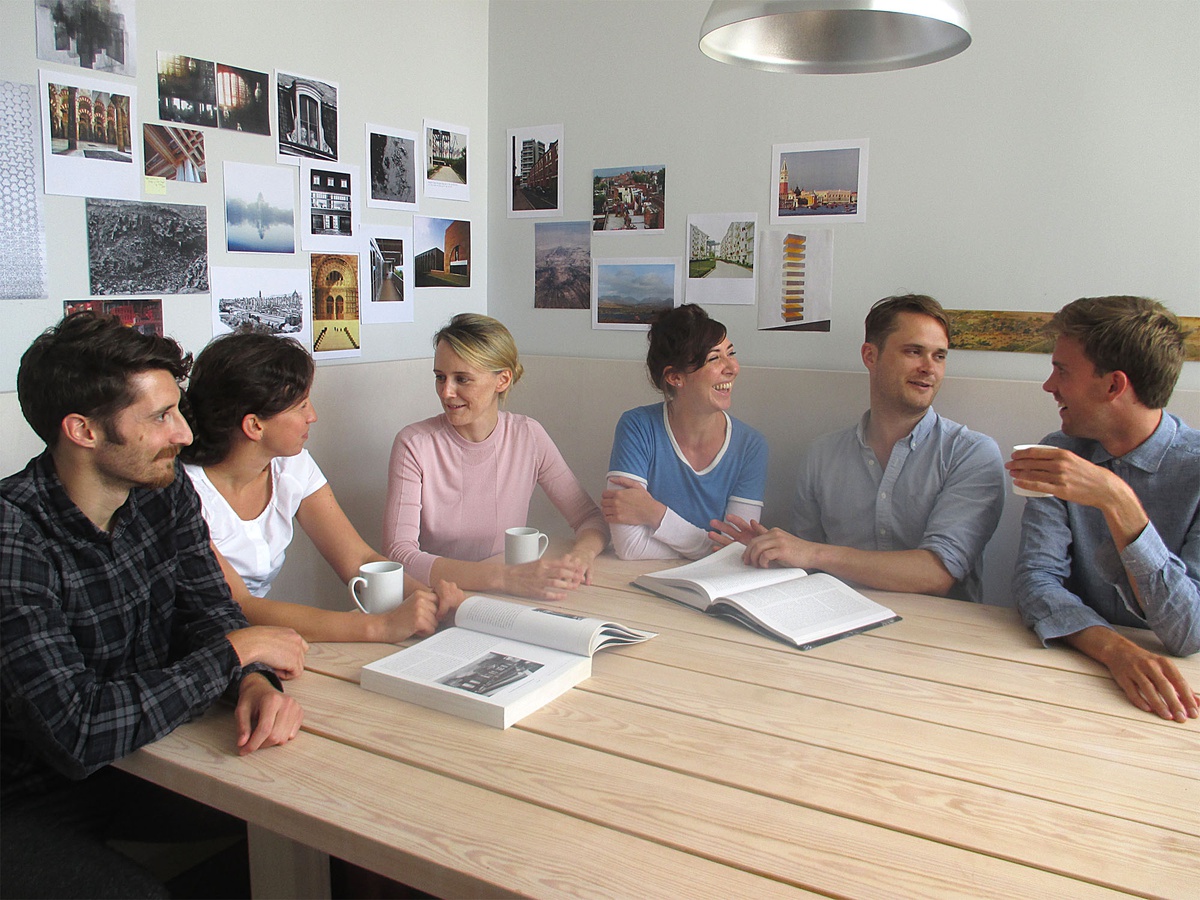
Our classification of the world is the result of a desire to impose order on the chaos we are born into. In nature we classify the species, in society we classify our relationships, and in architecture we classify the spaces we design and inhabit. In many cases, classification is a useful tool that allows us to root ourselves in time and space.
Classification can also be the enemy of imagination, suffocating our desire to wonder and discover new associations. It can limit the understanding of what surrounds us and disjoint elements that should not be separated. Framing perception can become a reductive force.
In his book Atlas: How to Carry the World on One’s Back, Didi Huberman uses ‘atlas’ in its broadest sense to mean a ‘collection of images’. Huberman explores two different ‘uses of reading’: a denotative sense in search of messages, and a connotative sense in search of montages. The dictionary is a predictable tool for the former, and the atlas is the ‘unexpected apparatus’ for the latter[1].
The atlas is frameless and endless. It surpasses boundaries and restrictions and is in a state of constant renewal. The atlas enables our imagination to trigger new associations, new relations. Although we may start with a search for the specific, we may then wander endlessly, unlimited by a defining frame.
Architectural education, architectural research and architectural practice have suffered for too long from being limited by a defining frame that has placed them in different dictionary entries. It is now time to rethink this model, which shapes our lives, our careers, and ultimately our contribution to society. If we are to replace the dictionary with the atlas, if we are to substitute the definitive meaning with the endless search for new relations, we will have a new model of architecture where education, research and practice are interwoven and intrinsic to one another.
For this new model to succeed, we must completely awaken our imagination. Education, research and practice will be symbiotic and won’t be understood without each other. As a result, transverse readings and meanings will develop within our work. These will be found not only in the individual but also in the collective. In our office, inspired by Aby Warburg’s Mnemosyne Atlas, we will develop our own Atlas where images of our endlessly evolving inspirations and aspirations will be captured. Our Atlas will be a new ground from which meaning, space and relationships will grow. Our Atlas will enable us to read what has never been written[2].
[1] Georges Didi-Huberman (2010). Atlas. ¿Cómo llevar el mundo a cuestas?. Madrid: TF Editores/Museo Reina Sofía . 16-17.
[2] Georges Didi-Huberman (2010). Atlas. ¿Cómo llevar el mundo a cuestas?. Madrid: TF Editores/Museo Reina Sofía . 14.