Brickwork at Magdalene College Cambridge
April 2020
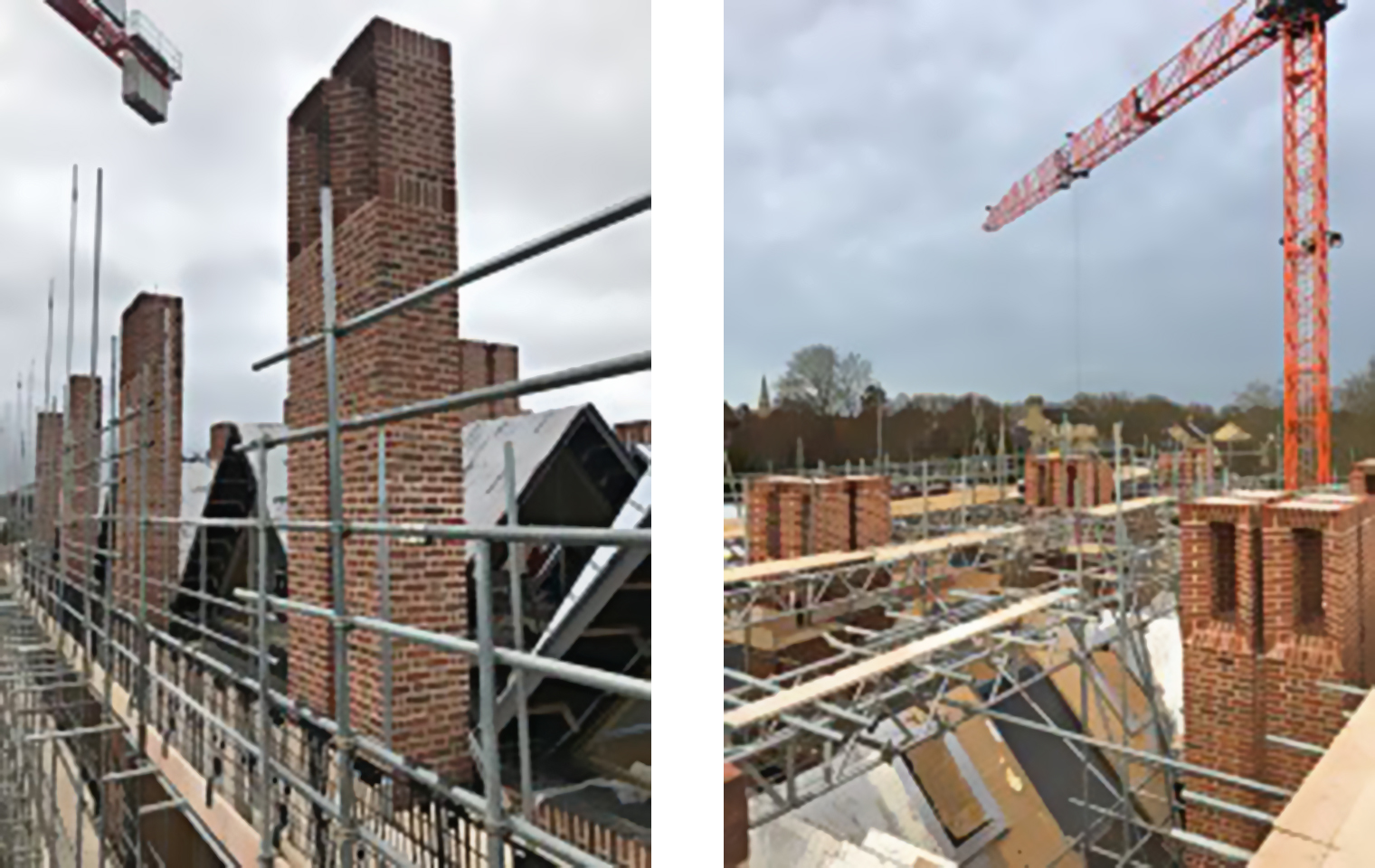
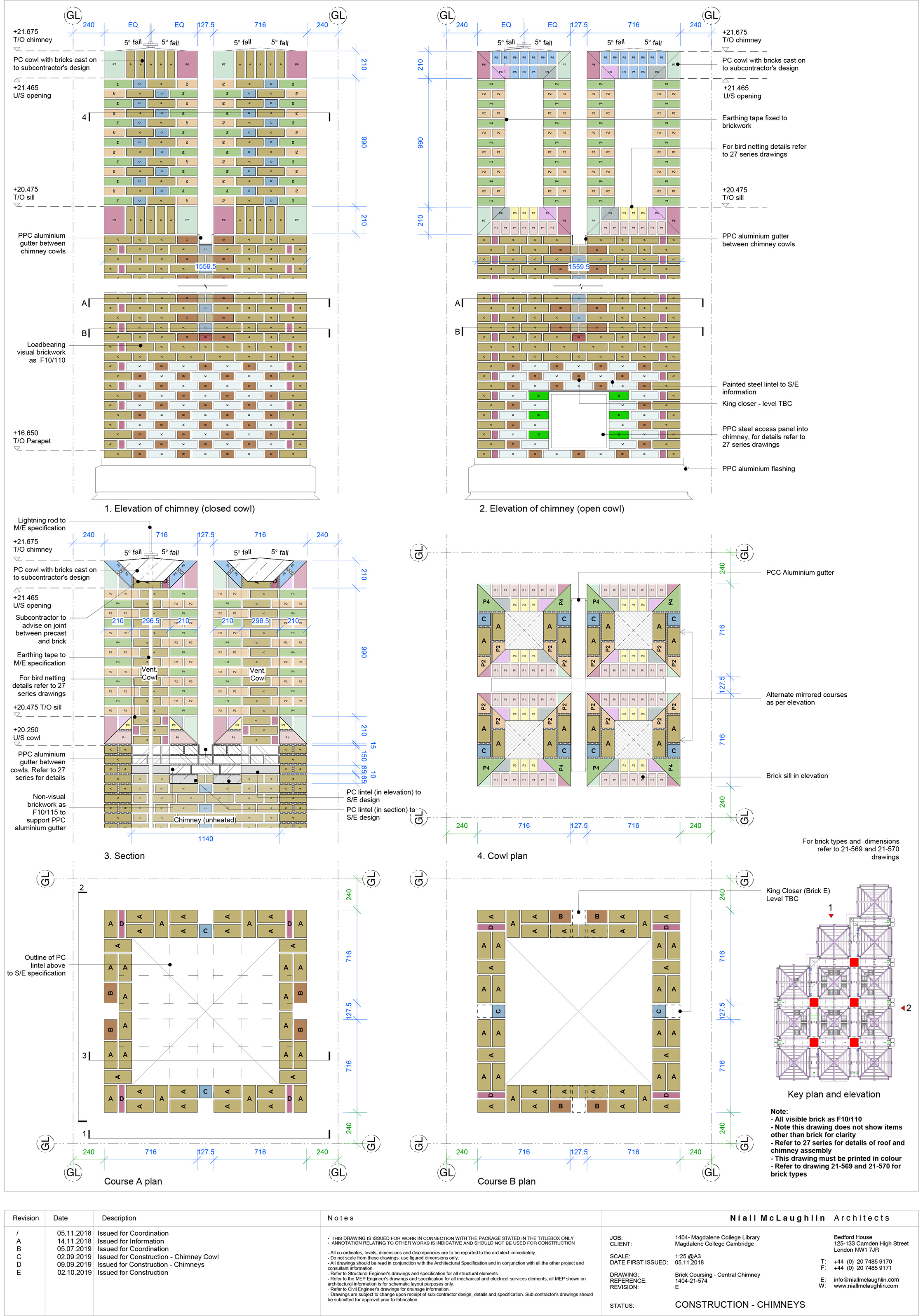
At a site in Cambridge, bricklayers have recently finished placing the final bricks at the top of the ventilation chimneys of the new library at Magdalene College. This is the final act in a long journey of completing the brickwork that forms the vertical structure of the building. Many parties were involved in the process with us, including the College, the engineers, the suppliers, the contractor and the bricklayers. The brick columns and walls support visual precast lintels which in turn support the horizontal timber structure. A grid of L shape brick columns rises continuously to roof level to support the central brick chimneys which sit on top of every group of four L shaped columns.
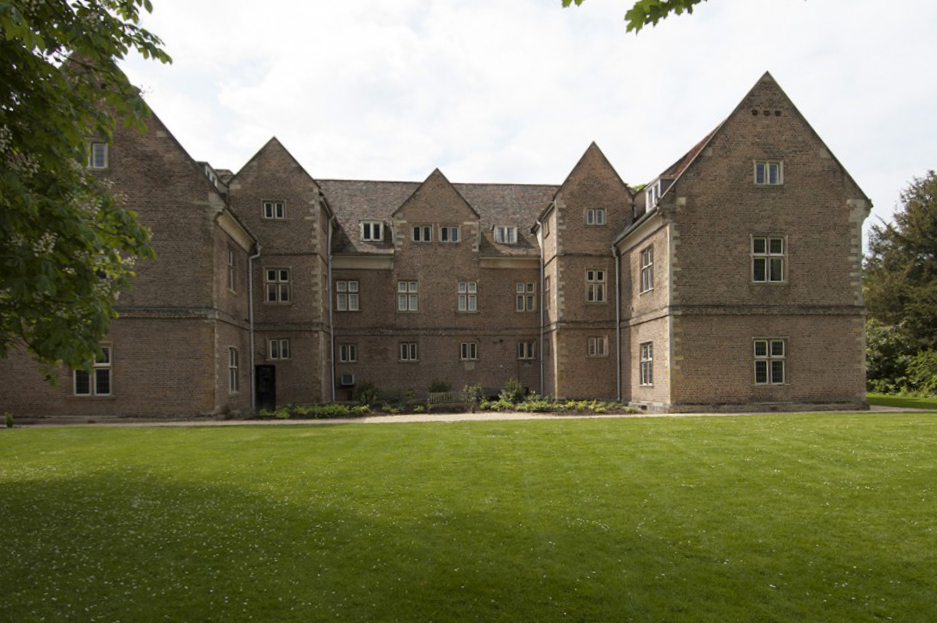
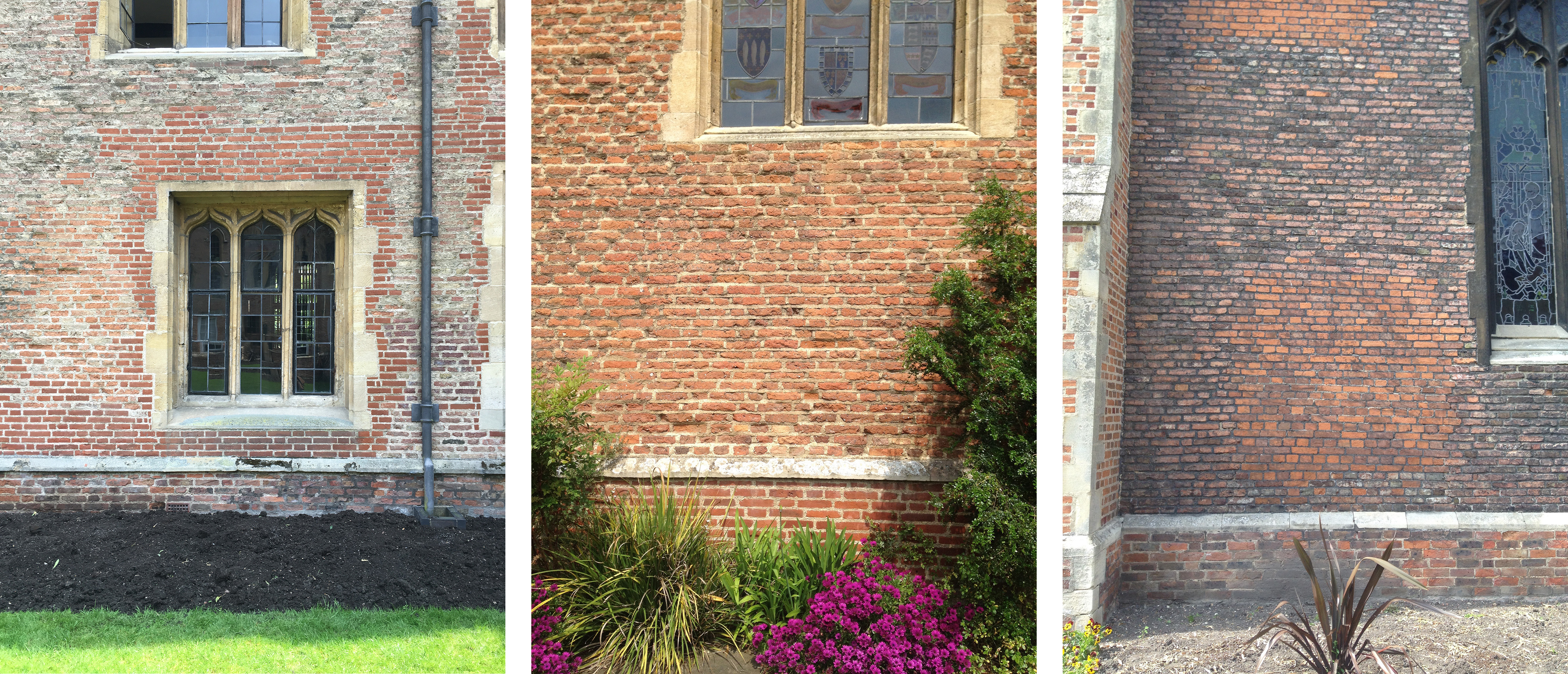
Magdalene College’s existing buildings display rich tapestries of brickwork. The bricks are predominantly soft with textured surfaces. Weathering and repair work that has been done over centuries has produced mottled patterns enriching their character further. The colours are mostly reds with some browns and purples. While all of the brickwork in the College was important as a reference, the Grade I Pepys Building which is the current college library, will have the most direct relationship with the new building and so was the focus of our studies. The new building will house the main college library collection while the Pepys Building will be refurbished to house and display the Pepys Collection. The elevation of the Pepys Building that faces onto the Fellows’ Garden is formed of red, brown and purple bricks. The brick colours along with large mortar joints give an overall brown appearance from a distance.
While surveying the existing brickwork we noted that the size of the mortar joints have a significant role to play in the overall apparent colour and texture of the wall surface. The mortar joints of the existing buildings are generally larger than a standard modern brick joint and the bricks are typically smaller in height than a standard brick. The existing joints are also predominantly flush with visible aggregate in the mortar. The ratio of brick to mortar has an impact on the perceived scale of the building.
Together with the engineers Smith & Wallwork and Cocksedge, the builders, we arrived at the most appropriate ratio of brick to mortar for the new building. The brick size chosen is 5mm smaller in every direction than a standard brick and the mortar joint is 5mm larger. For the height, this produces a ratio of brick to mortar of 60:15 instead of 65:10.
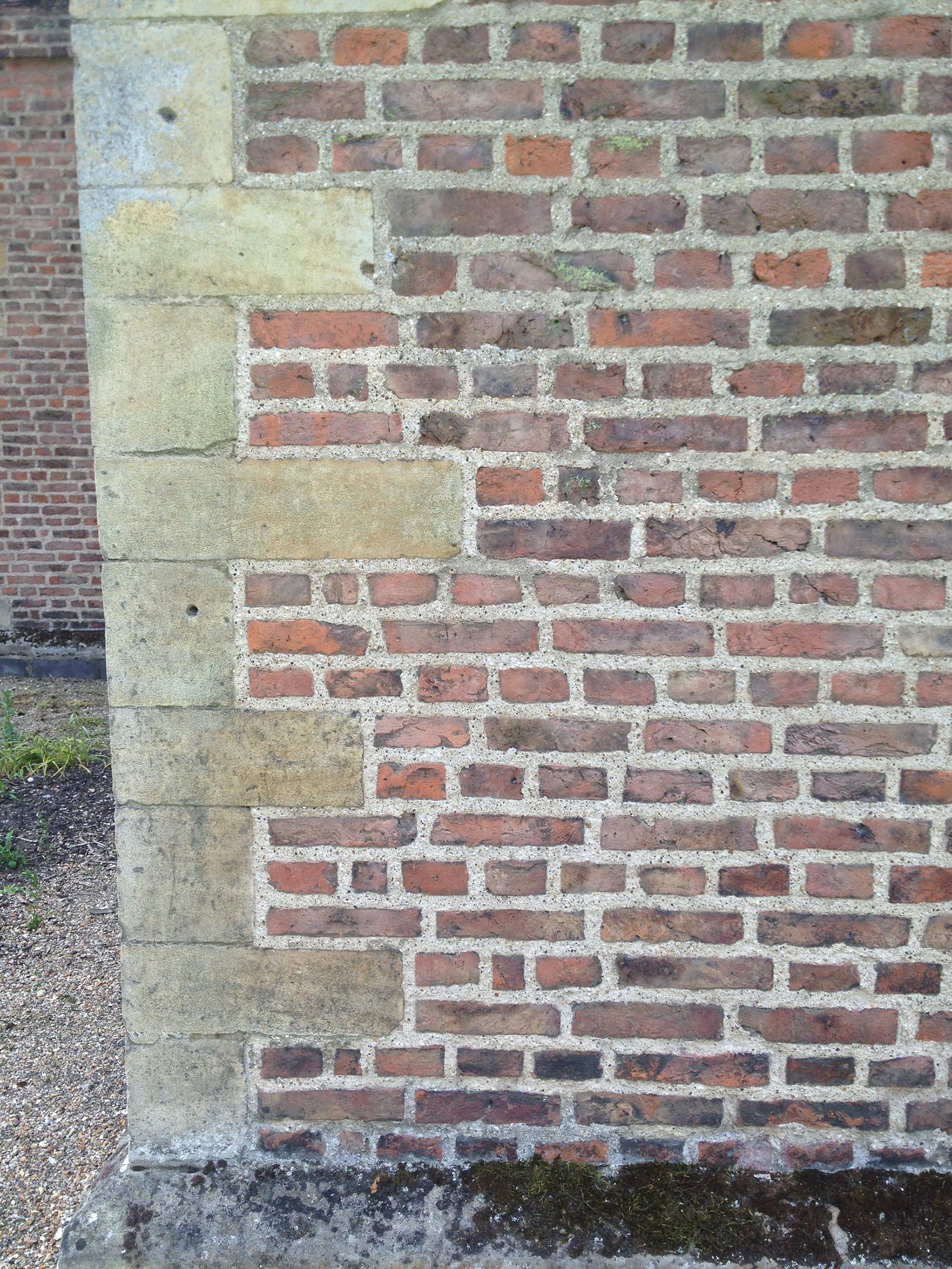
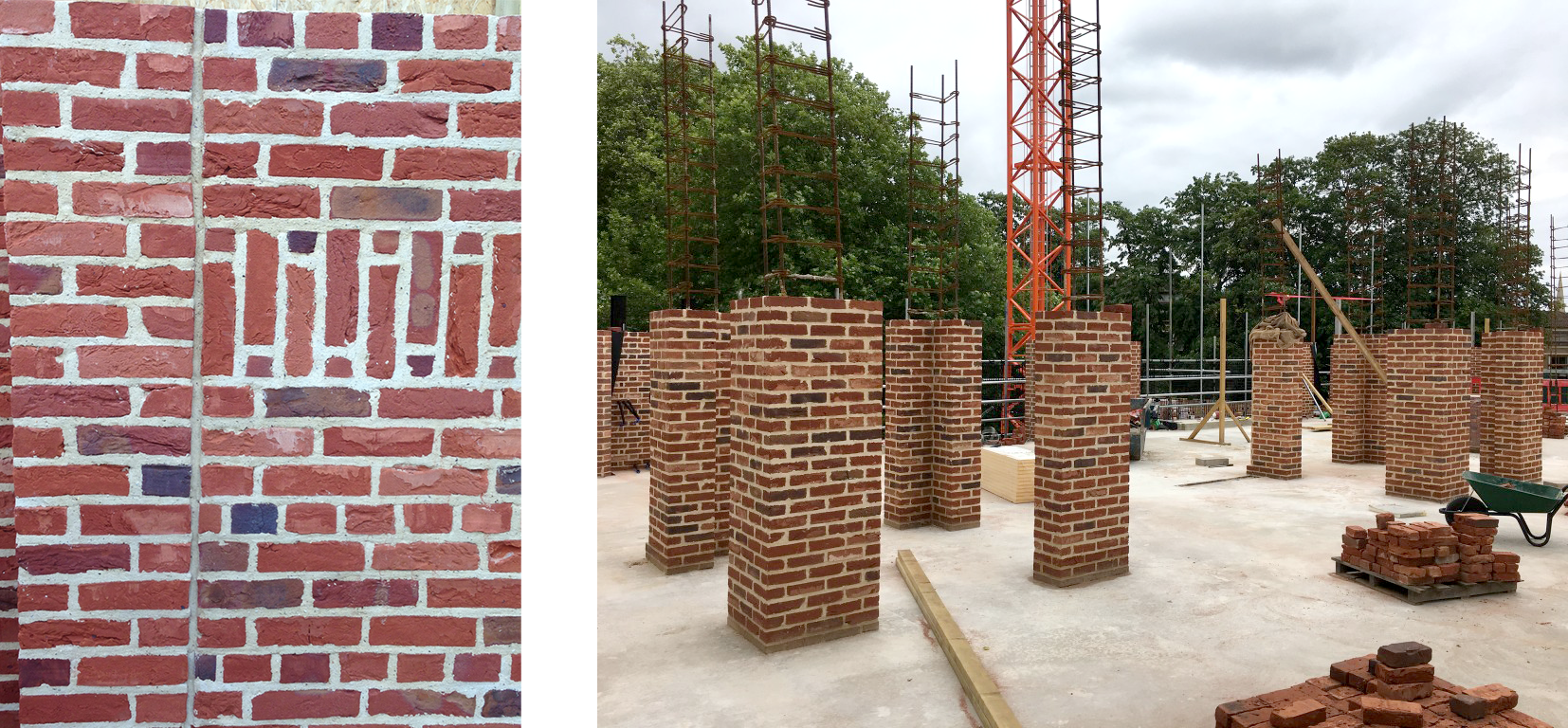
Another aspect which was developed with reference to the existing buildings was the brick bond. The old loadbearing brick buildings are predominantly English garden wall bond. We decided to use this for the walls and Flemish bond for the chimneys to reflect their load bearing nature. The L shaped columns of brick that rise continuously from ground to roof level repeat throughout the plan in a pattern that continues to the external walls, resulting in re-entrant corners on all external corners. A recessed joint running the full height of the building sits between the L columns on the exterior of the building and the enclosing walls in English garden wall bond. The floor slabs are expressed on the elevations by soldier courses.
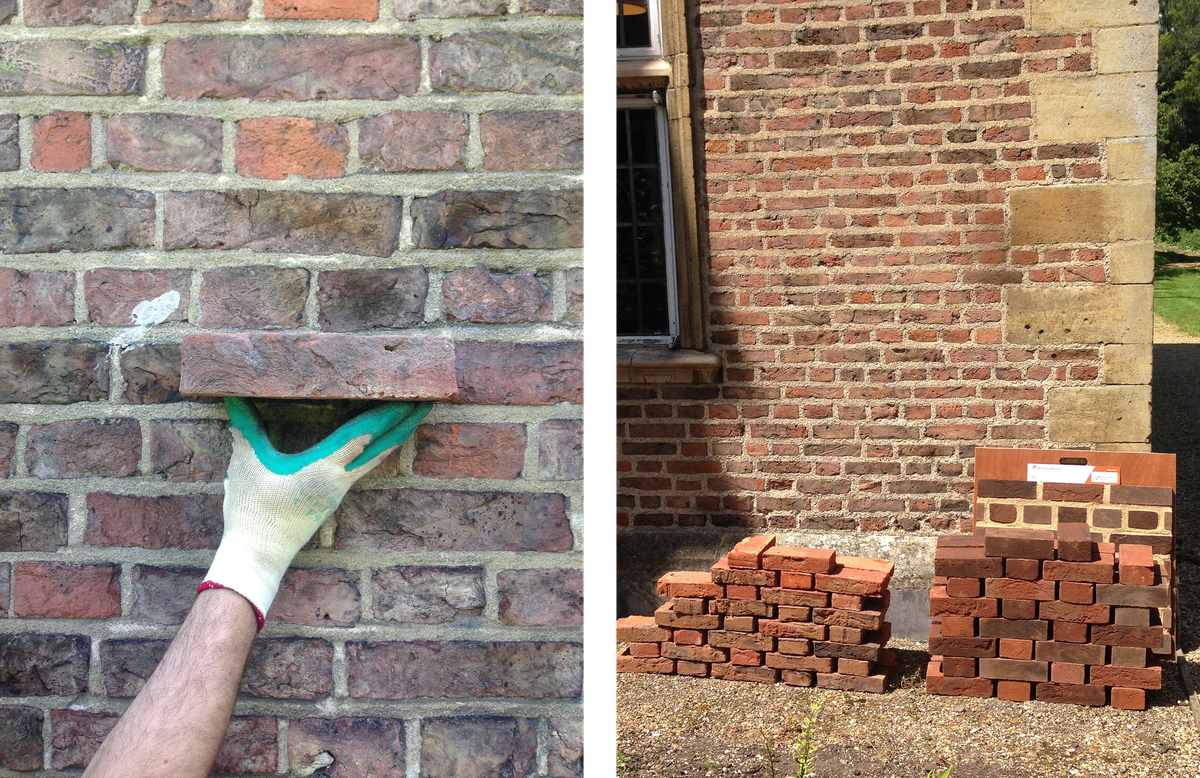
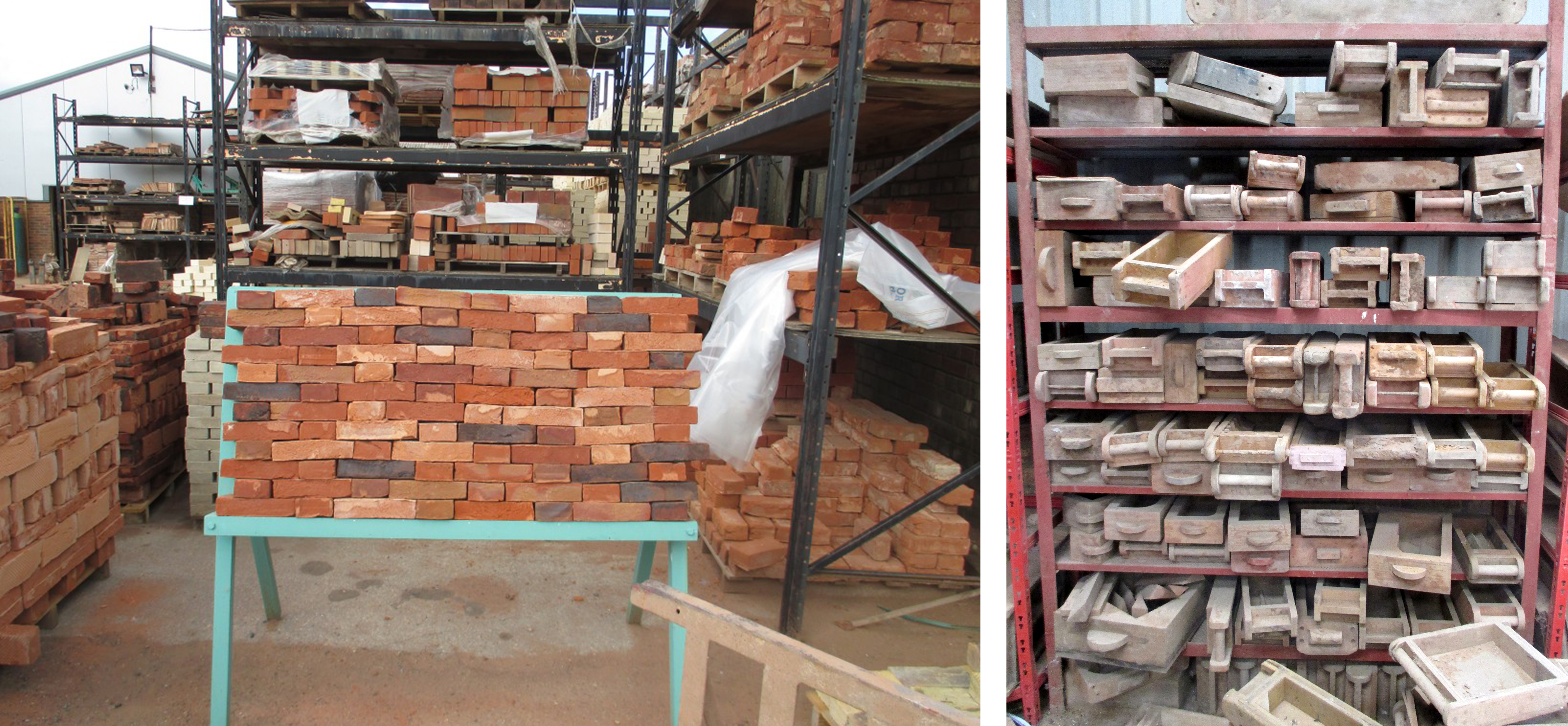
We looked at many different bricks from suppliers. The first brickworks that was chosen ceased production during the procurement process and the search began again. Samples which were considered to be potentially suitable were brought to site and compared to the existing buildings, particularly the Pepys Building. Cocksedge dry laid panels of the potential bricks beside the Pepys Building. A handmade brick by ‘York Handmade’ that Cocksedge had used on a previous project had a range of colours and textures that were complimentary to the Pepys Building. It was agreed with the College, Cocksedge and Smith & Wallwork that this was the most suitable brick to take forward.
We visited the factory in Alne, York with Cocksedge to understand how the bricks are made and to review dry laid samples. It was fascinating to learn how each part of the process has an impact on the final result in terms of strength, quality, colour, texture and shape. Many carefully honed skills are required for each part of the process.
The clay source is a Triassic mudstone in the Vale of York beside the factory. A joiner makes the timber moulds for each brick type. All of the visual bricks in the new Magdalene library are special sizes or shapes, so a new mould was required for every type. The moulds for the chimneys in particular were intricate pieces of joinery. The wet clay is then thrown by hand into the moulds. This requires accuracy and endurance. The wet bricks are then stacked on trays and prepared for the kilns.
The different colours are achieved by setting the bricks in different ways in the kiln; firing at different temperatures and also in some instances by the addition of surface sand and manganese oxide. Bricks are fired in the kiln for 80 hours. When the bricks come out of the kiln, they are then sorted by hand. The method used to sort the bricks in large quantities at the York Handmade factory means the risk of an unwelcome pattern appearing on the constructed wall is limited. There are four different colours used in the new library so the bricks were mixed in York before being delivered to Cambridge.
The team at Cocksedge built sample panels with the York handmade bricks. The aim was to check that the brick was the correct choice, to establish the most suitable ratio of the four colours and also to decide on the mortar mix. The mortar chosen was a mix of lime, cement and sand with the surface brushed to reveal some aggregate. The ratio of lime, cement and sand had to be carefully balanced and controlled to achieve the required strength, colour and texture.
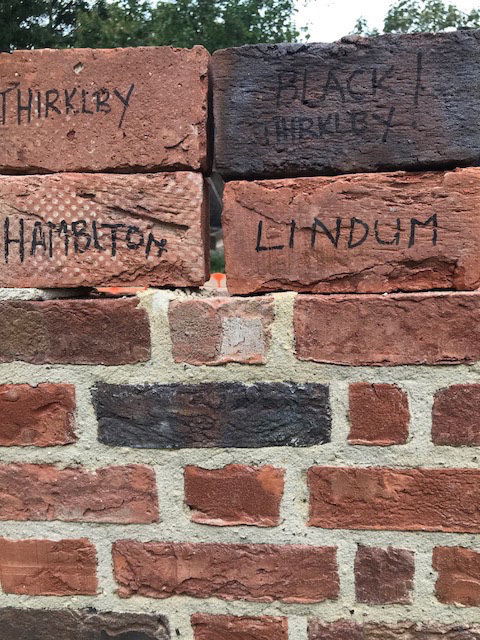
We were keen to not have any visible cut bricks and so the list of specials grew. We worked out the various types needed to form corners, walls and chimneys. We named each brick with a letter. In the end, we had one brick for every letter of the alphabet. It was nice to see that when the bricks arrived on site they had their name imprinted onto their surface.
Cocksedge began carefully laying the first bricks in February 2019. The bricklayers were chosen for their experience working with old existing brickwork. We carried out workshops with the bricklayers before work began to discuss the various intricate parts of the building. It was very enjoyable to see the progress each time we visited site. When each floor level was reached the precast lintels and timber beams and slabs were placed onto the bricks.
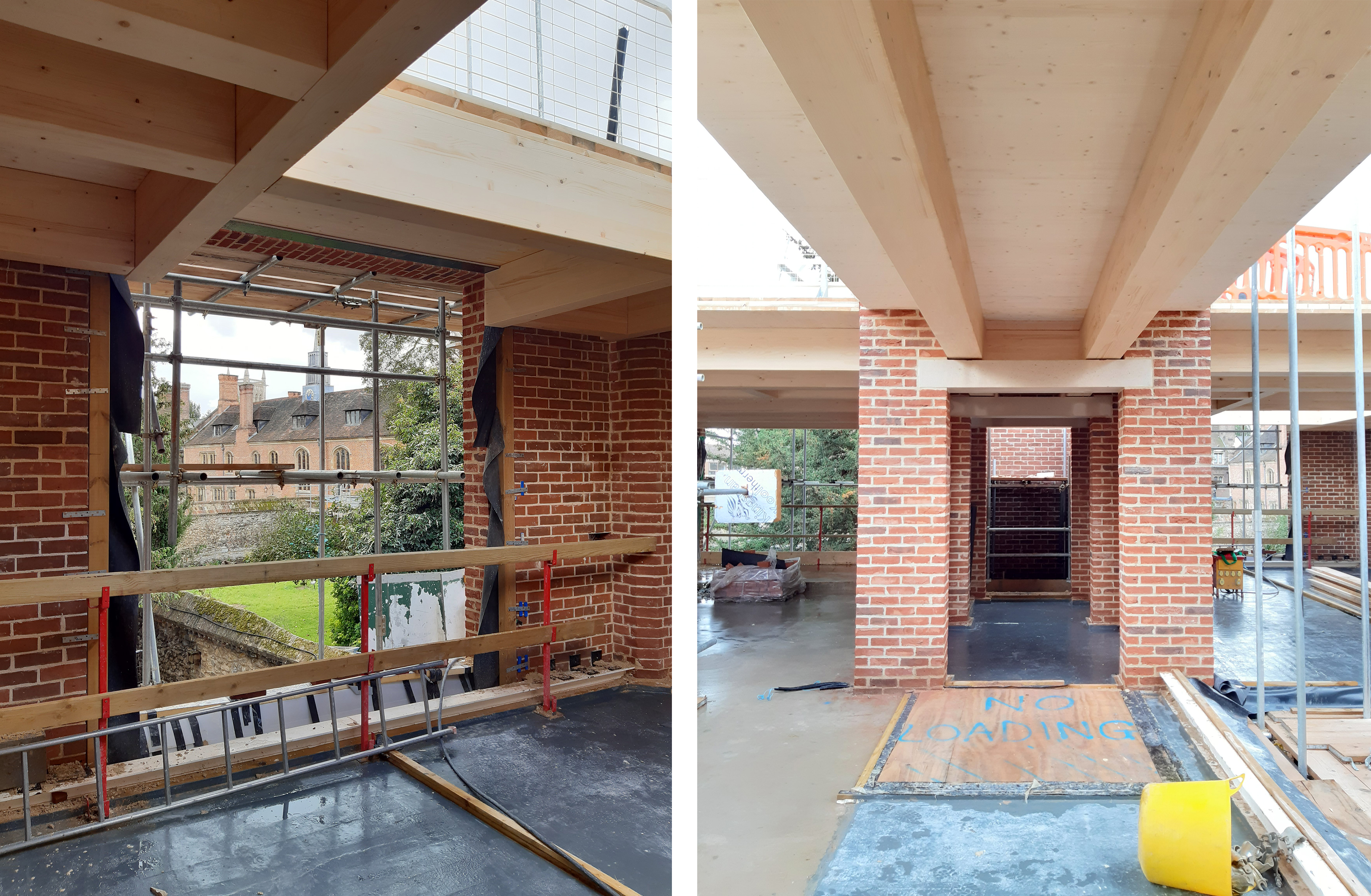
Now through the newly formed windows one can see back across the College with views of the existing brick buildings.