Auckland Castle Wing Extension
May 2019
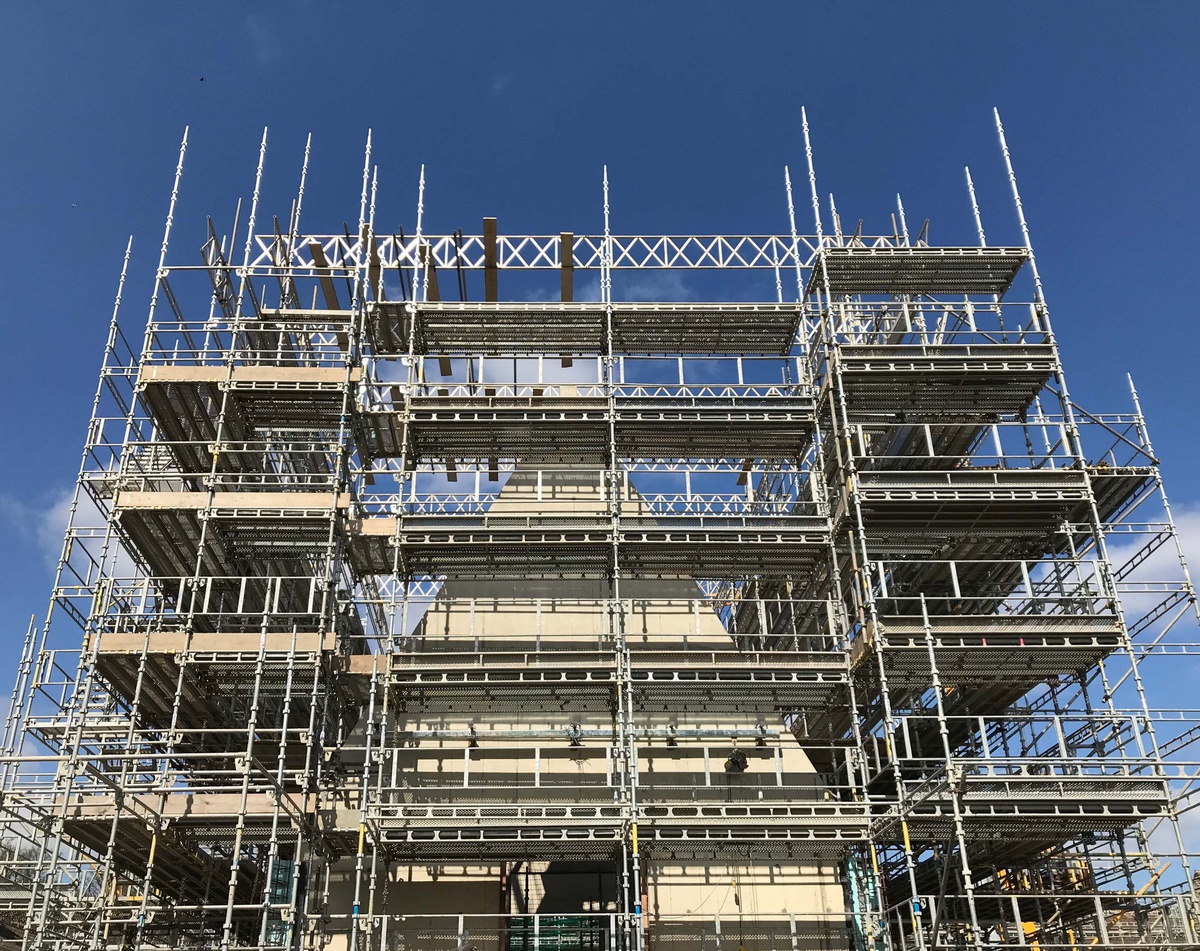
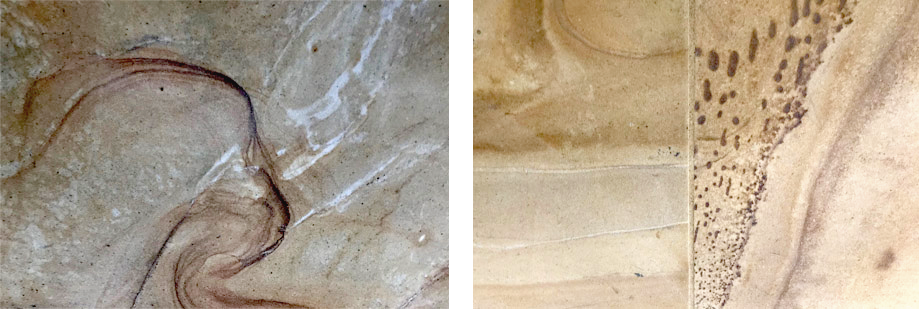
Following the completion of the Auckland Tower, the Faith Museum is our second project at Auckland Castle and is an extension to the Grade I listed Scotland Wing. Unlike its vertical sister, which wears its expressed timber structure on the outside, the Faith Museum is singular and monolithic in its appearance, forming a continuous horizontal stone edge to an enclosed courtyard. Cop Crag sandstone, local to the north-east of England, is the external treatment for the roof, walls and weatherings of the building. Far from being homogenous, the stone is alive with natural variation which ranges from delicate lacy swirls to something resembling animal markings.
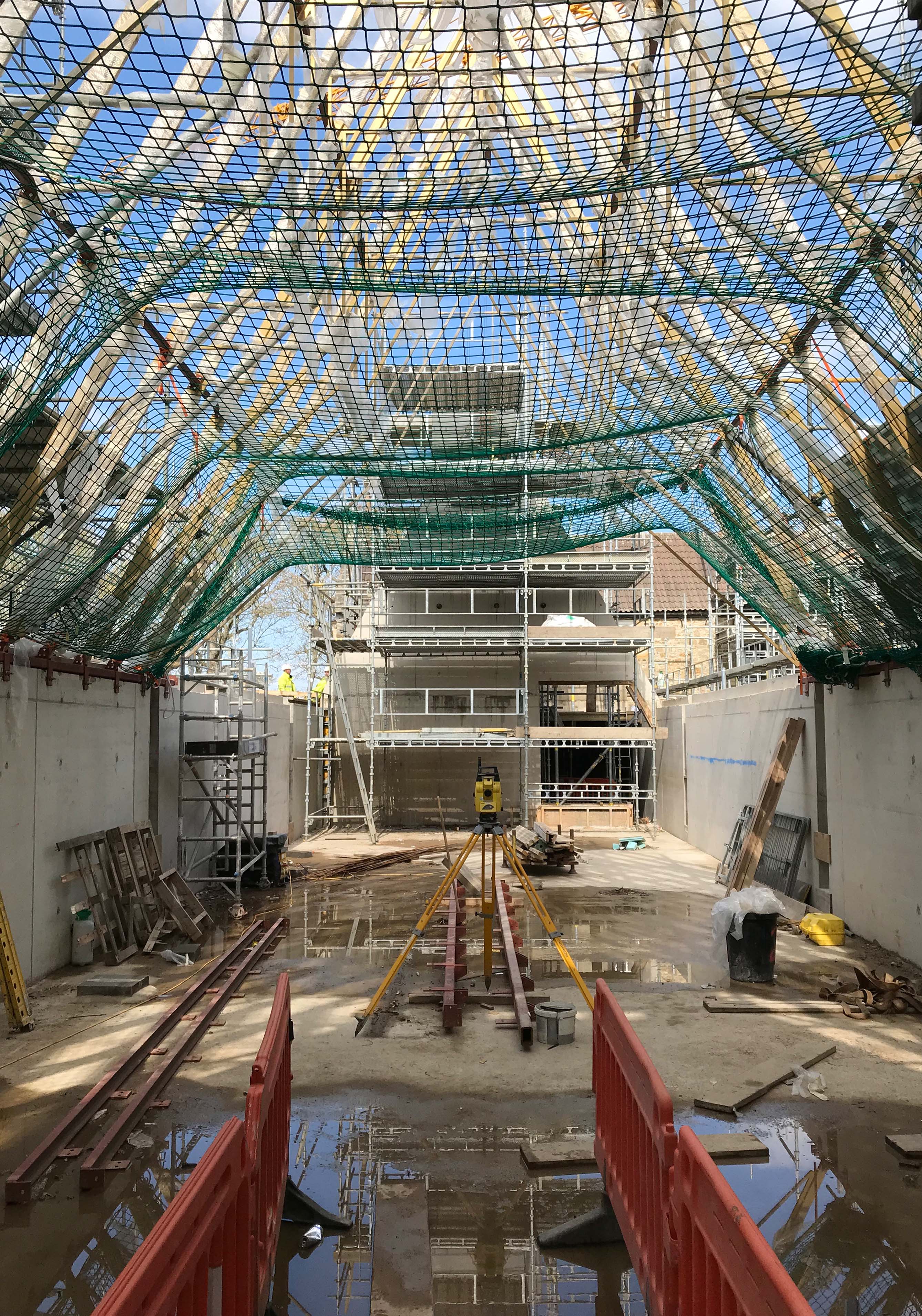
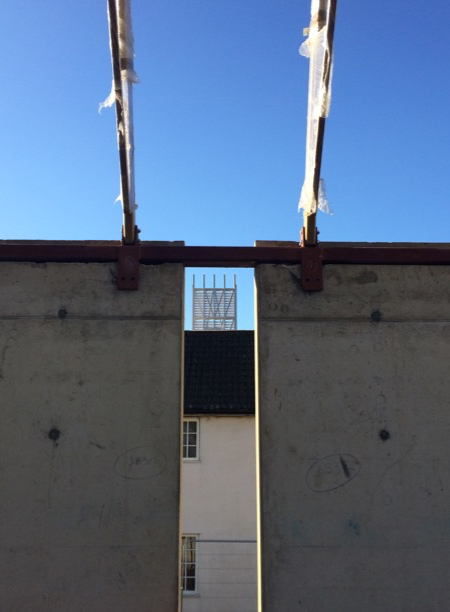
The principal internal space is a 9.5m tall gallery which follows the steeply pitching roof form, supported by a procession of closely-centred fine metal trusses. The Museum is largely inward-looking, borne of its intended purpose for contemplation and preservation of religious artefacts. This provides further enjoyable contrast and conversation between our two buildings in how they seem to view one another: the Tower’s expansive 360˚ views offering a full appreciation of the Faith Museum in its entirety as begins to take form, whilst the introspective Museum offers the only the slightest peek of its neighbour over the wall.
Craftlines
August 2015
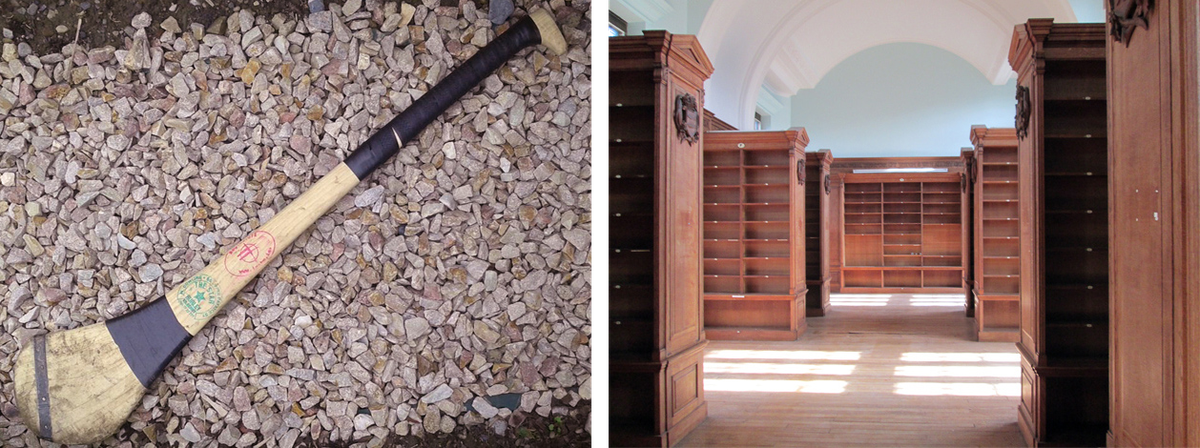
My grandfather has worn many hats; soldier, civil servant, father of seven, husband, and winner of a county final in hurling (the achievement of which he is potentially most proud). He is fluent in Irish and recalls event and dates from 50 years ago with a staggering accuracy. Yet the residing image of him from my childhood is as a craftsman – in the garage next to his house in Dublin, whittling and sanding a piece of ash to form a hurley, sizing it precisely for the user, wrapping the handle to create the perfect hold. I remember sitting, playing surreptitiously with a clamp, watching this in awe: the creation of the perfect instrument from a piece of timber; a skill honed through practice and an unfailing attention to detail. I marvelled at the assurance of it all, the promise in his hands.
It would be satisfyingly simple to attribute my choice of career to these moments – to claim there was an epiphany in watching him, a sudden realisation that I wanted to be an architect, to create. In reality, however, the path was not so linear; instead the conviction that I wanted to become an architect embedded itself in my consciousness slowly, over time. The memory of him working in his garage was one I didn’t return to often, and like any story we fail to repeatedly tell ourselves, it languished, dormant, in the recesses of my mind.
I recently went to site at Jesus College, Cambridge, where we are working on a project that is part new build, part refurbishment. An aspect of the refurbishment involves the adaptation of eight bookcases in the magnificent former library into wall panelling. The existing bookcases are a dark stained timber, designed by Maurice Webb in the 1920s and wonderfully crafted by a masterful hand. Reworking these without compromising their beauty would be a challenge for any craftsman.
On seeing the work the joiner had done, I realised there was no cause for worry – it had been executed with confident, competent hands. In that moment, the memory of my grandfather in his garage came back to me in glorious Technicolor; and I felt a familiar thrill at the embodied potential of the right material in the hands of a craftsman, with promise in his hands.