Architecture and Poetry
May 2023
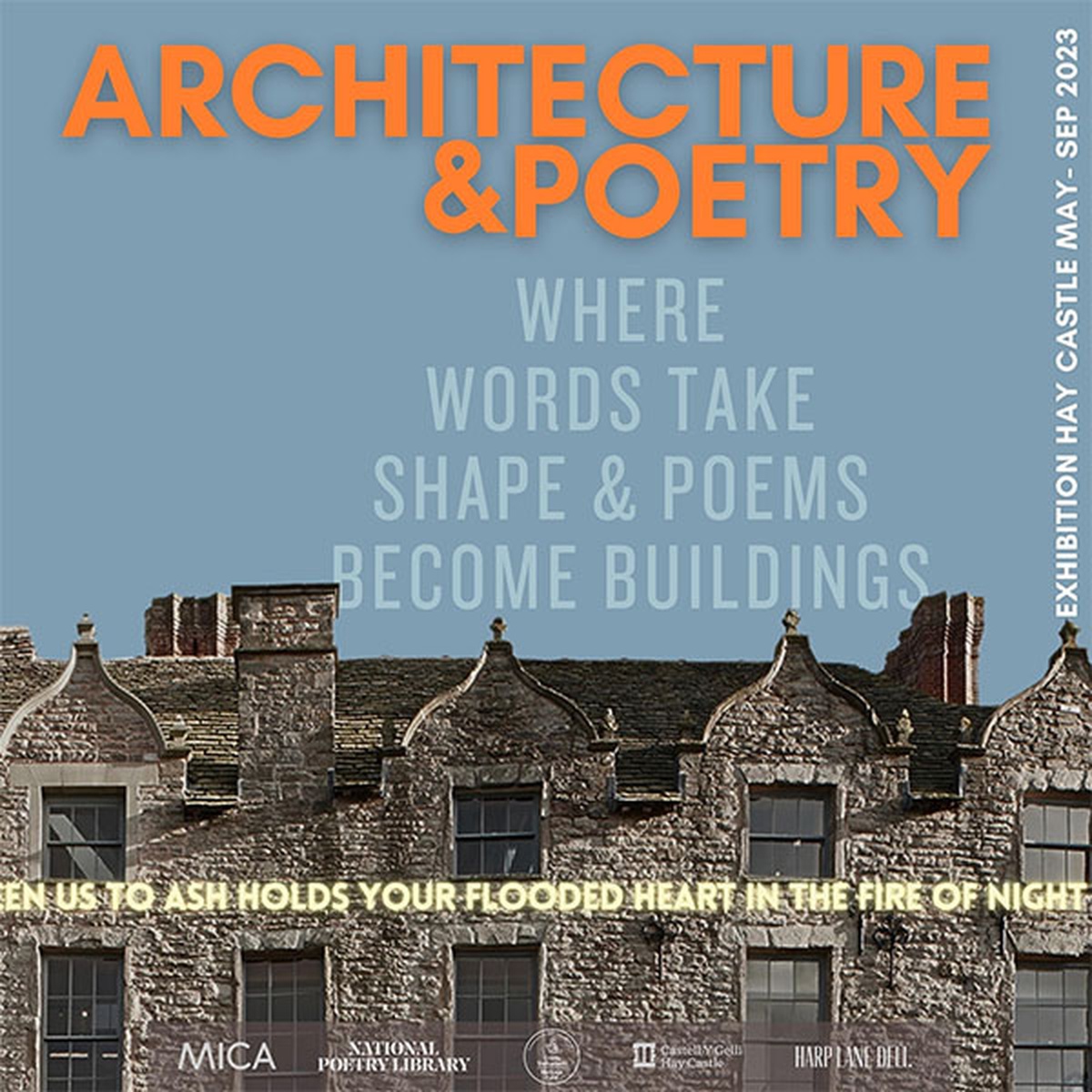
The exhibition Architecture and Poetry is on display at Hay Castle from May 26th - 3rd September. The exhibition begins on the Castle exterior with a newly commissioned light poem from poet-sculptor Robert Montgomery and culminates in Pelé Cox’s verse inscription for Eric Parry’s Building 7 at Chelsea Barracks as well as the words of bilingual poet Gwyneth Lewis for the Wales Millennium Centre at Cardiff. Alongside this, the exhibition details three architectural designs by our practice which were inspired by poems, including the International Rugby Experience at Limerick which has its origins in the poem Beowulf. These architectural exhibits are complemented by a collection of concrete poetry from the 1960s to the present including The Mouse’s Tale by Lewis Carrol. To visit the Hay Castle website click here.
Níall will be giving a lecture at Hay Castle on the 30th May talking about the links between poems and some of our projects. Please click here to find out further details.
Niall McLaughlin writes LA Article for Architectural Review
September 2013
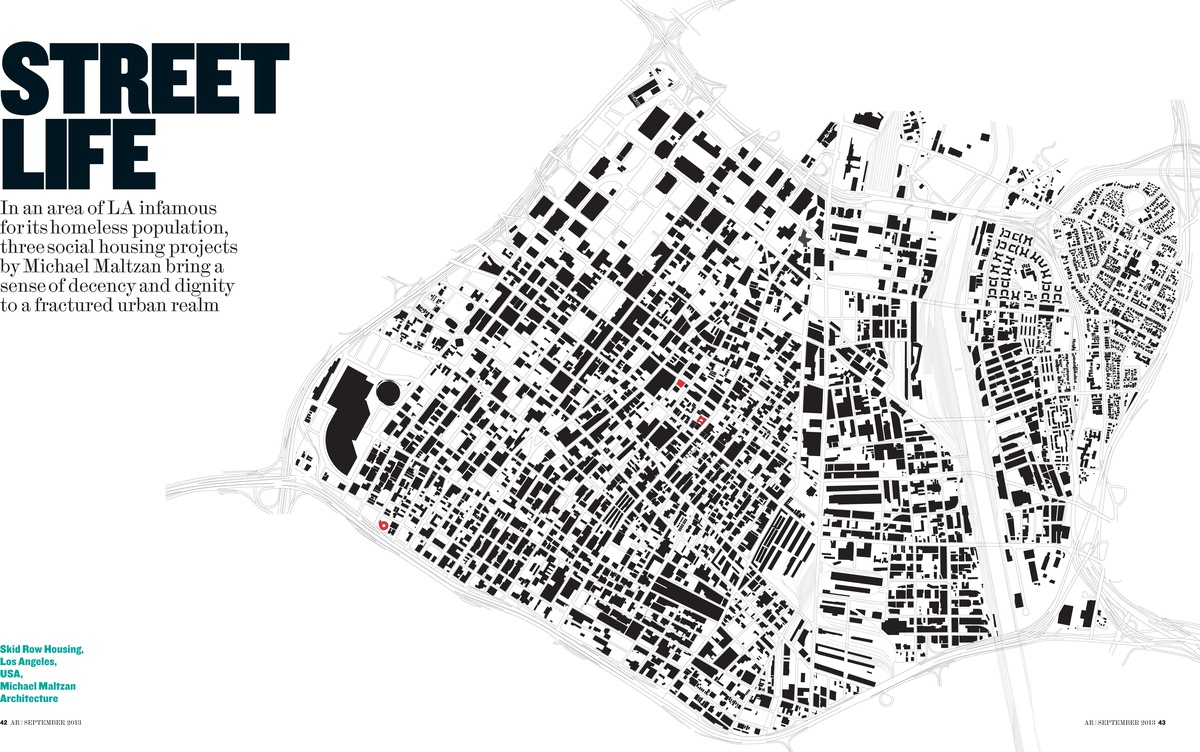
Niall McLaughlin has written an article for the Architectural Review, entitled ‘Street Life: Michael Maltzan’s Social Housing in Los Angeles’. The piece examines the history of the infamous area of LA known as Skid Row and three housing projects by the practice Michael Maltzan Architecture for this fractured part of the city. The piece draws out common themes between the projects, which are all low-cost accommodation for the previously homeless, exploring the successful spatial relationships between the private space of the individual rooms, the areas of common sheltered space and the public realm of the street.
“The formal virtuosity of each composition is Maltzan’s own special skill and they suggest that high architecture can give pleasure and dignity to all of us….I hope that the different spatial experiments, linking and articulating pavement, common sheltered space and private rooms, will become subjects for further reflection and analysis. It speaks of our common need to situate ourselves and participate in public life.” NM