Architecture and Poetry
May 2023
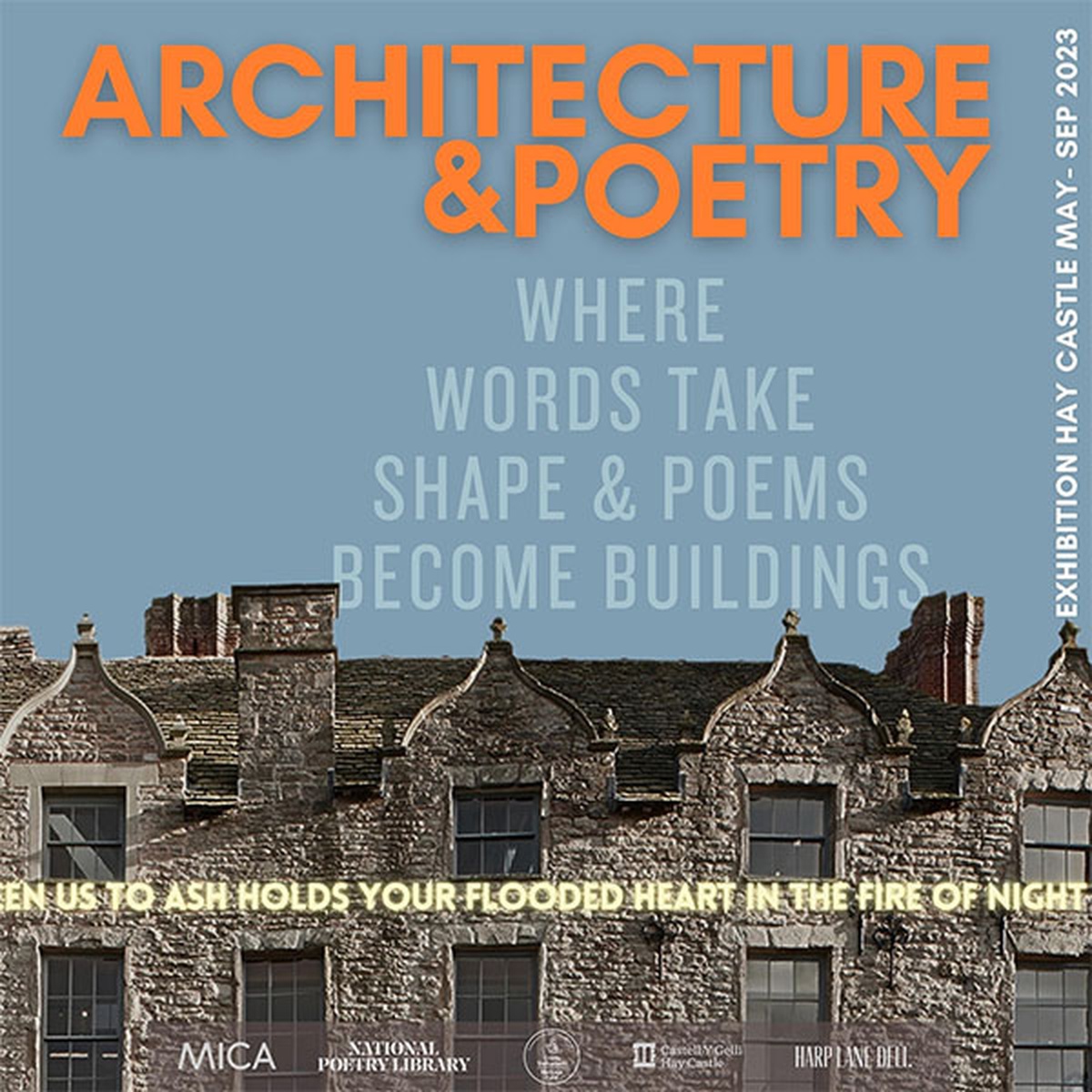
The exhibition Architecture and Poetry is on display at Hay Castle from May 26th - 3rd September. The exhibition begins on the Castle exterior with a newly commissioned light poem from poet-sculptor Robert Montgomery and culminates in Pelé Cox’s verse inscription for Eric Parry’s Building 7 at Chelsea Barracks as well as the words of bilingual poet Gwyneth Lewis for the Wales Millennium Centre at Cardiff. Alongside this, the exhibition details three architectural designs by our practice which were inspired by poems, including the International Rugby Experience at Limerick which has its origins in the poem Beowulf. These architectural exhibits are complemented by a collection of concrete poetry from the 1960s to the present including The Mouse’s Tale by Lewis Carrol. To visit the Hay Castle website click here.
Níall will be giving a lecture at Hay Castle on the 30th May talking about the links between poems and some of our projects. Please click here to find out further details.
a+u Feature on Somerville College Accommodation
May 2014
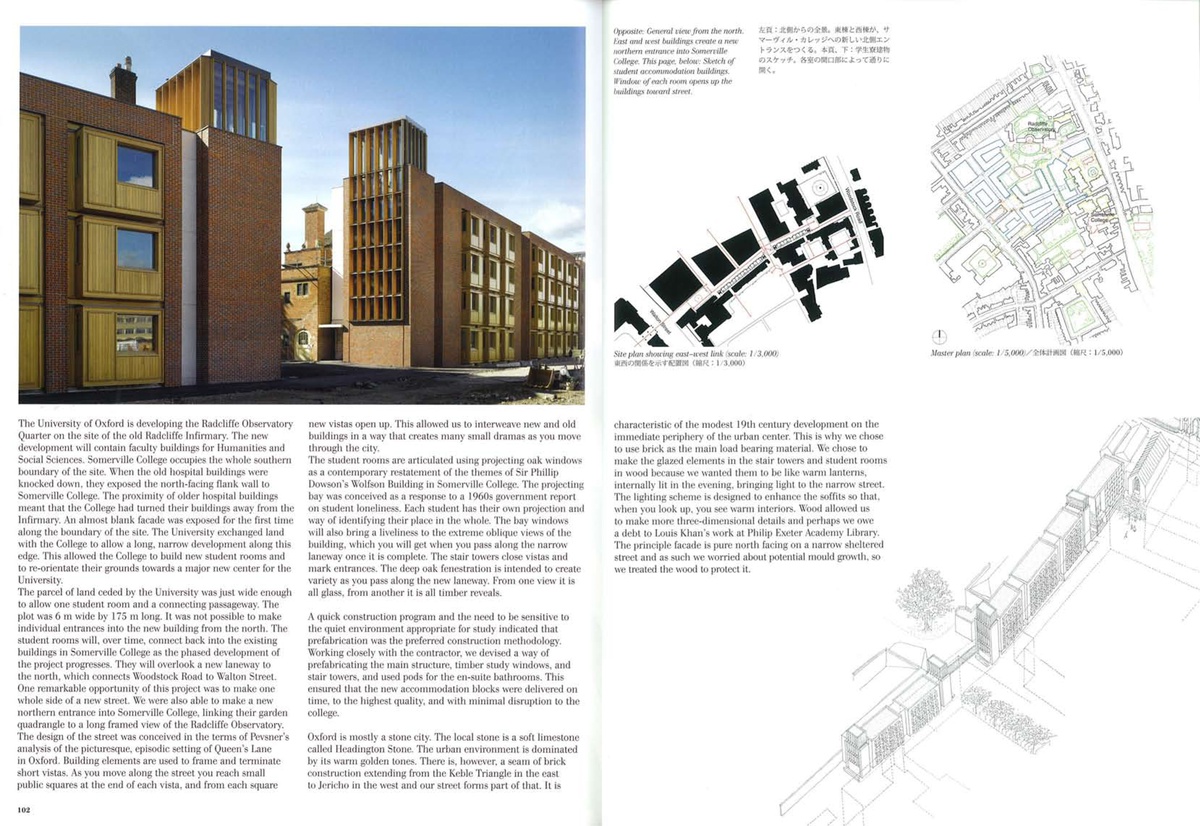
The Japanese journal a+u has published an account of the practice’s student accommodation for Somerville College, Oxford. The theme of this month’s publication is ‘New Landscapes of Wooden Architecture’ and features an international selection of projects that explore new aspects of wood technology and its potential within cities. The article gives a description on the themes and processes behind the project, placing it within the context of the historic university city and the surrounding Radcliffe Infirmary Quarter.
It is illustrated with working details of the bespoke timber glazing for the stair tower lanterns, as well as the prefabricated timber projecting bay window units for the student bedrooms, with their integral desk and bench seat overlooking the street.
‘We chose to make the glazed elements in the stair towers and student rooms in wood because we wanted them to be like warm lanterns, internally lit in the evening, bringing light to the narrow street…Wood allowed us to make more three-dimensional details…we owe a debt to Louis Kahn’s work at Philip Exeter Academy Library.’ NM