Street Life - Architectural Review
Issue 1399
September 2013
Text Níall McLaughlin
Images Michael Maltzan Architecture, Iwan Baan, James Ewing
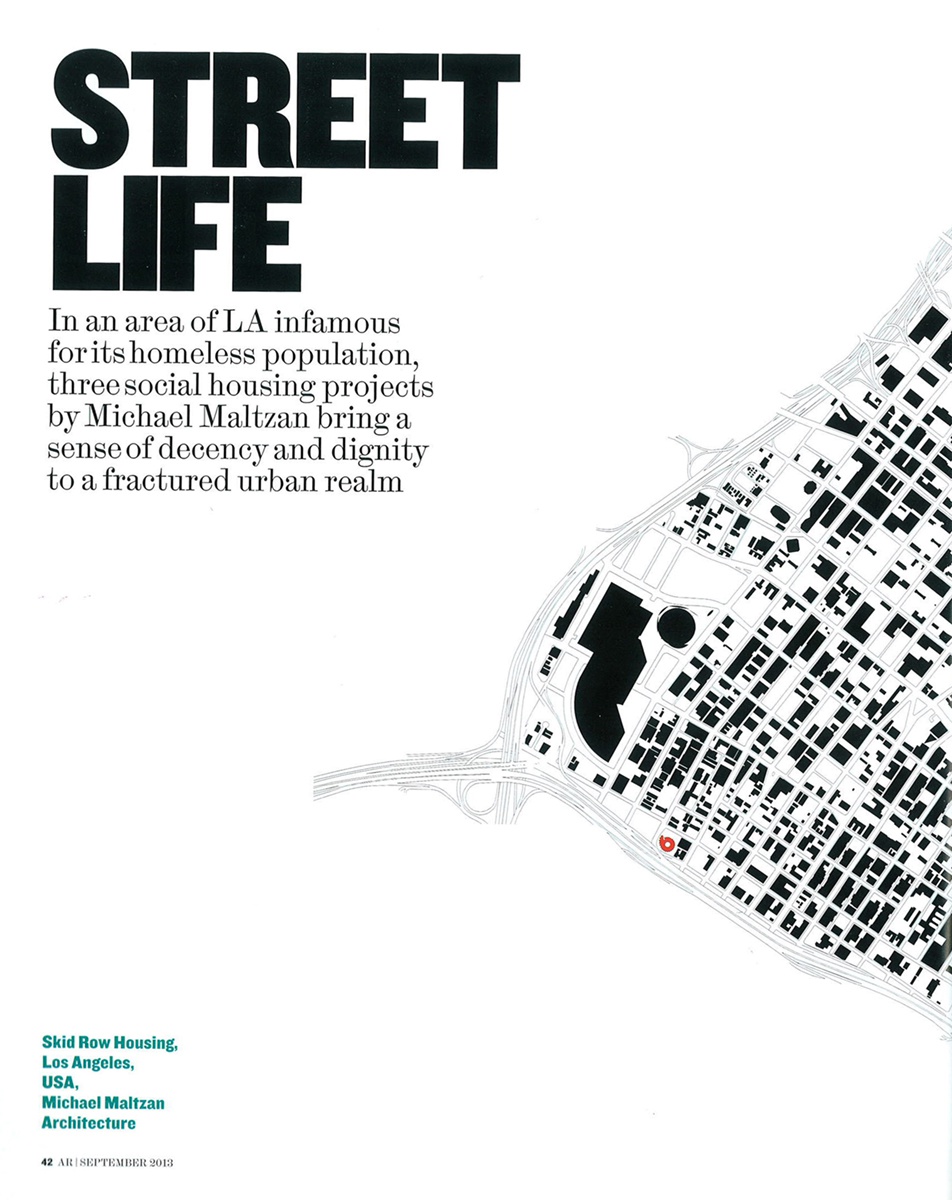
In an area of LA infamous for its homeless population, three social housing projects by Michael Maltzan bring a sense of decency and dignity to a fractured urban realm
The name Skid Row has been immortalised in myth and music as both a place and a state of being. It is the address associated with the bottom rung of life’s ladder, the dead-end destination for the hopeless. The original Skid Row was probably in Seattle and it got its name from the corduroy wooden tracks used to haul heavy lumber to the timber yards. The area around the yards became associated with the darker aspects of transient immigrant life; they became a haven for grease monkeys, vagrants, pimps and grifters.
The area known as Skid Row in Los Angeles is a 50-block section of Downtown. It is bounded by the Historic Core and Little Tokyo and it partly overlays the Downtown Industrial District. Its origins lie in the industrial developments that grew up to service LA’s agricultural hinterland reached from the nearby rail yards. The seasonal nature of the work drew in a combination of short-term workers and rail crews on layover; small hotels suited to single male migrant workers serviced them. A scatter down of bars, brothels and religious missions vied for the attentions of this lonely constituency. The combination of transient accommodation, available vice and the services needed to support the Fallen set the deep structure for the district and it has persisted beyond many of the original activities that generated it.
Link to full article here.