Damascene Dereliction - Architectural Review
Issue 1382
April 2012
Text Níall McLaughlin, Georgina Ward
Images Níall McLaughlin, Georgina Ward
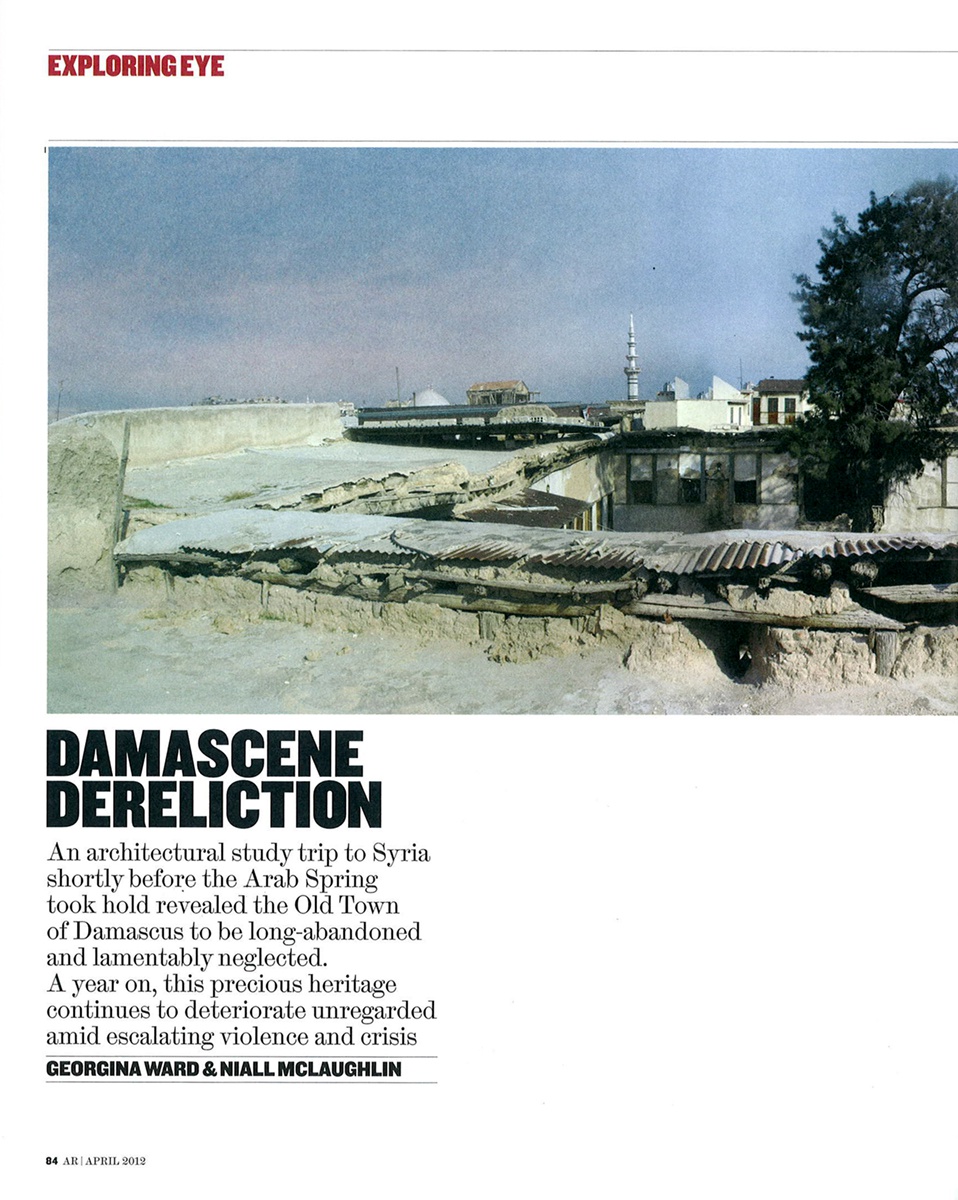
An architectural study trip to Syria shortly before the Arab Spring revealed the Old Town of Damascus to be long-abandoned and lamentably neglected. A year on, this precious heritage continues to deteriorate unregarded amid escalating violence and crisis.
It is said that the Prophet Mohammad refused to enter the gates of Damascus. He ascended the mountain track which led all travellers to the city, but when the view emerged of the glistening, lush oasis of Damascus he continued past, proclaiming ‘man should only enter Paradise once.’ The mythical status of Damascus as the oldest continually inhabited city has persisted through its existence; as described by Mark Twain, ‘she measures time not by days, months and years, but by the empires she has seen rise and prosper and crumble to ruin. She is a type of immortality.’ Visiting Damascus in January 2011, only weeks before the Arab Spring spread to Syria, this sense of the passage of time within the old city walls was tangible. The scattered columns of the Temple of Jupiter, which can now be spotted as lintels along the route of the ruined peribolos, and the reinstated Roman arch, found when excavating Straight Street, are two examples of Damascene history that illustrate this layered narrative in the urban fabric of the city.
Despite the mixed historic fabric, the domestic architecture of the Old Town is dominated by the period of Ottoman rule. From occupation in 1516 until the time of the French Mandate in the early 20th century, Damascus grew vastly. The city became the entrepôt of the Hajj to Mecca, bringing copious trade and concomitant wealth. Building spread particularly along the caravan route of the pilgrims and clustered close to the religious centre of the Umayyad Mosque. With this wealth there was competition to construct baits (lavish courtyard homes) as symbols of power.
Link to the full article here.